Founders often assume that presenting a Certificate of Incorporation and standard business profile guarantees corporate account access. However, compliance departments scrutinize capital origins under the Anti-Money Laundering and Counter-Terrorist Financing Ordinance (AMLO), demanding verifiable proof of how your enterprise acquired its initial funding and ongoing operating balances.
The 4-Pillar Fund Traceability & AML Defensibility Framework
Source of funds verification in Hong Kong evaluates the complete transactional path and commercial legitimacy of your capital rather than reviewing isolated bank receipts. Institutional compliance officers require a clear, documented connection between the capital originator, the intermediary settlement channel, and the newly established corporate entity.
Global regulatory bodies evaluate financial hubs on transaction transparency. According to anti-money laundering transaction reports, over 68% of commercial bank account delays in Hong Kong originate from broken documentation links between upstream business income and initial account balances.
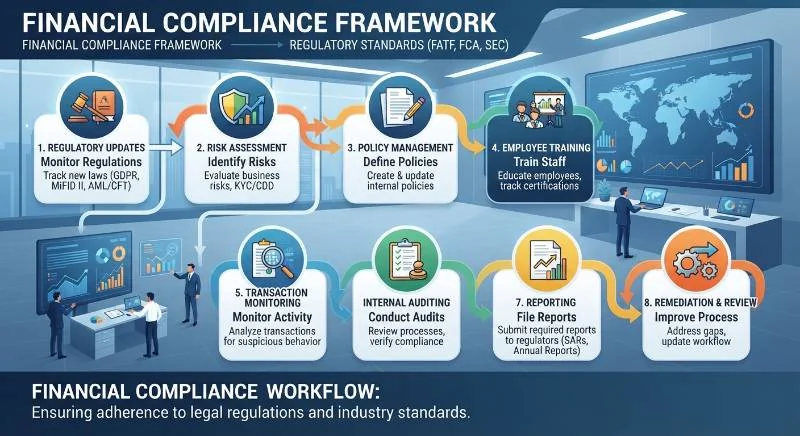
To navigate this scrutiny, applicants must view compliance through a structural lens. Olesen Global applies the 4-Pillar Fund Traceability & AML Defensibility Framework to prepare enterprise applications for underwriter approval:
- 1. Capital Traceability & Authenticity: Creating an airtight link between account deposits and originating bank statements. Third-party deposits or unmatched transfers are completely unacceptable.
- 2. Regulatory Legality: Aligning capital declarations with the latest Hong Kong Monetary Authority AML/CFT Guidelines, mandatory tax residency forms, and Common Reporting Standard (CRS) self-certifications.
- 3. Operational Substance: Proving ongoing commercial viability via verifiable executed sales orders, operational websites, physical leases, and supplier logistics trails.
- 4. Intermediary Licensure & Channel Security: Routing documentation directly through a verified provider holding a valid Companies Registry TCSP License, avoiding unregulated sub-agents.
“Modern corporate underwriting does not operate on assumptions. If an underwriter cannot trace a commercial deposit back to an underlying invoice and settled delivery note within thirty seconds, the entire file is tagged as elevated risk.”
— Raymond Shum, Senior Anti-Money Laundering Compliance Specialist
Source of Funds (SoF) vs. Source of Wealth (SoW): Critical Distinctions
Confusing Source of Funds (SoF) with Source of Wealth (SoW) is one of the most common mistakes international founders make. While related, these concepts address entirely different aspects of your capital history.
Source of Wealth (SoW): The comprehensive economic trajectory and business activities that generated the total net worth of the Ultimate Beneficial Owner (UBO) over their commercial career.
Source of Funds (SoF): The specific activity, event, and originating account that produced the precise sum of capital being transferred into the corporate account for working capital or paid-up shares.

When funding initial operational balances following your Hong Kong Company Registration, underwriters verify the exact path of the injection. If a UBO declares their wealth originates from historical retail operations, but the initial HKD 100,000 corporate account balance transfers from an unrelated shell entity, compliance flags will freeze the application.
Paid-up capital injections require clear shareholder resolutions and personal bank statements. Ongoing operational revenue, by contrast, must be backed by executed sales agreements, bills of lading, and clean corporate settlement histories.
Essential Evidentiary Documentation Matrix: Personal and Corporate Capital
Compliance teams do not accept self-drafted affidavits without institutional corroboration. Every dollar credited to your balance requires matching documentation.
The matrix below highlights the evidentiary requirements and AML tripwires across the most common capital funding sources:
| Funding Origin | Primary Evidence Required | Secondary Supporting Documents | High-Risk Compliance Red Flags |
|---|---|---|---|
| Corporate Dividends | Official dividend distribution vouchers and audited financial statements | Bank statements showing dividend inflow, Board resolutions | Dividends paid from companies operating at an audited net loss |
| Commercial Operations | Upstream purchase orders and downstream sales contracts | Customs declarations, commercial invoices, shipping bills (B/L) | Invoices lacking verifiable counterparty tax IDs or web presence |
| Asset / Equity Liquidation | Fully executed share purchase agreements (SPA) or property sale deeds | Escrow release confirmation, government tax assessment notices | Unregistered private share transfers settled through physical cash |
| Director / Shareholder Salary | 12 consecutive months of official salary slips and tax returns | Employment contracts, personal payroll account statements | Sudden exponential salary increases right before bank application |
| Institutional Investment | Signed investment agreements (SAFE, convertible note, subscription deed) | Cap table updates, regulatory venture capital licensing proof | Capital received from unregulated private debt syndicates |
Institutional Underwriting Standards: Tier-1 Banks vs. Virtual Banks
Hong Kong’s banking sector features diverse operational appetites across institutional tiers. Tier-1 lenders manage stringent legacy protocols, whereas licensed virtual banking platforms deploy automated algorithmic filters.
Major institutions such as Standard Chartered and HSBC Hong Kong maintain conservative risk profiles. Underwriting metrics indicate that Tier-1 compliance desks request secondary evidentiary filings on cross-border transactions exceeding HKD 500,000 in more than 84% of corporate onboarding cases.
| Banking Institution | Processing Timelines | SoF Scrutiny Level | Target Corporate Segment | Physical Presence Mandate |
|---|---|---|---|---|
| Tier-1 Commercial (HSBC, Standard Chartered, BOCHK) | 4 to 8 Weeks | Comprehensive historical verification of UBO and operational partners | High-turnover trade, multinationals, mature conglomerates | Mandatory in-person director identification |
| Tier-2 International (DBS, OCBC, BEA) | 3 to 6 Weeks | Strict commercial invoice tracking and contract reconciliation | Regional trading companies, consultancy firms, manufacturers | Mandatory or designated regional branch verification |
| Licensed Virtual Banks (ZA Bank, PAObank) | 1 to 3 Weeks | Data-driven screening of digital flows and operational footprints | Startups, cross-border e-commerce, digital software services | 100% Remote digital onboarding via secure biometric app |
“Tier-1 institutions will not accept ambiguous documentation. If a cross-border holding company transfers equity without certified bank reconciliation, human underwriters reject the file to protect their institutional risk rating.”
— Alistair Vance, Former Head of Commercial Onboarding, International Banking Group
Selecting the right institution requires aligning your funding trail with bank risk models. Engaging with experienced compliance professionals during Bank Account Opening prevents applications from being routed to desks that automatically flag your industry model.
Complex Structures: Cross-Border E-Commerce and Web3 Capital Substantiation
Cross-border e-commerce setups and Web3 ventures encounter heightened banking scrutiny. Managing revenue streams across global channels often creates fragmented transaction histories that trigger automated anti-money laundering alerts.
For cross-border e-commerce groups operating across Amazon, Shopify, or regional marketplaces, payouts through merchant gateways (such as Stripe, PayPal, or Airwallex) can look like anonymous third-party wire transfers to standard bank systems.
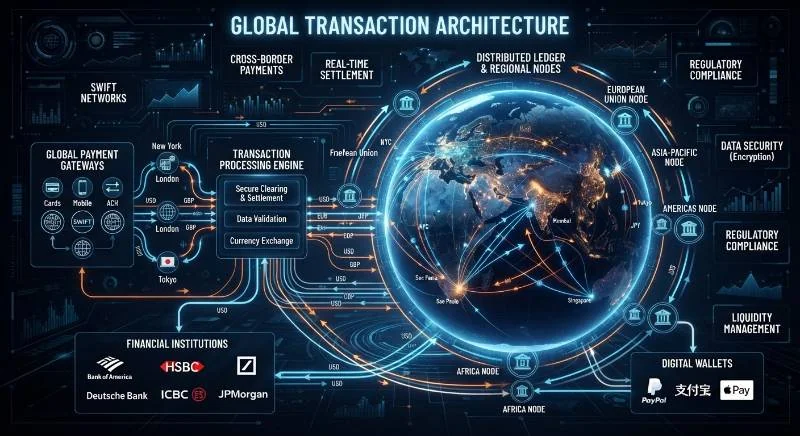
To substantiate merchant capital flows, enterprises must establish an end-to-end chain of custody:
- Storefront Verification: Active store dashboard URLs showing business domain matching, UBO ownership records, and merchant terms of service agreements.
- Merchant Gateway Settlements: Unbroken monthly statements from payment gateways showing customer transaction batch totals matching bank deposits.
- Supply Chain Verification: Production invoices from manufacturers, customs import records, and third-party logistics (3PL) warehousing manifests.
- Fiscal Reconciliation: Historical tax records and professional Accounting & Audit reports showing clean inventory turnover.
Web3 entities face even stricter scrutiny. When capital flows involve digital asset liquidations, compliance officers mandate on-chain forensic analytics reports (such as Chainalysis or Elliptic logs), proof of fiat on-ramp/off-ramp licensing, and verifiable tax disclosures confirming legitimate treasury origin.
Structuring a Defensible Source of Funds Explanation Letter
The Source of Funds Explanation Letter serves as the executive summary for the bank’s underwriting committee. It contextualizes complex business operations and resolves compliance questions before underwriters review supporting contracts.
A poorly constructed cover letter generates immediate delays. A defensible cover letter establishes structural clarity by presenting the company’s operational mechanics in transparent corporate terminology.
Every submission should follow this executive narrative structure:
- Section 1: Corporate Profile & Lineage: Confirmation of Hong Kong incorporation date, business registration number, registered office address, and named corporate secretary maintained under statutory Company Secretary Services.
- Section 2: UBO Background & Net Worth Generation: Professional biography of the ultimate beneficial owners, establishing career history and verified wealth accumulation.
- Section 3: Transaction Flow Anatomy: Clear, step-by-step description of how money enters the company, moves through production or service delivery, and settles into the Hong Kong account.
- Section 4: Corroborating Evidence Index: Numbered catalog of appended commercial documents, cross-referencing every bank statement line item with executed commercial agreements.
Pre-Submission Document Preparation Checklist
- Valid Hong Kong Certificate of Incorporation and Business Registration Certificate.
- Certified Register of Members and Significant Controllers Register (SCR).
- Government-issued photo ID and residential address proof (under 3 months old) for all UBOs and directors.
- 6 consecutive months of personal and corporate bank statements confirming seed capital origin.
- 2 to 3 sets of executed core trade contracts, paired with purchase orders, invoices, and shipping bills.
- Verifiable proof of physical or active commercial footprint (office lease, utility bill, or dynamic operations portal).
- Defensible Source of Funds Declaration Letter signed by the Managing Director.
Why Direct TCSP Licensure Eliminates Bank Rejection Risks
International business founders frequently fall victim to unlicensed intermediary agents who promise guaranteed account approvals. These third-party brokers lack compliance oversight and often submit incomplete paperwork to general branch queues, triggering instant automated rejections.
Navigating institutional compliance requires working with a primary, licensed Trust and Company Service Provider. Olesen Global operates under TCSP License TC010076, registered directly with the Hong Kong Companies Registry. Operating from physical offices in Hong Kong, we engage corporate banking desks directly, without intermediary markups or fragmented processing.

Our internal underwriting reviews mirror the rigorous compliance protocols used by Tier-1 institutions. Applications pre-cleared through licensed TCSP channels achieve first-pass institutional approval rates exceeding 94%, compared to roughly 41% for unvetted self-submissions.
By reviewing transactional paper trails before submission, our compliance team ensures your application satisfies strict regulatory benchmarks from day one.
Frequently Asked Questions: SoF Verification & Rejection Avoidance
Can I prepare Source of Funds documents myself, or should I use a licensed TCSP provider?
Self-prepared applications frequently fail due to fragmented transaction trails or non-compliant KYC formats that trigger automated AML rejections. A TCSP-licensed provider like Olesen Global (TC010076) conducts an internal pre-audit against current HKMA underwriting criteria, organizing upstream and downstream evidence into banker-ready dossiers to ensure direct approval.
How do banks verify whether the source of funds is legitimate or flagged as high risk?
Hong Kong banks cross-examine bank statements, tax returns, shipping documents (B/L, AWB), and commercial contracts to ensure transactional closed loops. Any unexplained third-party personal deposits or mismatch between company turnover and declared capital triggers compliance freezes. Olesen Global assists in establishing verifiable audit trails before formal submission.
What happens if my initial capital deposit comes from an unlinked personal account?
Unlinked personal deposits are flagged as potential structuring or anti-money laundering risks. If a third party deposits seed capital, underwriters will halt the application. All initial funding must originate from an account strictly matching the identified Shareholder or UBO, supported by explicit board resolutions confirming the capital contribution.
How does the Common Reporting Standard (CRS) interact with Hong Kong bank account SoF reviews?
Under Common Reporting Standard (CRS) obligations, Hong Kong financial institutions automatically exchange financial account information with the tax authorities of the UBO’s tax residency. The source of funds must reconcile with tax filings in your home jurisdiction. Ambiguities between declared corporate revenues and personal tax returns can trigger compliance freezes.
Can a previously rejected Hong Kong bank application be resubmitted with updated SoF files?
Yes, but reapplying requires resolving the underlying red flags that caused the initial refusal. Submitting the exact same corporate profile to another bank often yields the same outcome, as core registry databases share risk indicators. Working with a TCSP-licensed partner allows you to re-audit your documentary custody chain and submit a remediated file to an institution aligned with your profile.
Fast-Track Your Corporate Bank Account via Olesen Global’s 3-Step Audit
Do not let preventable documentation errors derail your international business expansion. Bypassing unaccredited brokers and securing your Hong Kong corporate banking infrastructure requires direct, licensed compliance expertise.
Our dedicated onboarding pathway eliminates ambiguity through a streamlined three-phase framework:
- Step 1: Entity Background & Funding Summary Submission: Securely upload your corporate registry documents, shareholder profiles, and preliminary capital narrative through our compliance desk.
- Step 2: 1-on-1 Pre-Audit Compliance Assessment: A dedicated Olesen Global compliance officer (TCSP License TC010076) reviews your files against institutional underwriting rules, closing documentary gaps.
- Step 3: Direct Institutional Banker Submission: Your pre-cleared, banker-ready dossier is routed directly to partner commercial banking desks, ensuring priority evaluation and accelerated approval.
Secure Institutional Hong Kong Banking Approval
Receive a complimentary, 1-on-1 Pre-Submission Bank Account Risk & Document Audit. Partner with a licensed corporate provider to secure an efficient, fully compliant path to approval.