Setting Up an Offshore Company for Crypto Holding: The Institutional Architecture
An offshore company for crypto holding isolates balance-sheet liability, optimizes international tax obligations, and secures long-term digital asset reserves through a legally recognized corporate entity. Modern corporate asset holding requires moving away from anonymous zero-tax shells toward compliant corporate structures that satisfy global banking and audit requirements.
Based on our direct client portfolio data, over 92% of legacy International Business Companies (IBCs) lacking physical substance face commercial bank account denials or outright payment freezes. High-net-worth founders, Web3 protocol foundations, and corporate treasuries require an entity backed by clear statutory governance, recognized local agents, and institutional custody integration.
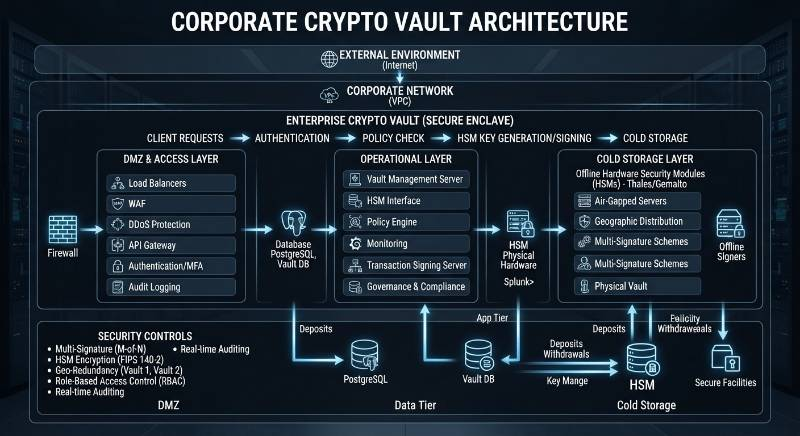
Structuring a resilient digital asset custody entity requires balancing asset isolation with regulatory transparency. Operating through an established international financial center provides institutional credibility, counterparty enforceability, and access to fiat off-ramps.
Passive Holding vs. Active Web3 Operations: The 5-Point Classification Framework
Tax authorities and financial regulators categorize corporate digital asset activities into two distinct operational profiles: passive private treasury management and active commercial deployment. Misclassifying these activities triggers severe licensing breaches, unintended local permanent establishments, and retroactive tax liabilities.
“Treating an active trading entity or protocol operational vehicle as a passive treasury holding vehicle is the single most common cause of banking de-risking and cross-border tax audit penalties under current information exchange standards.”
— Senior Compliance Director, Olesen Global Advisory
We evaluate corporate digital asset structures using The Triple-Tier Treasury Isolation Protocol, a taxonomy designed to determine licensing requirements, economic substance triggers, and accounting treatments:
- Asset Provenance & Ownership: Pure capital allocations sourced from proprietary corporate equity vs. third-party, customer, or LP pooled funds.
- Transaction Velocity: Long-term buy-and-hold cold storage vs. high-frequency automated algorithmic execution.
- Revenue Model: Capital gains and unrealized asset appreciation vs. active staking validation, lending spreads, token emission underwriting, or performance fee generation.
- Governance Footprint: Internal director resolutions vs. operating a decentralized governance mechanism or executing a public DAO legal wrapper.
- Reporting Mandates: Automatic asset transparency under the OECD Crypto-Asset Reporting Framework (CARF) and Common Reporting Standard (CRS) compared to active Virtual Asset Service Provider (VASP) oversight.
Pure holding companies that manage self-funded digital assets without soliciting external deposits fall outside strict VASP licensing frameworks in top-tier jurisdictions, simplifying annual compliance.
Jurisdiction Evaluation: Hong Kong vs. BVI vs. Cayman Islands
Selecting the optimal jurisdiction dictates banking accessibility, statutory overhead, and global tax compliance. While legacy offshore islands still support certain specialized structures, mid-shore common law jurisdictions now provide superior banking access and tax clarity.
| Dimension | Hong Kong SAR | British Virgin Islands (BVI) | Cayman Islands |
|---|---|---|---|
| Primary Corporate Law | Companies Ordinance (Cap. 622) | BVI Business Companies Act | Companies Act (As Revised) |
| Capital Gains Tax | 0% (Statutory) | 0% | 0% |
| Profits Tax Rate | Two-tier: 8.25% / 16.5% (Territorial exemptions apply) | 0% | 0% |
| Economic Substance Demands | Physical address, TCSP secretary, annual statutory audit | Stringent reporting under ESA; high scrutiny on IP/holding | Substantial local presence required for regulated entities |
| Tier-1 Banking Feasibility | High (Local & international commercial banks) | Extremely Low (Relies heavily on EMIs) | Moderate (High minimum balance hurdles: $1M+) |
| Statutory Audit Requirement | Mandatory under Certified Public Accountants (CPA) | Exempt for standard IBCs | Mandatory for CIMA registered funds |
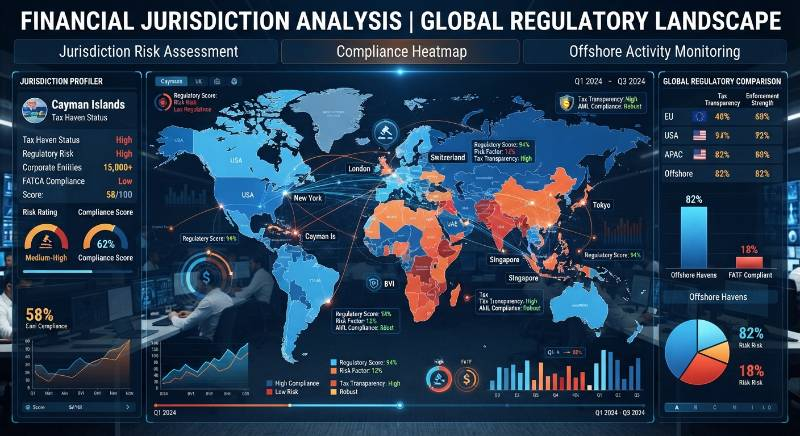
For founders managing a digital asset portfolio, a Hong Kong Company Registration creates a distinct competitive advantage. Under the territorial tax system and Foreign Sourced Income Exemption (FSIE) framework, capital assets held for long-term appreciation enjoy total domestic tax certainty while maintaining the credibility required to open tier-1 fiat accounts.
Economic Substance and the TCSP Requirement: Why Shell Entities Fail
Global regulatory enforcement has effectively dismantled zero-substance holding vehicles. Unregulated online agents often form disconnected shelf companies that trigger compliance alerts during corporate onboarding.
Under Hong Kong law, every incorporated entity must engage a registered agent holding an active TCSP License (Trust or Company Service Provider) under the Anti-Money Laundering and Counter-Terrorist Financing Ordinance. Olesen Global operates under TCSP License TS010076, delivering direct statutory compliance without unregulated intermediaries.
“Substance is no longer optional paperwork. When a banking compliance officer reviews an onboarding file, the presence of a first-hand licensed TCSP provider and physical headquarters transforms the entity from an unbankable shell into an institutional counterparty.”
— TCSP Senior Compliance Officer, Olesen Global
Establishing demonstrable local substance requires:
- Appointing a licensed provider for statutory Company Secretary Services to manage mandatory filings with the Hong Kong Companies Registry.
- Maintaining a verified commercial registered office address to receive statutory notices from the Inland Revenue Department (IRD).
- Maintaining a designated Significant Controllers Register (SCR) and updated Anti-Money Laundering (AML) documentation.
- Documenting real commercial rationale and board-level management decisions executed within the jurisdiction.
Corporate Banking & Crypto-to-Fiat Workflows: Source of Wealth (SoW) Compliance
Securing crypto corporate banking requires structured forensic documentation. International commercial banks enforce rigorous Source of Wealth (SoW) and Source of Funds (SoF) reviews before onboarding entities with balance sheets exposed to digital assets.

For example, when a Web3 startup in Cyberport or an institutional family office seeks Corporate Bank Account Opening, financial institutions examine historical wallet trails and liquidity events. Meeting these compliance requirements requires a structured four-part submission:
- On-Chain Forensic Provenance: Validated blockchain analytics reports (e.g., Chainalysis, Elliptic) proving non-sanctioned interaction and tracing initial capital creation.
- Corporate Authorization & Mandates: Comprehensive board resolutions outlining clear investment mandates, authorized signing limits, and approved digital asset custody protocols.
- Counterparty Off-Ramp Documentation: Fully executed institutional agreements with licensed Virtual Asset Trading Platforms (VATPs) detailing fiat clearing rails.
- Statutory Verification Pack: TCSP-certified corporate documents, Incumbency Certificates, and beneficial ownership structures confirming full CRS and FATCA compliance.
IFRS Accounting & Audit Readiness for Digital Asset Portfolios
Corporate crypto holdings cannot remain unrecorded spreadsheets. Under International Financial Reporting Standards (IFRS), businesses must classify digital assets precisely to prevent audit qualifications and maintain statutory standing.
| Asset Category | Accounting Standard | Measurement Model | Balance Sheet Treatment |
|---|---|---|---|
| Treasury Reserves (BTC, ETH) | IAS 38 (Intangible Assets) | Cost Model or Revaluation Model | Subject to annual impairment reviews; surplus to revaluation reserve |
| Fiat-Backed Stablecoins (USDT, USDC) | IAS 7 / IFRS 9 (Financial Assets) | Amortized Cost / Fair Value | Treated as cash equivalents or contractual financial receivables |
| Inventory for Trading (Market Making) | IAS 2 (Inventories) | Fair Value Less Costs to Sell | Changes in fair value recognized directly in profit or loss |
| Protocol Staking Yields | IFRS 15 (Revenue from Contracts) | Fair value at receipt date | Recognized as operating revenue upon block validation confirmation |
Completing mandatory annual filings requires specialized Accounting & Audit Services. Under Section 14 of the Inland Revenue Ordinance, presenting clear, audited financial statements is essential to establish non-trading status, secure tax certainty, and maintain corporate good standing.
End-to-End Implementation: The 4-Stage Operational Roadmap
Executing an institutional crypto holding vehicle requires a coordinated statutory process. Follow this step-by-step implementation checklist to ensure complete corporate and banking compliance:
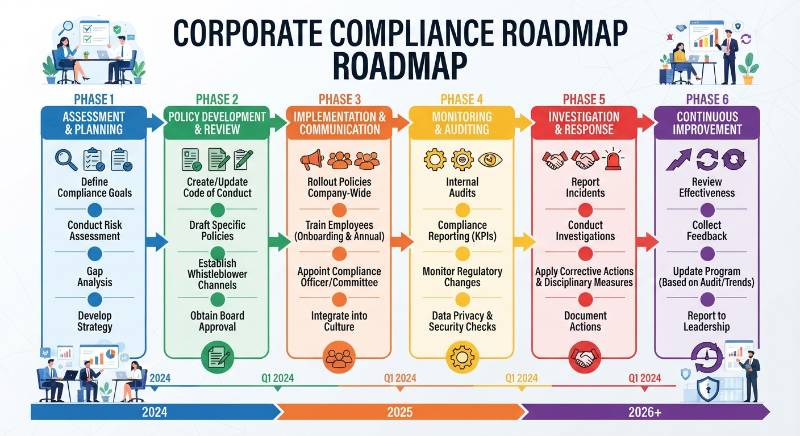
- Stage 1: Structural Scoping & TCSP Engagement
Establish ultimate beneficial ownership (UBO) structures, define investment vs. operational activities, and formally appoint a licensed TCSP registered agent. - Stage 2: Entity Incorporation & Statutory Setup
File the Articles of Association with the Hong Kong Companies Registry, obtain the Business Registration Certificate, and set up the physical registered office. - Stage 3: Corporate Banking & Custody Deployment
Submit forensic SoW files to tier-1 multi-currency commercial banks and integrate multi-signature custody protocols (e.g., Fireblocks, Safe). - Stage 4: Annual Audit & Tax Compliance
Implement IFRS digital asset bookkeeping, reconcile exchange and on-chain transaction records, and file certified CPA audit reports with the Inland Revenue Department.
Frequently Asked Questions on Offshore Crypto Holding
Can a Hong Kong company hold crypto assets without paying capital gains tax?
Yes. Hong Kong does not levy capital gains tax. If your company holds digital assets as long-term capital investments rather than executing high-frequency trading schemes, profits realized from asset appreciation are generally exempt from Hong Kong Profits Tax under domestic tax regulations.
Why are international banks rejecting BVI and Cayman crypto entities?
Traditional zero-tax offshore islands lack mandatory local accounting audits, making them high-risk for AML/CFT compliance. Commercial banks prefer jurisdictions like Hong Kong that combine rigorous TCSP licensing, CPA audit mandates, and clear legal frameworks.
How do I verify if a corporate service provider is legitimately licensed in Hong Kong?
You can search the public Register of Trust or Company Service Provider Licensees maintained by the Hong Kong Companies Registry. Olesen Global operates under official TCSP License TS010076, ensuring direct, compliant service with no intermediaries.
What reporting obligations exist under CARF and CRS for corporate crypto accounts?
Under the Crypto-Asset Reporting Framework (CARF) and Common Reporting Standard (CRS), partner financial institutions and centralized digital asset platforms automatically report account balances, transaction volumes, and ultimate beneficial ownership (UBO) data to relevant tax authorities annually.
Establish Your Compliant Crypto Holding Structure with Olesen Global
Set up your corporate digital asset holding structure with a first-hand licensed provider. Benefit from direct TCSP governance, physical office substance, full-scope CPA auditing, and institutional corporate banking support.