Understanding Hong Kong Online Trademark Registration: The 5S Strategic Framework
Registering a trademark online in Hong Kong requires submitting an electronic Form T2 via the Intellectual Property Department (IPD) e-filing portal, supported by a verified local Address for Service. Governed by the Trade Marks Ordinance (Cap. 559), the statutory procedure grants exclusive proprietary rights across 45 Nice classes within 6 to 8 months for uncontested applications.
Many international founders mistakenly assume that completing a Hong Kong Company Registration or obtaining a Business Registration (BR) certificate from the Inland Revenue Department protects their brand. In reality, company name incorporation grants no statutory brand monopoly, leaving businesses vulnerable to passing-off actions and trademark squatting.
Securing IP assets requires an institutional approach. At Olesen Global, our corporate compliance team evaluates trademark protection through our proprietary 5S Trademark Precision Framework:
- Search: Rigorous pre-clearing of phonetic, visual, and semantic conflicts across the Hong Kong Intellectual Property Department IPD register.
- Select: Drafting narrow, defensible specifications under the Nice Classification system to balance commercial scope and examination success.
- Support: Validating procedural prerequisites, including statutory local representation and certified documentation.
- Substantiate: Pre-empting absolute and relative grounds for refusal with historical market usage data.
- Solve: Securing a clean grant of registration and integrating IP assets into broader corporate governance.
Prerequisites and Statutory Rules Before Filing Online with IPD
The Trade Marks Registry enforces strict legal thresholds for electronic applications. The most critical requirement for international enterprises is statutory representation within the jurisdiction.
Under Rule 105 of the Trade Marks Rules (Cap. 559A), every applicant must provide a physical Hong Kong address for service requirement. The IPD will not deliver official correspondence, examination reports, or deficiency notices to overseas physical addresses or domestic post office boxes.
“Using an unregulated third-party maildrop as an address for service creates significant regulatory vulnerabilities. When statutory notices go unanswered due to administrative delays, the IPD abandons applications without right of appeal.”
— Senior Compliance Specialist, Olesen Global (TCSP License No. TC010076)
Foreign applicants without a physical office in the Special Administrative Region (SAR) must appoint an authorized agent. Coordinating your filing alongside your Company Secretary Services ensures that official notices from both the Companies Registry and the IPD are tracked through a single, accountable corporate channel.
Pre-Filing Verification Checklist
Ensure you satisfy the following operational prerequisites before logging into the IPD portal:
- Legal entity identification (Business Registration Certificate or Certificate of Incorporation).
- High-resolution graphical representation of the mark (plain text, stylized logo, or 3D device).
- Verified Hong Kong physical Address for Service provided by a licensed TCSP.
- Exhaustive list of target goods and services mapped to current Nice Classification editions.
- Priority claim documentation if filing within 6 months of a convention country application.
Step-by-Step Walkthrough: Navigating the IPD E-Filing Portal
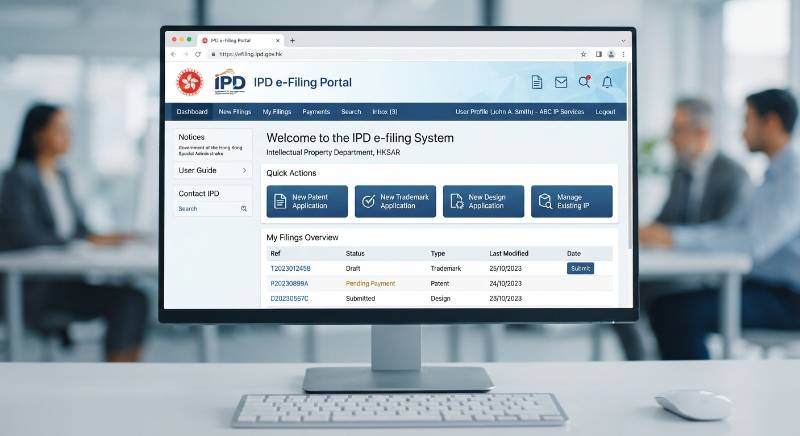
The Trade Marks Registry e-filing system (accessible via efiling.ipd.gov.hk) operates 24/7. Submitting online shortens initial acknowledgment timelines from three weeks (manual paper filing) to immediate automated issuance.
Executing Electronic Form T2 Submission
Executing an online trademark submission requires structured data entry across five core stages:
- Portal Authentication: Log into the IPD Electronic Submission System. Registered agents access the system using a recognized digital certificate (such as Hongkong Post e-Cert) or designated organizational user accounts.
- Applicant Profile Data: Input legal entity names in both English and Chinese (if applicable). Precise corporate naming must match official statutory registers.
- Mark Specification Upload: Upload graphical representations. Images must be high-resolution JPEG, PNG, or TIFF files. For series marks (maximum 4 iterations), variations must differ only in non-distinctive elements, such as color or font weight.
- Classification Selection: Select the relevant classes of Nice Classification goods and services. Input precise descriptions from the pre-approved IPD database to reduce classification queries.
- Statutory Fee Payment: Settle official government filing fees through direct debit, PPS, or international credit card gateways. The system issues an instant electronic filing receipt containing your official Application Number.
Strategic Classification: Selecting Nice Classes for Tech, Web3, and Cross-Border E-Commerce
Hong Kong applies the International Classification of Goods and Services under the Nice Agreement. Accurate classification protects your business footprint without incurring unnecessary statutory class fees or inviting examiner objections.
For high-growth ventures, such as a Web3 protocol in Cyberport or a cross-border e-commerce brand operating across Southeast Asia, drafting overly broad specifications triggers immediate objections under Section 11 of the Ordinance.
| Industry Vertical | Primary Class | Strategic Specification Sample | Cross-Class Risk Factor |
|---|---|---|---|
| Web3 & FinTech | Class 9 & 36 | Downloadable cryptographic keys; virtual asset custody services; digital wallet software. | Class 36 banking restrictions require clear non-banking disclaimers. |
| Cross-Border E-Commerce | Class 35 | Provision of an online marketplace for buyers and sellers; retail services for consumer electronics. | Vague terms like “commercial services” trigger deficiency notices. |
| SaaS & Enterprise Tech | Class 42 | Software as a service (SaaS) featuring cloud-based supply chain management; data encryption hosting. | Failing to distinguish downloadable (Cl. 9) from hosted (Cl. 42) software. |
Specialized guidance through Hong Kong Trademark Registration Services ensures your specifications pass automated Registry clearance without procedural delays.
Official Fee Structure and Realistic Timelines: Data Benchmarks
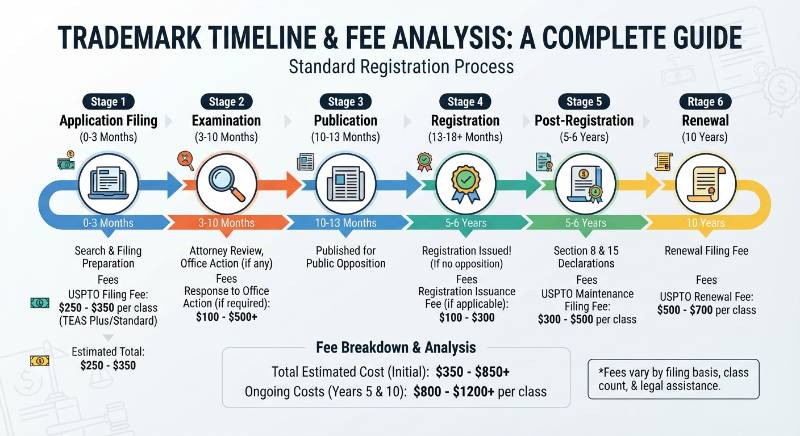
The IPD charges non-refundable statutory fees for processing electronic Form T2 filings. Financial and legal directors must evaluate these costs alongside realistic examination lead times.
| Procedural Action | Statutory IPD Fee (HKD) | Expected Milestone Duration | Statutory Basis |
|---|---|---|---|
| Form T2 (1st Class) | HK$2,000 | Day 1 (Instant Receipt) | Cap. 559, Schedule 1 |
| Form T2 (Additional Class) | HK$1,000 per class | Concurrent | Cap. 559, Schedule 1 |
| Substantive Examination | Included | Months 2 to 3 | Section 42 |
| Gazette Publication | Included | 3-Month Opposition Period | Section 43 |
| Certificate Issuance | Included | Months 6 to 8 (Uncontested) | Section 47 |
According to annual data from the Registry, approximately 35,000 trademark applications are processed each year. Uncontested applications clear the Registry in 6 to 8 months. Applications facing substantive objections or third-party oppositions extend to 12 to 18 months.
Properly capitalizing intellectual property development costs also supports ongoing balance sheet valuation for annual Accounting and Audit Compliance.
Overcoming IPD Objections: Section 11 and Section 12 Defense Playbooks
If an application fails to satisfy statutory requirements, the Trade Marks Registry issues a formal opinion outlining its grounds for refusal. Applicants have a strict six-month window to file a formal response.
“Responding to an IPD examiner’s objection requires legal precision rather than emotional argument. Successfully navigating relative grounds requires targeted specification amendments or verifiable market distinctiveness evidence.”
— IP Litigation Consultant, Hong Kong Legal Practice
Defending Against Section 11 Objections (Absolute Grounds)
Under Section 11 of the Trade Marks Ordinance (Cap. 559), marks that are descriptive, laudatory, or lack distinctiveness are refused registration. Effective counter-strategies include:
- Acquired Distinctiveness: Submitting documentary evidence demonstrating that the mark has acquired secondary meaning in Hong Kong through prior commercial turnover, local advertising spend, and media coverage.
- Form T13 Disclaimers: Adding a formal disclaimer confirming that registration confers no exclusive rights to generic components within a composite device mark.
Defending Against Section 12 Objections (Relative Grounds)
Section 12 objections arise when an examiner cites an earlier registered trademark or pending application due to phonetic, visual, or conceptual similarities across identical or related goods. Proven resolution paths include:
- Specification Carve-Outs: Restricting your list of goods/services to eliminate commercial overlap with cited prior marks.
- Letter of Consent: Negotiating a formal coexistence agreement and Letter of Consent from the earlier proprietor.
- Honest Concurrent Use: Invoking Section 13 by proving continuous, honest commercial coexistence within the Hong Kong market.
Cross-Border Synergy: Hong Kong (IPD) vs. Mainland China (CNIPA) Protection
Under the “One Country, Two Systems” framework, Hong Kong and Mainland China operate completely independent legal and intellectual property regimes. A trademark granted by the Hong Kong IPD confers zero protection across the border in Shenzhen, Shanghai, or Beijing.
Enterprises expanding throughout the Greater Bay Area (GBA) must file dual applications: one through the Hong Kong IPD e-filing system and another through the China National Intellectual Property Administration (CNIPA).
Establishing clear IP ownership in Hong Kong serves as a strategic launchpad for opening operational branches, securing regional distribution contracts, and completing your corporate Corporate Bank Account Opening with institutional tier-one banks.
Post-Registration Asset Governance: Renewals, Licensing, and Customs Enforcement
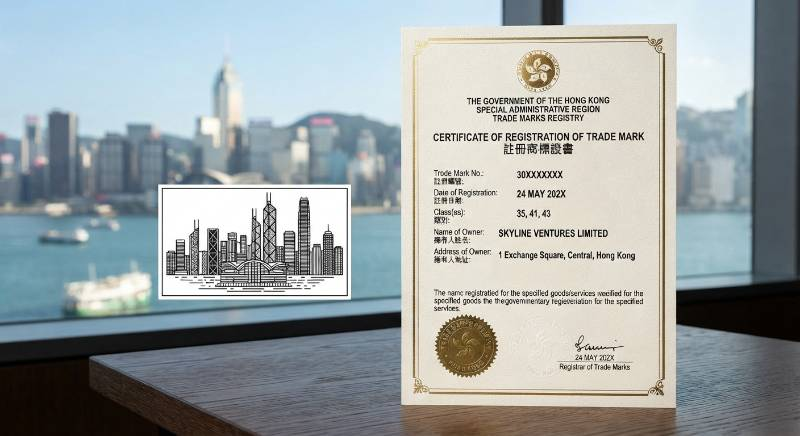
Securing your Certificate of Trade Mark Registration HK is an important milestone, but maintaining that protection requires ongoing administrative compliance.
Statutory Renewals and Non-Use Risks
- 10-Year Renewal Cycle: Trademarks remain valid for 10 years from the initial filing date. Renewals are submitted online via Form T8 within the 6-month window prior to expiration.
- 3-Year Non-Use Vulnerability: Under Section 52(2)(a) of Cap. 559, a registered mark that is not put to genuine commercial use in Hong Kong for an uninterrupted period of three years becomes vulnerable to revocation by competitors.
- Licensing and Assignment Recordal: All commercial IP licenses and ownership assignments must be recorded with the Trade Marks Registry via Form T5 within six months of execution to ensure legal enforceability against third parties.
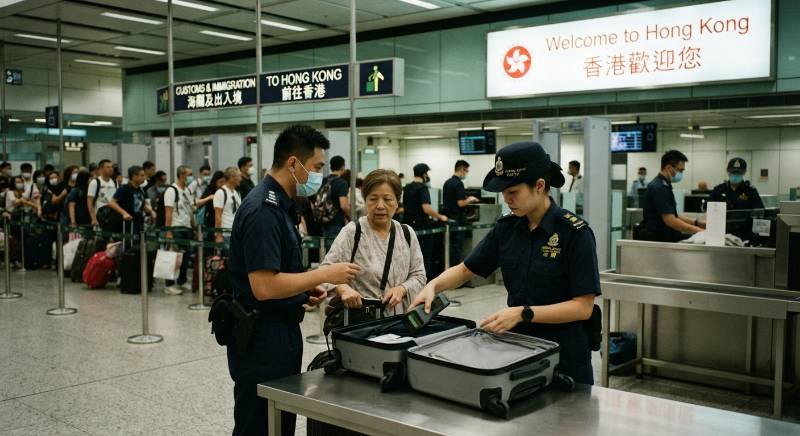
- Border Enforcement Recordation: Brand owners can record registered trademarks with the Hong Kong Customs and Excise Department, empowering customs agents to seize counterfeit cargo entering or transiting through Hong Kong ports.
Frequently Asked Questions (FAQs)
Can a foreign company register a trademark in Hong Kong online without a local agent?
While foreign entities can access the public portal, Rule 105 of the Trade Marks Rules requires a physical Hong Kong Address for Service. Non-resident applicants without local commercial premises must appoint an authorized Hong Kong representative to receive statutory notices.
What is the difference between a Form T1 preliminary search and a free online search?
A free search on the IPD online database identifies direct identical matches. Filing Form T1 requests a formal preliminary opinion from an official Registry examiner regarding potential absolute and relative objections before incurring full filing costs.
How long is a trademark valid in Hong Kong?
A registered trademark in Hong Kong is valid for 10 years from the date of application. It can be renewed indefinitely for successive 10-year periods by submitting Form T8 and paying the statutory renewal fees.
Does Hong Kong follow a first-to-file or first-to-use trademark system?
Hong Kong operates primarily on a first-to-file statutory system. While common law rights exist through the tort of passing off, securing registered status under Cap. 559 provides nationwide exclusive rights without the heavy burden of proving market reputation.
Can I register a series of trademarks in a single Hong Kong online application?
Yes. The IPD allows applicants to file a series of up to four marks under a single application fee. All marks in the series must resemble each other closely in material particulars, differing only in non-distinctive elements such as color or font style.
Secure Direct Trademark Protection with a Licensed Hong Kong Partner
Protecting your intellectual property in Hong Kong requires direct access to experienced corporate specialists who understand statutory filing rules, classification strategy, and objection resolution.
As a first-hand Trust and Company Service Provider (TCSP License No. TC010076) headquartered in Hong Kong, Olesen Global eliminates intermediaries. We deliver end-to-end brand protection, statutory Address for Service compliance, and ongoing IP asset management.
Protect Your Brand in Hong Kong Today
Ensure your trademarks are filed correctly with zero intermediary markups. Connect directly with our licensed Hong Kong compliance team for a preliminary clearance search and filing roadmap.