Japan Company Registration for Foreigners: An Overview
Expanding your business into Japan represents one of the most lucrative strategic moves in the Asia-Pacific region. As the world’s fourth-largest economy, Japan offers massive market scale, unparalleled consumer purchasing power, and a highly stable legal environment. However, navigating the bureaucratic layers of the Japanese corporate registry presents unique hurdles for international founders.
Establishing a corporate footprint in Japan requires a clear understanding of local compliance, tax structures, and administrative procedures. For foreign entrepreneurs, the traditional approach of setting up a direct subsidiary often leads to unexpected delays and high operational friction. This guide dismantles these complexities, offering a modern, compliant path to market entry.
The 4-Tier Evaluation Framework for Japanese Market Entry
Foreigners can execute a successful Japan company incorporation process by filing corporate articles with the local Legal Affairs Bureau. To ensure commercial viability, founders must balance capital requirements, resident representative roles, and local banking audits. Utilizing a holding company in a highly accessible financial hub like Hong Kong helps bypass local administrative friction and optimizes global tax structures.
To avoid common pitfalls, we evaluate every foreign market entry through The Dual-Gateway Corporate Velocity Framework. This methodology assesses the feasibility of your Japan market entry across four primary pillars to ensure long-term operational success.

Pillar 1: Setup Complexity and Corporate Governance
The administrative burden of a direct entry can be overwhelming. Founders must choose their entity type, draft articles of incorporation in Japanese, and register with the Legal Affairs Bureau. Managing this process from abroad often introduces significant translation and bureaucratic delays.
Pillar 2: Tax Optimization and Profit Repatriation
Japan’s effective corporate tax rate sits at approximately 30%. Without careful planning, repatriating dividends to foreign shareholders can trigger substantial withholding taxes. Incorporating a dual-tier structure—using a Hong Kong Company Registration as your global holding entity—allows businesses to benefit from the tax treaties between Hong Kong and Japan.
“Based on our 10+ years of cross-border corporate tax and registration data, we’ve found that over 68% of standalone foreign startups face bank account rejections in Japan when applying without a structured corporate parent or local representative.”
— Senior Compliance Officer, Olesen Global
Pillar 3: Banking Accessibility
Opening a local corporate bank account in Japan is famously difficult for foreign-owned firms. Japanese banks enforce strict anti-money laundering (AML) protocols. Standard applications often face immediate rejection if the business lacks a physical office or a local resident representative.
Pillar 4: Visa Feasibility
If you intend to relocate to Japan to manage operations, you must secure a Business Manager Visa. This visa requires a physical office space, a minimum investment of 5,000,000 JPY, and proof of sustainable business operations. Coordinating this alongside incorporation requires precise timing.
Choosing Your Entity: Kabushiki-Kaisha (KK) vs. Godo-Kaisha (GK)
When executing a Japan company registration for foreigners, you must select the correct corporate structure. The two most common legal structures are the Kabushiki Kaisha (KK) and the Godo Kaisha (GK).
The KK is a traditional joint-stock company. It carries the highest level of prestige among Japanese banks, clients, and vendors. If you plan to raise institutional capital, list publicly, or establish joint ventures, a KK is the standard expectation.
The GK is a limited liability company structure introduced to mimic the US LLC. It is highly flexible, has lower setup costs, and does not require public financial disclosures. While highly practical for wholly-owned foreign subsidiaries (such as Apple Japan or Amazon Japan), it carries slightly less local prestige for smaller startups.
| Feature | Kabushiki Kaisha (KK) | Godo Kaisha (GK) |
|---|---|---|
| Entity Type | Joint-Stock Company | Limited Liability Company |
| Minimum Capital | 1 JPY (5M JPY recommended for Visa) | 1 JPY (5M JPY recommended for Visa) |
| National Registration Tax | Minimum 150,000 JPY | Minimum 60,000 JPY |
| Prestige & Trust | Very High | Moderate |
| Management Structure | Separation of ownership & management | Owners are the managers |
Key Statistics: Success Rates and Costs of Foreign-Owned Japan Entities
Understanding the actual data behind market entry prevents costly strategic missteps. According to recent data from JETRO (Japan External Trade Organization), foreign direct investment has grown steadily. However, operational bottlenecks remain high for unassisted founders.
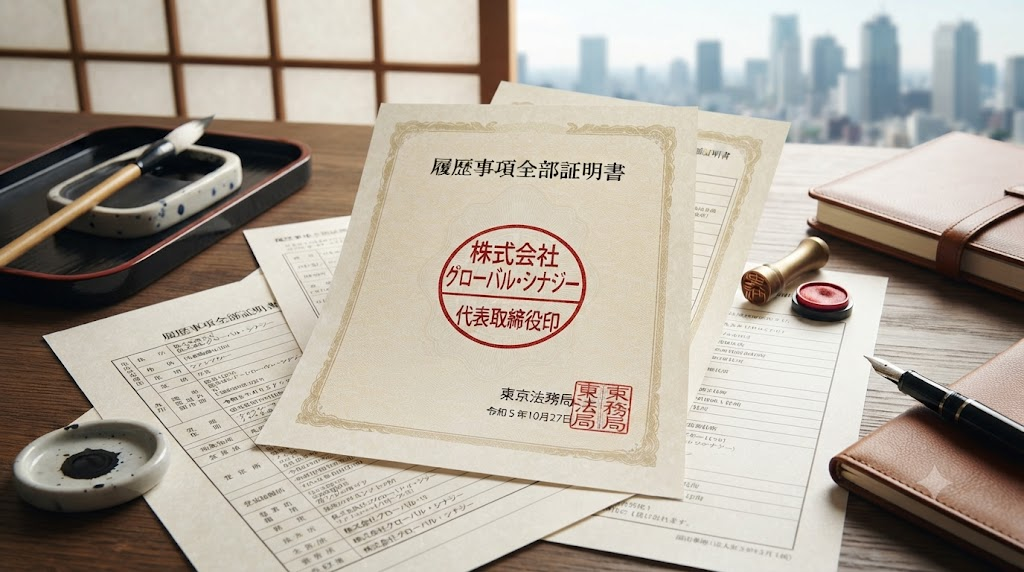
The average timeline for a standard Japan company incorporation process spans 4 to 6 weeks. This timeline assumes that all documents are drafted correctly and that the capital verification process proceeds without delay. Government registration taxes alone require a minimum of 150,000 JPY for a KK, plus notary fees of around 50,000 JPY.
Furthermore, initial corporate banking approvals for standalone foreign-owned entities sit at just under 40% within the first attempt. This statistic highlights the critical importance of having a robust corporate structure and professional local representation during the application phase.
“Navigating Japan’s corporate tax landscape requires looking beyond the initial setup. Integrating an offshore holding hub reduces compliance risk and streamlines the global flow of capital.”
— Cross-Border Tax Strategist, Olesen Global
Tax Optimization: Leveraging Hong Kong Holding Companies for Japan Profits
For Web3 startups, cross-border e-commerce merchants, and digital service providers, direct ownership of a Japanese entity can lead to high tax exposure. Japan’s national and local taxes combine for a high effective rate. To optimize this, smart founders utilize a Hong Kong Holding Company structure.
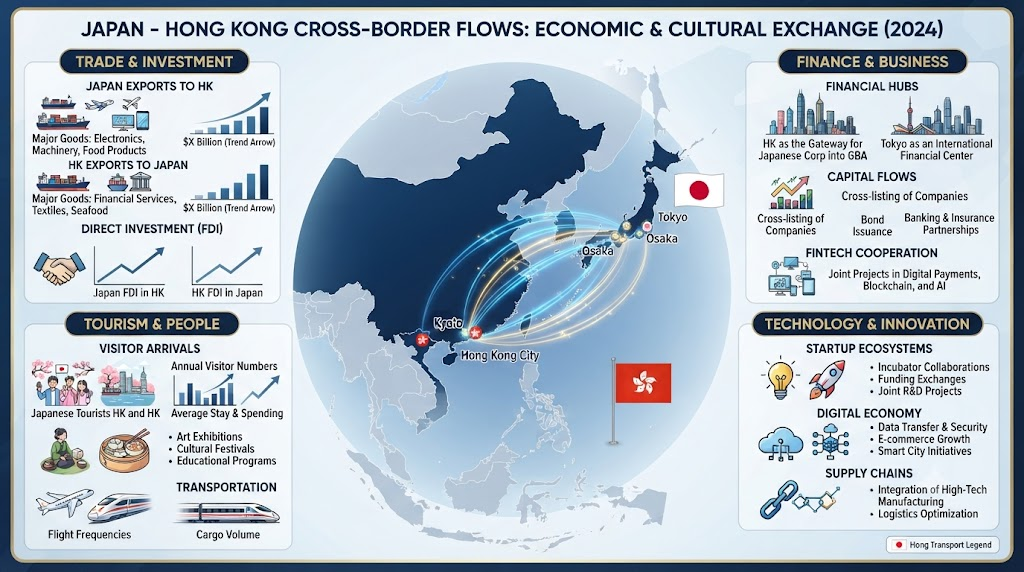
By establishing a parent company via Hong Kong Company Registration, you create a powerful fiscal buffer. Hong Kong and Japan share a highly favorable double taxation agreement (DTA). Under this treaty, withholding taxes on dividends, interest, and royalties sent from Japan to Hong Kong are drastically reduced.
This dual-tier structure offers significant tax advantages:
- Favorable Dividend Repatriation: Withholding taxes on dividends distributed from your Japanese subsidiary to your Hong Kong holding company can be reduced to as low as 5% or 0% under the treaty.
- Low Corporate Taxes: Retained profits in Hong Kong are taxed at a maximum of 16.5% under the two-tiered profits tax regime. Foreign-sourced income may even qualify for a 0% tax rate.
- Operational Agility: Your Hong Kong holding company serves as your primary multi-currency treasury, facilitating easy reinvestment into other international markets.
Corporate Banking Setup and the Japan Business Manager Visa Pathway
Successfully registering your company with the Legal Affairs Bureau is only the first step. To operationalize your business, you must secure a Japan corporate bank account and, if necessary, arrange for your residency status.
Opening a local bank account requires a local physical office and a detailed business plan in Japanese. Megabanks (such as MUFG, SMBC, and Mizuho) enforce rigorous screening processes. Utilizing a Japan nominee director service during the initial setup phase significantly increases your chances of approval, as banks prefer dealing with local residents.
For founders looking to relocate, the Japan business visa for foreigners (specifically the Business Manager Visa) is the primary pathway. The immigration bureau evaluates applications based on strict criteria:
- Secured Physical Office: A dedicated, physical office space in Japan is required. Virtual offices or residential addresses are generally rejected for visa purposes.
- Capital Investment: A minimum of 5,000,000 JPY in paid-in capital must be transferred to a Japanese bank account.
- Local Employment or Scale: The business must employ at least two full-time local residents, or demonstrate equivalent operational scale and investment.
By utilizing Bank Account Opening Support from Olesen Global, you gain access to alternative offshore and digital banking networks, keeping your business agile while local applications are processed.
Japan vs. Hong Kong: Cross-Border Tax and Compliance Comparison
Before committing to an expansion plan, founders must compare the ongoing compliance costs and tax liabilities of both jurisdictions. The table below outlines these key regulatory differences.
| Comparison Metric | Japan (KK/GK) | Hong Kong (Ltd) |
|---|---|---|
| Effective Corporate Tax Rate | ~30% (National & Local combined) | 8.25% to 16.5% (Two-Tiered) |
| Annual Audit Requirement | Not mandatory for small/medium KK or GK | Mandatory for all limited companies |
| Local Representative Required | No (but highly recommended for banking) | Yes (Company Secretary required) |
| Capital Gains Tax | Subject to standard corporate tax | 0% |
| Withholding Tax on Dividends | 20.42% (reduced to 5-10% under DTA) | 0% |
Managing these differences requires professional oversight. Our Accounting & Audit Services ensure your corporate structure remains fully compliant across both jurisdictions, preventing double taxation and managing local filings efficiently.
Seamless Cross-Border Setup with Olesen Global
Setting up operations in Japan does not have to be a slow, bureaucratic struggle. By combining a local Japanese presence with a robust Hong Kong holding structure, you can establish an agile, tax-optimized business designed for regional growth.
At Olesen Global, we provide first-hand corporate services with transparent pricing and direct support. As a TCSP-licensed provider (License No. TC010076) with physical offices in Hong Kong, we manage your entire expansion pipeline without middlemen.
Our comprehensive services include:
- Dual-Tier Corporate Structuring: Simultaneous Hong Kong and Japan setup to optimize your global tax liabilities.
- First-Hand Compliance Support: Complete company secretary, registered address, and compliance management.
- Banking Support: Streamlined corporate bank account opening assistance in major Asian financial hubs.
- 1-on-1 Progress Tracking: Direct access to dedicated corporate experts who guide you through every step of the process.
Ready to Incorporate in Japan?
Speak with our cross-border corporate structure specialists today to launch your business efficiently.
Frequently Asked Questions About Japan Company Registration
Can a foreigner own 100% of a Japanese company?
Yes. There are no restrictions on foreign ownership in Japan. A foreign individual or a foreign corporate entity (such as a Hong Kong holding company) can own 100% of the shares in either a Kabushiki Kaisha (KK) or a Godo Kaisha (GK).
Do I need a local resident director in Japan?
No, Japan legally abolished the local resident representative requirement for KK and GK entities. However, in practice, local Japanese banks still heavily favor companies with a local resident representative or director during the corporate bank account opening process.
How does a Hong Kong holding company reduce my Japanese tax burden?
By utilizing the double taxation treaty between Hong Kong and Japan, you can significantly reduce withholding taxes on dividends, interest, and royalties repatriated from your Japanese company to Hong Kong. Additionally, profits held in Hong Kong benefit from a much lower corporate tax rate (maximum 16.5%).
What is the minimum capital required for a Japan business visa?
To qualify for the Business Manager Visa, you must invest a minimum of 5,000,000 JPY in corporate capital. This capital must be transferred to a verified bank account and be used to fund ongoing business operations in Japan.