Statutory Foundations: Deconstructing IRO Schedule 17G, 17I, and DIPN 58-60
Hong Kong transfer pricing rules require all associated enterprises to price cross-border and domestic transactions according to the arm’s length principle. Governed by the Inland Revenue Ordinance (Cap. 112), the Inland Revenue Department (IRD) holds statutory authority to recalculate corporate income, disallow inflated deductions, and levy severe administrative penalties if intercompany pricing generates a tax advantage in Hong Kong.
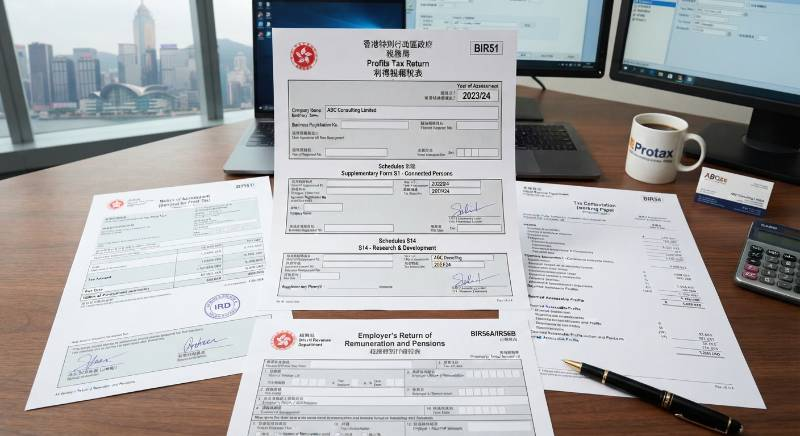
The core transfer pricing regime is codified under Schedule 17G and Schedule 17I of the IRO. Section 50AAF serves as the primary charging mechanism, allowing the assessor to benchmark actual pricing against uncontrolled market rates.
Administrative execution relies on three central Departmental Interpretation and Practice Notes published by the IRD:
- DIPN 58: Establishes transfer pricing documentation mandates, group Master File parameters, and Local File content requirements.
- DIPN 59: Focuses on intercompany transactions involving intangible assets, intellectual property licensing, and service fee allocations.
- DIPN 60: Regulates permanent establishments (PEs), attribution of profits, and cross-border financial transactions.
“Hong Kong’s transfer pricing regime bridges territorial taxation with OECD standards. The IRD scrutinizes not merely accounting entries, but the economic substance and real decision-making functions behind intercompany contracts.”
— Hong Kong Certified Tax Adviser (CTA), TCSP Review Board
This regime aligns directly with the international OECD Base Erosion and Profit Shifting (BEPS) framework. Consequently, businesses operating in the jurisdiction must ensure their internal pricing structures withstand international audit standards.
The 3-Tier Documentation Architecture: Master File, Local File, and CbC Reporting
Hong Kong incorporates a standardized 3-tier transfer pricing documentation architecture. Entities incorporated through Hong Kong Company Registration that engage in transactions with related parties must systematically assess their documentation liabilities annually.
The three tiers consist of:
- Master File: Provides a high-level strategic overview of the multinational enterprise (MNE) group’s global business operations, allocation of worldwide income, and overall transfer pricing policies.
- Local File: Details specific intercompany transactions of the local Hong Kong taxpayer, providing transactional economic analyses, comparability studies, and pricing methodology selection.
- Country-by-Country (CbC) Report: Mandated for large multinational groups to report global revenue allocation, taxes paid, and indicators of economic activity by tax jurisdiction.
The IRD exempts companies from preparing a Master File and Local File if they meet statutory business size criteria or if specific related-party transaction values fall below designated thresholds.
| Assessment Dimension | Statutory Exemption Limit (Must satisfy any 2 of 3) | Regulatory Reference |
|---|---|---|
| Annual Total Revenue | Not exceeding HKD 400 Million | IRO Schedule 17I, Part 2 |
| Total Balance Sheet Assets | Not exceeding HKD 300 Million | IRO Schedule 17I, Part 2 |
| Total Employee Headcount | Not exceeding 100 Employees | DIPN 58 Section B |
For CbC Reporting, the consolidated group revenue threshold is set at HKD 6.8 Billion (equivalent to the OECD benchmark of EUR 750 Million). If an ultimate parent entity is tax resident in Hong Kong and crosses this financial barrier, filing a formal CbC report is mandatory.
Threshold Assessment Matrix and Mandatory Deadlines
Even when an entity exceeds the enterprise-size exemptions, it does not need to prepare a Local File for specific transaction types that remain below statutory transaction thresholds.
| Transaction Category | Annual Exemption Limit (HKD) | Preparation & Retention Window |
|---|---|---|
| Transfer of Tangible Assets (Goods/Inventory) | HKD 220 Million | Completed within 9 months; Retained for 7 years |
| Financial Transactions (Loans/Treasury) | HKD 110 Million | Completed within 9 months; Retained for 7 years |
| Transfer of Intangibles (IP/Software/Patents) | HKD 110 Million | Completed within 9 months; Retained for 7 years |
| Other Transactions (Services/Management Fees) | HKD 44 Million | Completed within 9 months; Retained for 7 years |
Master Files and Local Files must be prepared within 9 months following the end of the enterprise’s accounting period. While businesses do not submit these files automatically with the annual Profits Tax Return (Form BIR51), the IRD can demand immediate disclosure upon audit.
Methodologies and Economic Analysis: CUP vs. TNMM and Intragroup Benchmarking
The IRD adheres strictly to the five recognized OECD transfer pricing methodologies. Taxpayers must adopt the most reliable method based on their specific transaction dynamics, asset profiles, and operational risks.
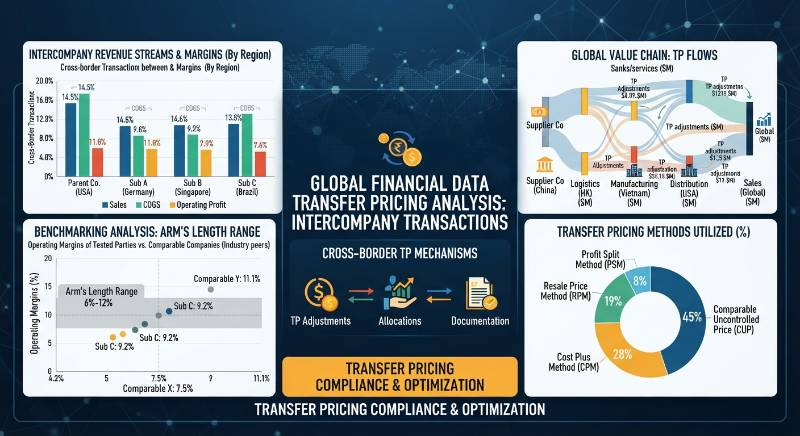
Selecting an inappropriate economic methodology creates immediate exposure during an assessor review. Intercompany transactions are analyzed across five core models:
- Comparable Uncontrolled Price (CUP) Method: Compares the price charged in a controlled transaction directly to the price charged in a comparable uncontrolled market transaction.
- Resale Price Method (RPM): Evaluates the gross margin earned by a distributor purchasing from a related party and reselling to independent clients.
- Cost Plus Method (CPM): Evaluates the gross markup on direct and indirect costs incurred by a supplier in controlled transactions.
- Transactional Net Margin Method (TNMM): Analyzes net operating margins relative to an appropriate base (e.g., costs, sales, or assets).
- Profit Split Method (PSM): Allocates combined operating profit or loss derived from complex, highly integrated cross-border transactions based on relative economic contributions.
For cross-border service operations, companies often use our proprietary 4-D Arm’s-Length Nexus Framework™. This framework evaluates functional profiles across four stages: Value Chain Mapping, DEMPE Analysis, Cost Center Segregation, and Quantitative Benchmarking.
Engaging professional Accounting & Audit Services ensures your intercompany agreements, cost allocations, and statutory accounts reconcile accurately with your selected economic model.
Intragroup Financing, Management Fees, and IP Royalty Allocation
The IRD places maximum scrutiny on three specific cross-border transaction categories: interest rates on related-party loans, headquarter service fee markups, and intellectual property licensing.
Cross-border financial transactions require economic benchmarking under DIPN 60. Zero-interest loans between related entities or uncommercial credit spreads trigger immediate profit adjustments under Section 50AAF.
Management service charges require proof of actual benefit, documentation of cost allocation keys, and economic defense of profit markups (typically 3% to 7% for routine support services under OECD guidelines).
Under DIPN 59, royalty payments for patents, software, and trademarks must align with DEMPE functions (Development, Enhancement, Maintenance, Protection, and Exploitation). Protecting these corporate assets requires formal legal mechanisms like Hong Kong Trademark Registration to establish clear ownership and defend cross-border royalty streams.
Reconciling Transfer Pricing Compliance with Hong Kong Offshore Profit Exemption Claims
Hong Kong operates under a territorial source tax regime alongside the updated Foreign Sourced Income Exemption (FSIE) framework. A critical compliance conflict often emerges between transfer pricing rules and offshore tax exemption claims.
“Taxpayers attempting to claim a 100% offshore profit exemption while simultaneously reporting significant management substance in Hong Kong to satisfy transfer pricing documentation create an immediate statutory contradiction.”
— Senior Tax Consultant, Hong Kong Revenue Defense Practicum
If an enterprise claims its profits are completely offshore, it must demonstrate that the core income-generating activities took place outside Hong Kong. However, if transfer pricing documentation attributes key decision-making, executive functions, and economic risk to the Hong Kong entity, the IRD will disallow the offshore claim.
Navigating this balance requires experienced corporate administration, including reliable Company Secretary Services, to ensure corporate resolutions, board meeting locations, and physical operations align consistently across all tax filings.
SME Defense Blueprint: Managing Section 50AAF Scrutiny for Exempt Entities
A widespread misconception among small and medium-sized enterprises is that falling below the Master File and Local File thresholds exempts them from transfer pricing enforcement entirely. This assumption is legally incorrect.

Section 50AAF applies universally to all Hong Kong taxpayers regardless of turnover. During routine profits tax assessments, the IRD frequently issues verification letters requesting justification for intercompany loans, management fees, and trade margins.
SMEs should implement a lightweight transfer pricing defense protocol by tracking the following actionable checklist:
- Intercompany Contracts: Maintain executed cross-border agreements specifying scope, deliverables, and payment terms.
- Pricing Policy Memos: Document the economic rationale and method used to calculate trade markups or interest rates.
- Timesheets & Cost Invoices: Preserve operational evidence demonstrating that services were genuinely rendered.
- Banking Infrastructure: Ensure related-party fund transfers flow through properly segregated accounts via Corporate Bank Account Opening with matching commercial descriptions.
IRD Transfer Pricing Audits, Penalty Mitigation, and Advance Pricing Arrangements (APA)
When the IRD identifies transfer pricing non-compliance, it initiates formal tax audits under Section 50AAF and penalizes underreporting via Section 80B of the Inland Revenue Ordinance.
Penalties for non-arm’s length pricing without reasonable excuse can reach up to 100% of the undercharged tax. In cases of willful evasion or reckless record maintenance, criminal sanctions and higher punitive assessments apply.
To secure tax certainty for complex cross-border value chains, enterprises can apply for an Advance Pricing Arrangement (APA) under DIPN 48:
- Unilateral APA: Agreement solely between the taxpayer and the Hong Kong IRD.
- Bilateral APA: Formal agreement negotiated between the IRD and a competent tax authority in a treaty partner jurisdiction under the Double Tax Agreement (DTA) network.
- Multilateral APA: Cross-border agreement involving three or more tax jurisdictions covering integrated supply chains.
Further statutory procedural guidelines can be referenced directly through the official Hong Kong IRD Practice Notes Portal.
Frequently Asked Questions Regarding Hong Kong Transfer Pricing
What defines an associated enterprise under Hong Kong transfer pricing rules?
An enterprise is considered associated if one enterprise participates directly or indirectly in the management, control, or capital of the other, or if the same persons participate directly or indirectly in both enterprises. Control is broadly defined through voting power, share capital ownership, board control, or contractual influence under Schedule 17G.
How long must transfer pricing documentation be retained in Hong Kong?
Under Section 51C and Schedule 17I of the Inland Revenue Ordinance, Master Files, Local Files, and supporting accounting records must be retained for at least 7 years from the transaction date. Failure to retain proper records carries statutory fines up to HKD 50,000.
Does Hong Kong allow retrospective transfer pricing adjustments?
Yes, the IRD has statutory authority to review and adjust intercompany transactions up to 6 years retrospectively under standard audit windows, and up to 10 years in cases involving fraud, gross negligence, or willful tax evasion.
Are domestic intercompany transactions in Hong Kong subject to transfer pricing rules?
Yes. Unlike some tax regimes that only inspect cross-border dealings, Hong Kong’s Section 50AAF applies to both domestic and international related-party transactions if the arrangement generates a tax advantage (such as shifting profits between profitable and loss-making local group entities).
Engage Olesen Global for First-Hand Transfer Pricing Defense & Compliance
Navigating Hong Kong transfer pricing compliance demands experienced local oversight, precise documentation, and alignment with global tax authorities. Intercompany errors expose enterprises to severe tax reassessments, double taxation, and administrative penalties.
Olesen Global operates as a first-hand, licensed Trust or Company Service Provider (TCSP License: TC010076) with a physical headquarters in Hong Kong. We eliminate third-party agency markups, delivering direct, partner-led transfer pricing analysis, Local File formulation, and profits tax audit defense.