Hong Kong Tax Planning Strategies for Foreign Companies: 2026 Guide
Global enterprises face a rapidly changing tax landscape. Choosing the right corporate hub determines your net profitability. Hong Kong remains a premier jurisdiction for corporate optimization due to its simple, low-tax environment.
Hong Kong’s Territorial Tax System
Hong Kong operates a strict territorial tax system. This means the government only levies taxes on corporate profits derived from or accrued within Hong Kong itself.
If your business operations take place entirely outside the borders, your foreign-sourced income can qualify for a complete tax exemption. This rule makes Hong Kong an exceptional base for international trade, holding companies, and global service providers.
The corporate tax structure uses a competitive two-tiered Profits Tax system. Under this framework, the tax rate is split to encourage small-to-medium enterprise growth:
- 8.25% on the first HKD 2 million of assessable profits.
- 16.5% on any assessable profits exceeding HKD 2 million.
To access these benefits securely, foreign companies must work with a direct, licensed partner. Olesen Global is a direct, Trust and Company Service Provider (TCSP) license holder (TC010076) with a physical office in Hong Kong, removing costly third-party agencies and middlemen.
The Olesen Source-Nexus Validation Protocol
To legally minimize tax liability in Hong Kong, foreign companies must isolate their operations from the local territory, ensuring contract negotiation, execution, and operations occur entirely offshore. This separation allows entities to secure a 0% tax rate via a formal offshore claim, provided they comply with the updated 2026 economic substance requirements.
We evaluate offshore claim viability using a proprietary methodology called the Olesen Source-Nexus Validation Protocol. This framework analyzes three distinct operational layers:
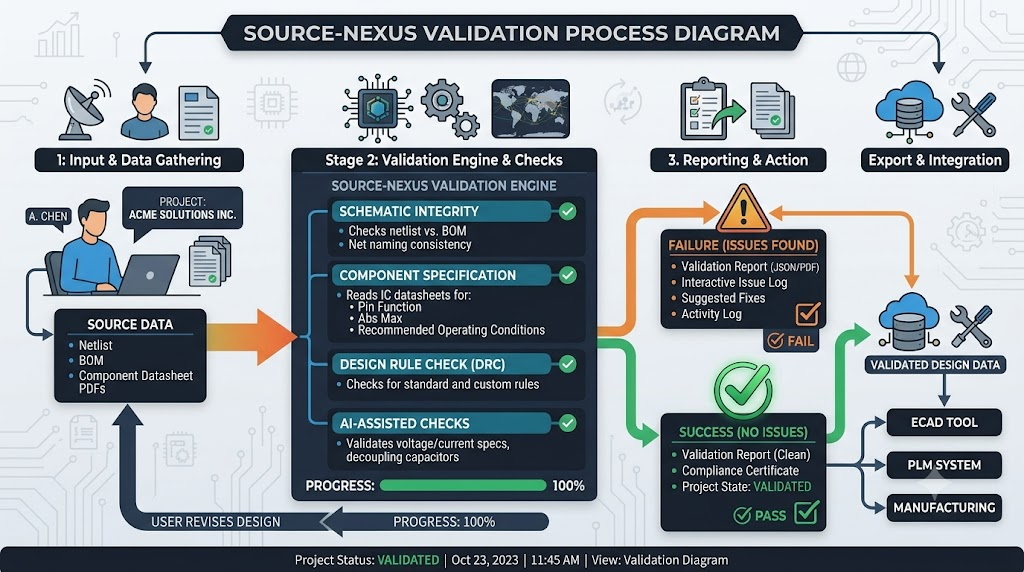
1. Contractual Origin
Where are your commercial contracts drafted, negotiated, and signed? If your sales agreements are executed outside Hong Kong by remote directors, the source of revenue points offshore.
2. Operational Execution
Do you have physical offices, warehouses, or staff in Hong Kong? To secure offshore tax-free status, your day-to-day services, manufacturing, or shipping logistics must happen entirely outside the SAR.
3. Financial Settling
Where are payments processed? While having a local bank account does not automatically make your profits taxable, your invoicing and payment gateways must align with your offshore operational footprint.
Navigating the 2026 FSIE Regime & Economic Substance Rules
The Inland Revenue Department (Hong Kong) has refined its tax codes to align with global anti-base erosion initiatives. The 2026 Offshore Income Exemption (FSIE) regime targets specific passive income streams received in Hong Kong by multinational enterprise (MNE) entities.
These passive income streams include dividends, interest, equity disposal gains, and intellectual property (IP) income. Under the 2026 guidelines, these incomes are tax-exempt only if the company meets explicit economic substance requirements.
“FSIE compliance is not about creating artificial setups. The IRD actively looks for real operational footprints. Foreign companies must show they employ qualified staff and incur sufficient operating expenses locally in Hong Kong if they wish to claim exemptions on passive income.”
— Olesen Global Tax Director
For IP income, Hong Kong applies the “nexus approach.” This links tax exemptions directly to research and development (R&D) expenditures incurred by the company. To ensure your business does not lose its tax-exempt status, proper record-keeping is non-negotiable.
Niche Scenarios: Web3, E-Commerce, and IP Licensing
Standard tax advice often fails when applied to specialized digital sectors. We analyze how different business models perform under Hong Kong’s tax framework:
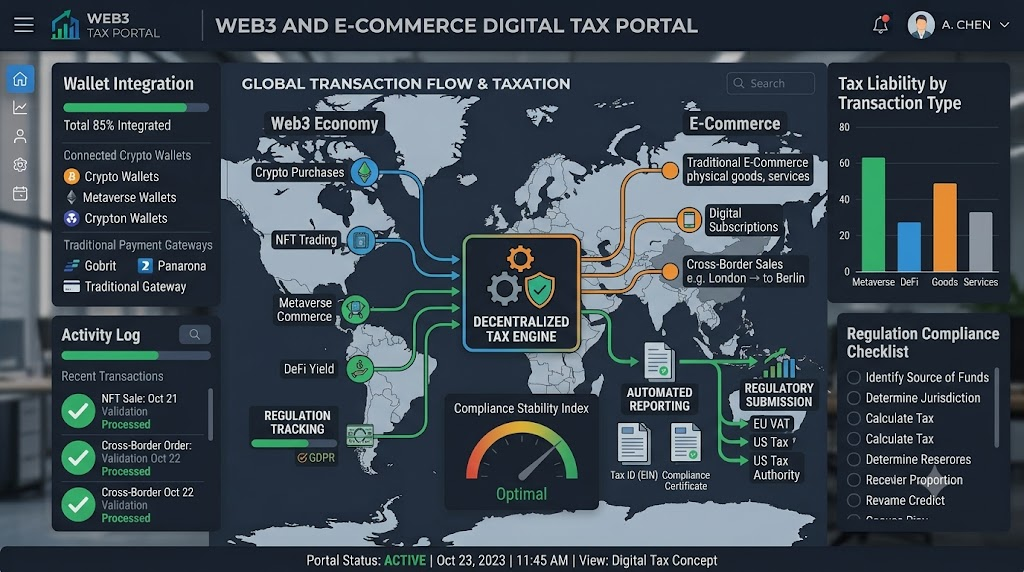
Web3 HK Registration
Startups operating out of incubators like Cyberport must structure their token issuances carefully. Staking rewards and utility token transactions require precise classification to prevent them from being treated as taxable onshore trading profits.
E-Commerce Offshore Claims
Cross-border e-commerce brands often source goods from mainland China and ship directly to western markets. By keeping their supply chain and servers outside Hong Kong, they can claim a 0% tax rate on global sales, even while using a local corporate entity.
IP Licensing Holding Companies
A foreign parent company can utilize a Hong Kong subsidiary to hold regional patents or trademarks. By licensing these assets to Asian subsidiaries, the group can optimize regional tax loads while complying with international Transfer Pricing standards.
Corporate Structuring: Repatriating Profits to the US and EU
Setting up a holding company in Hong Kong is a highly efficient way to manage cash flows from mainland China and broader Asia back to the US or EU. Hong Kong does not levy any withholding tax on dividends or interest paid to foreign investors.
This allows profits to flow out of the Hong Kong entity completely untaxed at the local level. Furthermore, Hong Kong continues to expand its Double Taxation Treaty network.
With over 45 active Double Taxation Agreements (DTA), foreign enterprises can drastically reduce withholding taxes levied by other jurisdictions on royalties, dividends, and interest payments before they reach Hong Kong.
Hong Kong vs. Singapore: Holding Company Comparison
Many foreign investors compare Hong Kong and Singapore when choosing an Asian headquarters. The table below outlines the core tax and operational differences between these two financial hubs:
| Feature | Hong Kong | Singapore |
|---|---|---|
| Standard Corporate Tax Rate | 16.5% (8.25% on first HKD 2M) | 17% (Partial exemptions apply) |
| Offshore Claim Simplicity | High (Territorial Source-based) | Moderate (Subject to remittance rules) |
| Withholding Tax on Dividends | 0% | 0% |
| Capital Gains Tax | 0% | 0% (Subject to safe harbor rules) |
| FSIE Implementation | Economic Substance & Nexus Approach | Economic Substance & Foreign Income Rules |
While Singapore offers excellent treaty coverage, Hong Kong provides a lower top corporate tax rate (16.5% vs 17%) and a more straightforward offshore tax exemption process for trading and service profits.
Avoiding IRD Tax Audits: The Role of a Licensed TCSP
The IRD has increased its scrutiny of offshore claims. A poorly documented claim is a primary trigger for corporate tax audits, leading to severe penalties and retroactive taxation.
To keep your structure compliant, you must prepare complete audit trails. This includes maintaining emails, shipping logs, signed agreements, and bank statements that prove your operations exist entirely outside Hong Kong.
Under local corporate law, every Hong Kong company must appoint a local secretary. This secretary must be a licensed Trust and Company Service Provider (TCSP).
Working with a fully licensed provider like Olesen Global (TC010076) ensures your corporate records, annual filings, and tax reporting align perfectly with IRD standards. This proactive compliance shields your business from costly operational reviews.
Visualizing the Process: From HK Incorporation to Tax Filing
Establishing and maintaining a tax-optimized corporate presence in Hong Kong involves five distinct operational stages:
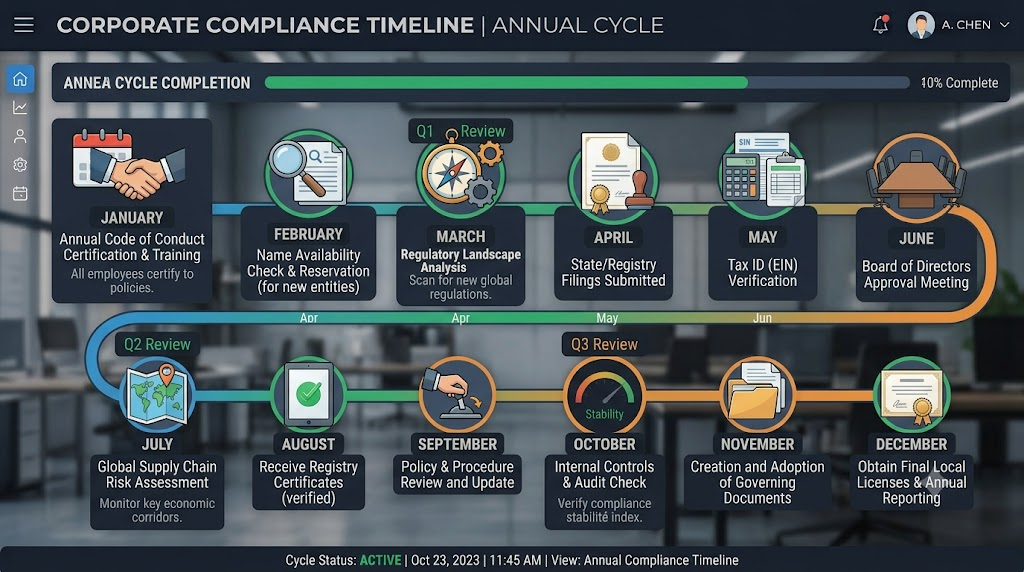
- Step 1: Incorporation
Launch your business using professional Hong Kong Company Registration Services to establish a clean, compliant structure. - Step 2: Bank Account Opening
Open corporate accounts with leading international or local banks to handle global transactions. - Step 3: Ongoing Secretary Compliance
Retain Licensed Company Secretary Services to manage statutory filings and maintain your legal standing. - Step 4: Annual Accounting & Audit
Utilize Professional Accounting & Audit Services to prepare localized financial statements that meet IRD audit standards. - Step 5: Tax Filing & Offshore Claim
Submit your corporate tax return along with your formal offshore claim to secure your tax-exempt status.
Frequently Asked Questions on HK Tax Planning
How do I verify a TCSP license in Hong Kong?
You can verify any company secretary’s credentials directly on the Hong Kong Companies Registry TCSP Register. Simply search for the provider’s name or license number. For example, Olesen Global is registered under license number TC010076.
What is the difference between an offshore claim and onshore tax?
An onshore tax claim applies to profits generated from business activities within Hong Kong, taxed at either 8.25% or 16.5%. An offshore claim is a formal application to the IRD requesting a 0% tax rate on profits earned entirely from activities outside Hong Kong.
How does FSIE compliance in 2026 affect my holding company?
If your holding company receives offshore dividends, interest, or equity disposal gains in Hong Kong, it must meet the economic substance requirements. This means you must maintain an adequate physical presence, qualified staff, and appropriate operational spending in Hong Kong to preserve your tax exemption.
Implement Your Compliant HK Tax Strategy with Olesen Global
Tax planning is not a one-size-fits-all process. Missteps can lead to unexpected tax liabilities and compliance penalties that eat away at your hard-earned profits.
Ready to Optimize Your Global Corporate Structure?
Work directly with a first-hand licensed service provider. Avoid middlemen, secure your offshore tax status, and ensure absolute compliance with Hong Kong’s 2026 FSIE regulations.