The Strategic Advantage of a Hong Kong Trading Company
Using a Hong Kong company for international trading provides a structural edge that few jurisdictions can match. As we move through 2026, the city has solidified its role as a neutral, highly efficient gateway for B2B transactions and cross-border e-commerce.
Our 10+ years of Hong Kong Company Registration data shows that successful traders prioritize HK for its legal clarity and the absence of trade barriers. Unlike most western jurisdictions, Hong Kong imposes no sales tax, no capital gains tax, and no withholding tax on dividends.
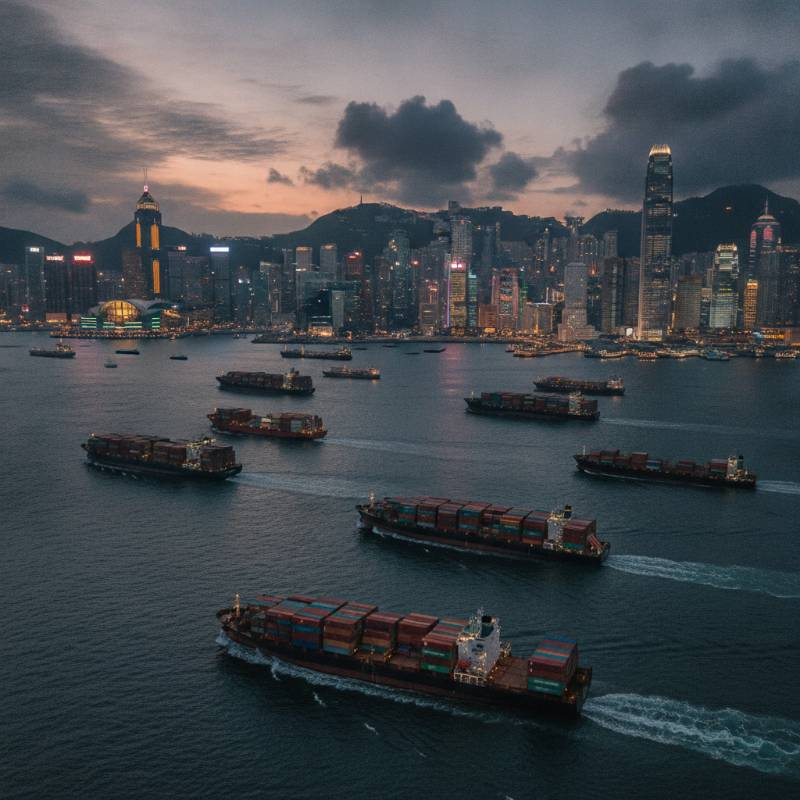
“A Hong Kong entity is not just a corporate shell; it is a globally recognized instrument for trade finance and asset protection, provided it is managed by a first-hand licensed provider.” — Senior Compliance Officer, Olesen Global.
The Global Trade Velocity Matrix: A 5-Point Evaluation
To determine if a Hong Kong company for trading business fits your specific model, we utilize The Global Trade Velocity Matrix. This proprietary framework evaluates jurisdiction suitability across five critical dimensions: tax efficiency, banking accessibility, supply chain proximity, regulatory stability, and lifecycle costs.
Hong Kong scores exceptionally high in 2026 for its regulatory adherence and proximity to Asian manufacturing hubs. For a trading firm, “velocity” means the speed at which you can move capital and clear customs. HK’s status as a free port ensures that goods move without the friction of import duties, significantly increasing your operational speed.
We evaluate your trading structure based on these 3 dimensions: physical substance requirements, the “mind and management” location, and the specific flow of contracts. This ensures your setup isn’t just fast, but fully compliant with the Inland Revenue Department (IRD).
Hong Kong vs. Singapore: Which is Better for Your Trading Business?
Choosing between Hong Kong and Singapore is the most frequent dilemma for global traders. While both are tax-efficient hubs, the choice often depends on your target market and the complexity of your Accounting & Audit Services needs.
| Feature | Hong Kong | Singapore |
|---|---|---|
| Corporate Tax Rate | 8.25% on first HK$2M; 16.5% after | 17% (with partial exemptions) |
| Offshore Income Tax | 0% (via Offshore Claim) | 0% (if not remitted) |
| VAT / GST | None (0%) | 9% (as of 2024-2026) |
| Audit Requirement | Mandatory for all companies | Exempt for “Small Companies” |
Hong Kong remains the winner for pure trading businesses due to the lack of GST and a more straightforward territorial tax system. Singapore is often preferred for holding companies or those seeking specific government grants.
Offshore Profits Tax Exemption: Maximizing Your Trade Margins
The “Source of Income” principle is the cornerstone of HK tax optimization. If your trading activities—negotiation, conclusion of contracts, and logistics—happen outside Hong Kong, you may apply for an offshore profits tax exemption.
In 2026, the IRD has increased scrutiny under the Foreign-Sourced Income Exemption (FSIE) regime. This means traders must demonstrate “economic substance” if they are part of a multinational group. Our Accounting & Audit Services specialize in building the “audit trail” necessary to satisfy these requirements.

Case Study: A cross-border e-commerce firm sourcing from Vietnam and selling to the US used an HK entity for invoicing. By ensuring no staff were based in HK and contracts were signed digitally abroad, they successfully secured a 0% tax ruling for three consecutive years.
Compliance for Modern Niches: Web3 and Digital Asset Trading
For a Web3 startup in Cyberport or a digital asset trader, Hong Kong is the definitive candidate. Unlike jurisdictions that have banned or over-regulated crypto, Hong Kong has established a clear VASP licensing framework and a regulatory sandbox.
Web3 HK registration requires more than just a standard incorporation. It involves digital asset trading compliance and ensuring your Multi-currency bank account is “crypto-aware.” Olesen Global provides hyper-specific support for these niches, ensuring your trading company doesn’t face sudden account closures.
Navigating Banking and Trade Finance in Hong Kong
Securing a Bank Account Opening Support is often the biggest hurdle for international traders. Banks in 2026 prioritize companies that can show a clear business plan and a TCSP license TC010076 backing their registration.
Hong Kong banks are world leaders in trade finance support. For firms requiring a Letter of Credit (LC) or high-volume payment gateway for e-commerce, having a physical HK presence—even if just a registered office managed by Olesen Global—adds significant credibility.

We leverage direct relationships with tier-1 banks like HSBC, BOC, and Standard Chartered to assist in recovering rejected bank applications by refining the KYC (Know Your Customer) documentation to meet 2026 standards.
Maintenance and Annual Compliance for Trading Firms
Ongoing compliance is what separates a sustainable business from one facing heavy fines. Every HK company must appoint a Company Secretary Services provider who holds a valid TCSP license.
Your annual return filing and SCR maintenance (Significant Controllers Register) are statutory duties. Failure to update the Hong Kong Companies Registry on time can lead to personal liability for directors. Olesen Global ensures 1-on-1 progress tracking so no deadline is missed.
Frequently Asked Questions about HK Trading Companies
What is the typical HK company maintenance cost for a trading firm?
For a standard trading company, annual costs include the Business Registration Fee (payable to the IRD), Annual Return filing fees, and Audit and Tax Filing fees. Expect a range of HK$8,000 to HK$20,000 depending on transaction volume.
Is a physical office requirement mandatory for trading?
While you need a physical “Registered Office Address” in Hong Kong (which Olesen Global provides), you do not necessarily need to rent a full commercial space unless you are applying for certain work visas or specific trade licenses.
Do I need an audit even if my company is dormant?
Yes. Hong Kong law requires all companies to produce audited financial statements annually, regardless of whether they were active. However, the Profits tax return for a dormant company is significantly simpler.
Start Your Global Trade Journey with Olesen Global
Work directly with a TCSP-licensed provider (TC010076). No middlemen. Just expert, first-hand support for your Hong Kong trading business.
Physical HK Office • 10+ Years Expertise • Licensed Professionals