Hong Kong Audit Requirements for Private Limited Companies
Maintaining a private limited company in Hong Kong offers unparalleled access to global markets. However, the region’s robust regulatory environment requires strict adherence to annual audit standards. Navigating these obligations is not merely a matter of checking boxes; it is about ensuring the longevity and financial integrity of your business.
Defining the Statutory Audit Framework: An Evaluation Methodology
Under the Companies Ordinance (Cap. 622), every private limited company incorporated in Hong Kong must have its financial statements audited annually. This process ensures that the company’s financial records provide a “true and fair view” of its financial position to shareholders and the government.
We evaluate audit readiness across four distinct dimensions using The Olesen Audit Clarity Protocol (OACP). This framework helps directors assess their compliance standing: (1) Transaction Integrity, (2) Regulatory Alignment, (3) Asset Valuation, and (4) Tax Optimization Strategy.

“A statutory audit in Hong Kong is more than a legal hurdle; it is a critical instrument for financial transparency that builds trust with global banking partners and the IRD.” — Expert Quote from Olesen Global Compliance Team.
To remain compliant, companies must appoint a qualified auditor who is a member of the Hong Kong Institute of Certified Public Accountants (HKICPA). Our Hong Kong Accounting & Audit Services provide a direct bridge to these licensed professionals, removing the friction of dealing with intermediaries.
2026 Compliance Timeline: Deadlines and Extensions
In 2026, the Inland Revenue Department (IRD) continues to enforce strict filing windows. For a newly incorporated private limited company, the first Profits Tax Return (PTR) is typically issued 18 months after the date of incorporation. You are granted a 3-month window from the issue date to submit the audited financial statements.
| Accounting Year End | Filing Deadline | Extension Potential |
|---|---|---|
| March 31 (Code M) | Nov 15, 2026 | Available via Block Extension |
| Dec 31 (Code D) | Aug 15, 2026 | Limited to 1-2 months |
| Other Dates (Code N) | Apr 30, 2026 | Generally no extension |
Failure to meet these deadlines can result in heavy penalties or even prosecution for company directors. It is vital to coordinate with your HK Company Secretary Compliance officer to ensure all Companies Registry compliance filings are synchronized with your audit cycle.
Niche Compliance: Auditing Web3 and Virtual Asset Entities
For a Web3 startup operating out of Cyberport or a cross-border e-commerce firm using stablecoins for settlement, audit requirements are significantly more complex. In 2026, auditors are applying enhanced scrutiny to virtual asset auditing.
Key audit focus areas for Web3 entities include:
- Ownership Verification: Providing audit evidence for private key custody and multi-sig wallet controls.
- Valuation: Adhering to Financial Reporting Standards (HKFRS) for digital assets, which often requires point-of-transaction price logging.
- Anti-Money Laundering (AML): Ensuring on-chain transactions map back to identifiable business activities.

Olesen Global specializes in these high-growth sectors, providing the technical expertise needed to translate blockchain data into compliant audited financial statements.
Statutory Audit vs. Tax Audit: Critical Differences
A common point of confusion for international entrepreneurs is the difference between a statutory audit and a tax audit. A statutory audit is an annual requirement for all companies to report to their shareholders. A tax audit (or tax investigation) is a selective review conducted by the IRD to verify tax computation accuracy.
If your company intends to file an offshore tax exemption claim, your audited accounts must clearly delineate income sources. Without a rigorous statutory audit, the IRD is unlikely to approve any claims for zero tax on offshore profits. Detailed Taxation and Profits Tax Returns planning must start months before the audit begins.
The Olesen Advantage: Direct Licensed Provider vs. Middlemen
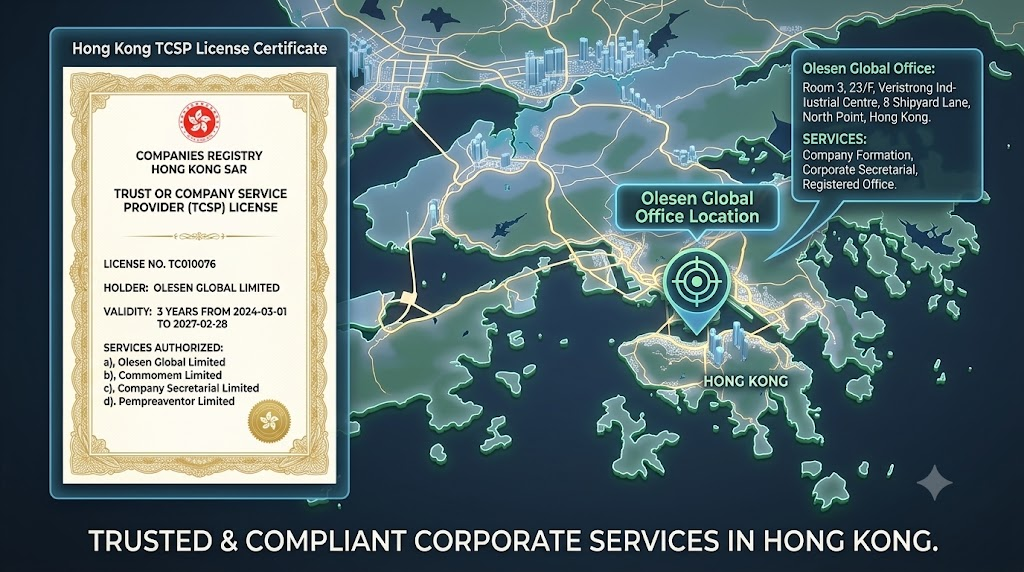
Many online agencies act as mere middlemen, outsourcing your sensitive financial data to third-party accountants. This increases costs and risks data leaks. Olesen Global is a TCSP-licensed provider (TC010076) with a physical Hong Kong office.
By choosing a direct service provider, you benefit from 1-on-1 progress tracking and immediate access to our 10+ years of local tax expertise. We don’t just file your paperwork; we provide a strategic shield for your Hong Kong operations.
Frequently Asked Questions
Can a dormant company be exempt from audit?
Technically, a company can apply for “dormant status” via a special resolution to exempt itself from the audit requirement. However, even one minor transaction in the bank account will void this status, making an audit mandatory once again.
How do I verify an auditor’s license in Hong Kong?
You can search the official register of the Hong Kong Institute of Certified Public Accountants (HKICPA). Always ensure your provider is directly linked to a practicing CPA.
What happens if I miss the audit deadline?
The IRD may issue a surcharge (usually 5% to 10% of the tax due) and court summonses. Long-term non-compliance can lead to the company being struck off the register.
Secure Your Hong Kong Compliance Today
Don’t leave your 2026 audit to chance. Work with Olesen Global, your TCSP-licensed partner, for transparent, expert-led audit and tax services.