Can a Virtual Office Be Used as a Registered Address? The Direct Answer & Legal Baseline
Yes, a virtual office can legally serve as a company’s registered address in Hong Kong, but only if it meets statutory requirements under the Companies Ordinance (Cap. 622) and is operated by a licensed Trust or Company Service Provider (TCSP) under the Anti-Money Laundering and Counter-Terrorist Financing Ordinance (AMLO, Cap. 615).
A standard commercial digital mailbox that merely forwards letters cannot legally function as your official corporate seat. Statutory registered offices require an active physical commercial presence capable of receiving process, accommodating government inspections, and maintaining mandatory corporate registers.
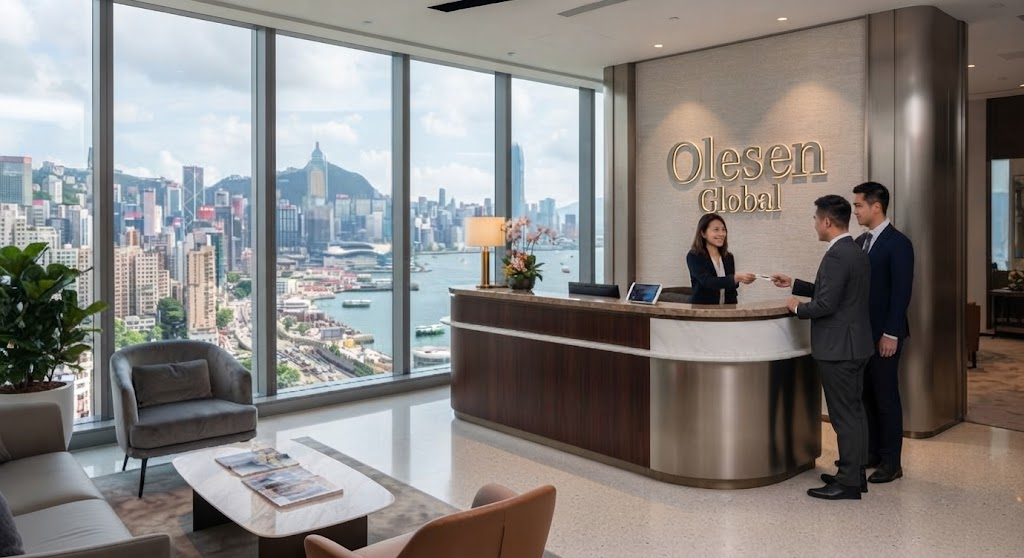
The distinction lies in statutory classification. Under Hong Kong law, a company’s registered office is not merely a mailing destination; it is the official legal domicile of the corporate entity recognized by the Hong Kong Companies Registry (CR) and the Inland Revenue Department (IRD).
The 4-Pillar Evaluation Framework: What Makes a Registered Address Legally Compliant?
To determine if a virtual address satisfies Hong Kong legal and regulatory standards, founders must assess the premises against the TCSP Statutory Domicile Framework. Evaluating an address across these four dimensions ensures corporate legitimacy and protects against administrative dissolution.
- Pillar 1: Regulatory Licensing & TCSP Validity
Under Section 35A of Cap. 615, any entity providing registered office or corporate secretary services in Hong Kong must hold a valid TCSP license issued by the Companies Registry. Operating through unlicensed mailbox brokers exposes your business to immediate non-compliance penalties. - Pillar 2: Physical Commercial Reality
The location must be a verifiable physical commercial premises in Hong Kong open during normal business hours. It must have staff present to receive court writs, tax notices, and formal notices from statutory bodies. - Pillar 3: Statutory Register Custody
The location must be legally designated to store and present vital statutory documents, including the Significant Controllers Register (SCR), Register of Directors, and Register of Members upon request by law enforcement authorities. - Pillar 4: Banking & AML Whitelist Standing
The address must possess clean compliance standing. Tier-1 commercial banks evaluate address risk metrics during Know Your Customer (KYC) screening, automatically flagging addresses shared with hundreds of unvetted shell companies.
“Under Hong Kong corporate law, registered office compliance is judged by substance, accessibility, and licensing integrity. An unverified mailbox fails statutory scrutiny the moment formal legal process is served or bank KYC audits are initiated.”
— Hong Kong Corporate Governance Review, 2026
Hong Kong Statutory Mandates: Cap. 622 and Why P.O. Boxes and Residential Units Fail
Section 658 of the Companies Ordinance (Cap. 622) explicitly states that every company incorporated in Hong Kong must maintain a registered office in Hong Kong to which all communications and notices may be addressed. The statute specifically prohibits the use of a Post Office Box (P.O. Box) as a registered office.
Post Office boxes lack physical commercial presence, making it impossible for bailiffs or process servers to execute personal service of process under Hong Kong High Court rules. A missed court writ due to an unmonitored mailbox can result in a default judgment entered against the company without the directors’ knowledge.
Using residential addresses presents distinct operational hazards. Residential properties often violate Government Land Leases and local zoning rules when used for commercial registrations. Furthermore, your private home address becomes public record across the Companies Registry search portal, compromising director privacy.
Virtual Office vs. TCSP Secretary Address vs. Dedicated Commercial Space: Comparative Analysis
When executing Hong Kong Company Registration, founders generally evaluate three address categories. The table below outlines the legal, financial, and compliance parameters for each option.
| Evaluation Dimension | Unlicensed Virtual Mailbox | Dedicated Commercial Lease | Licensed TCSP Registered Office |
|---|---|---|---|
| Cap. 622 Compliance | High Risk / Often Non-Compliant | 100% Compliant | 100% Fully Compliant |
| TCSP License Status | None (Unregulated Intermediary) | Self-Managed Tenant | Licensed (e.g., Olesen Global TC010076) |
| Average Annual Cost | $100 – $300 USD | $25,000 – $100,000+ USD | Cost-Effective / Bundled |
| Bank KYC Approval Rate | < 35% (High Rejection) | > 95% | > 90% (Clean Whitelist) |
| SCR & Statutory Custody | Not Supported / Violates AMLO | Requires In-House Staff | Full Professional Custody |
| Statutory Mail Handling | Delayed / Risk of Mail Loss | Internal Mailroom Required | Immediate Digital Scanning & Alert |
Impact on Banking KYC: Why Unlicensed Virtual Mailboxes Trigger Account Rejection
Opening a corporate bank account in Hong Kong requires passing strict institutional risk assessments. According to compliance audit figures, over 40% of international account delays stem from address validation discrepancies during onboarding.
Commercial banks maintain automated risk databases that cross-reference Commercial Mail Receiving Agency (CMRA) markers. When an address is flagged as an unregulated mail hub, anti-money laundering algorithms assign the applicant a high-risk score.
Tier-1 institutions verify whether the registered address provider is a licensed trust company. Combining a registered office with certified Company Secretary Services and verified statutory books directly supports a smooth Bank Account Opening process.
“Banking compliance officers look for commercial legitimacy and accountability. An applicant backed by a licensed TCSP showing verifiable records is processed through standard KYC channels rather than flagged for shell-company risks.”
— Hong Kong Association of Banks Compliance Guidelines
Cross-Border & Web3 Scenarios: Solving Registered Address Compliance for Remote Founders
Cross-border e-commerce sellers, Web3 protocols, and foreign investment holdings frequently operate without local Hong Kong staff. However, foreign corporate structures must maintain complete legal substance within Hong Kong’s jurisdiction.
Unlicensed maildrops provide zero regulatory substance. They fail to support customs declarations, merchant account verifications, or Inland Revenue Department (IRD) audits. Maintaining an address through a licensed TCSP provides an authentic registered office that keeps offshore holding structures in full compliance.
Custodian Responsibilities: On-Site Maintenance of the Significant Controllers Register (SCR)
Under the Companies Ordinance, Hong Kong entities must identify individuals or entities with significant control and maintain a Significant Controllers Register (SCR). This register must be kept at the company’s registered office or a designated location in Hong Kong.
Failure to maintain the SCR or produce it during a formal inspection by the Companies Registry or law enforcement carries criminal liability and a fine of up to HK$25,000 for the company and every responsible officer. A licensed TCSP acts as the Designated Representative to maintain these records in complete compliance with statutory requirements.
| Statutory Record Item | Governing Legislation | Custody Location Requirement | Non-Compliance Penalty |
|---|---|---|---|
| Significant Controllers Register (SCR) | Companies Ordinance (Cap. 622, Part 12) | Registered office or permitted place in HK | HK$25,000 fine + daily ongoing fines |
| Register of Directors (RoD) | Companies Ordinance (Cap. 622, s.641) | Registered office of the company | Level 3 fine on company & directors |
| Register of Members (RoM) | Companies Ordinance (Cap. 622, s.627) | Registered office or place where constructed | Daily default fines under s.627(5) |
| Business Records & Invoices | Inland Revenue Ordinance (Cap. 112, s.51C) | Accessible for 7 years within Hong Kong | HK$100,000 fine under IRD enforcement |
Red Flags & Due Diligence: 5-Step Checklist to Verify a Compliant Registered Address Provider
Before engaging an address provider in Hong Kong, perform comprehensive due diligence to protect your corporate standing. Use this actionable checklist:
- Step 1: Check the TCSP Register — Verify that the provider holds an active Trust or Company Service Provider license on the Hong Kong Companies Registry TCSP Public Register.
- Step 2: Verify Commercial Zoning — Ensure the registered location is a grade-A or prime commercial office, not a residential flat or industrial warehouse unit.
- Step 3: Confirm Designated Representative Status — Ensure the provider can legally act as your Designated Representative for the Significant Controllers Register (SCR).
- Step 4: Inspect Statutory Mail Protocols — Confirm that official government mail from the IRD, CR, and courts is scanned, logged, and digitally delivered within 24 hours.
- Step 5: Review Comprehensive Service Capabilities — Ensure the firm can handle long-term statutory filings, including mandatory Accounting & Audit and annual profits tax returns.
Frequently Asked Questions Regarding Hong Kong Registered Office Addresses
What is the difference between a cheap online virtual office and a licensed TCSP registered office address?
Unregulated online virtual offices often operate without a TCSP license, violating Section 35A of the AMLO. These setups lack statutory register custodian rights and frequently lead to bank account rejections or Companies Registry penalties. A licensed TCSP provider such as Olesen Global (TC010076) delivers a verified physical commercial address, professional statutory mail processing, on-site SCR custody, and recognized regulatory standing with banks and the Inland Revenue Department.
Can Hong Kong banks reject corporate account applications due to a virtual office address?
Yes. Banks analyze address risk during KYC checks. Applications associated with unverified mailbox providers or shared high-risk shell addresses show elevated rejection rates. Using a registered office backed by a primary TCSP-licensed firm ensures the address clears compliance screening, especially when accompanied by proper corporate secretarial and accounting records.
Can a P.O. Box or overseas address be used as a Hong Kong registered office address?
No. Under Section 658 of the Companies Ordinance (Cap. 622), every Hong Kong incorporated company must have a physical registered office located in Hong Kong where official notices and communications may be served. P.O. Boxes and non-Hong Kong addresses are prohibited by law.
Pave Your Compliant Route: Secure a First-Hand TCSP-Licensed Address in Hong Kong
Establishing an international business presence requires direct accountability, regulatory compliance, and clean commercial standing. By securing a registered office through a licensed TCSP provider, founders eliminate intermediary markups, protect their legal standing, and establish a solid foundation for cross-border banking.
Get a Free Compliance & Registered Address Risk Diagnostic
Verify your corporate structuring eligibility and secure a premier, bank-friendly commercial address backed by our direct TCSP license (TC010076).