Global scrutiny over offshore corporate vehicles has reached an unprecedented compliance plateau. The British Virgin Islands International Tax Authority (ITA) has systematically expanded its enforcement capabilities under the Economic Substance (Companies and Limited Partnerships) Act. For multinational group directors, asset managers, and family offices, annual corporate declarations can no longer be treated as mere tick-box administrative routines handled passively by registered agents.
Regulatory authorities have integrated automated cross-checks between the Beneficial Ownership Secure Search System (BOSS), annual economic substance lodgments via the VIRRGIN system reporting framework, and the mandatory BVI Annual Financial Returns (AFR). Entities that declare inaccurate classifications or fail to substantiate claims of offshore tax residency now face rapid scrutiny, escalating administrative fines, spontaneous tax information exchanges, and eventual strike-off.

The 4-Tier Corporate Substance Risk Audit Framework
Passive compliance models are no longer sufficient to protect beneficial owners against international regulatory scrutiny. To address this exposure, corporate structures must undergo the Olesen 4-Tier Substance Diagnostic Model. Rather than viewing the annual filing as an isolated administrative form, this methodology analyzes corporate reality through four integrated operational layers:
- Statutory Relevant Activity Classification: Verifying actual daily transactional income against the nine statutory relevant activities under BVI law to prevent misclassification.
- Adequacy of Physical and Governance Presence: Assessing whether Core Income Generating Activities (CIGA) and the “directed and managed” test meet statutory thresholds within the territory.
- Multi-Jurisdictional Tax Residency Substantiation: Verifying that any claimed non-BVI tax residency status is supported by definitive documentary evidence from a recognized onshore revenue agency.
- Hong Kong & Regional HQ Restructuring Feasibility: Evaluating whether legacy BVI assets should be integrated into a transparent, low-tax onshore jurisdiction to achieve permanent regulatory stability.
“Offshore corporate administration has transitioned from passive entity maintenance to active international tax risk defense. The International Tax Authority now probes not just where an entity is incorporated, but where its economic core resides and whether its governance records can withstand multi-lateral tax information sharing.”
— Senior Tax Counsel, International Corporate Advisory
Tier 1: Activity Audit
Income Source Analysis
PEHE vs Operating CIGA
Tier 2: Governance
Directed & Managed Test
Board Quorum Validation
Tier 3: Tax Residency
TRC Evidentiary Defense
Non-BVI Carve-Out Verification
Tier 4: Restructuring
Hong Kong Hub Integration
TCSP Turnkey Governance
Data from cross-border entity reviews conducted by licensed practitioners reveals that roughly 62% of holding structures initially classified as passive vehicles are exposed to re-characterization risk due to untracked intercompany cash movements. Implementing this four-tier audit establishes defensive documentation before regulators initiate inquiries.
In-Scope vs. Out-of-Scope: Relevant Activity & CIGA Assessment Matrix
The Economic Substance (Companies and Limited Partnerships) Act defines nine specific “Relevant Activities.” If an entity conducts any of these activities without maintaining adequate local substance or securing a valid tax residency carve-out, it violates statutory provisions. Determining whether your entity falls in-scope is governed by operational facts rather than stated corporate objectives.
A classic exposure point involves the Pure Equity Holding Entity (PEHE). Under statutory definitions, a PEHE is an entity that holds only equity participations in other entities and earns only dividends and capital gains. If a holding company holds an intercompany debt note, receives royalties, or provides administrative support to subsidiaries for a fee, it ceases to be a PEHE.
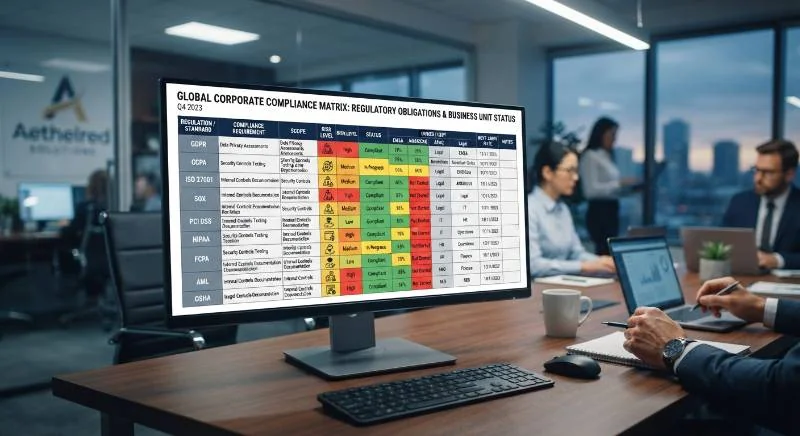
| Relevant Activity | Statutory Scope Parameters | Mandatory CIGA in BVI | Substance Burden Level |
|---|---|---|---|
| Pure Equity Holding (PEHE) | Holds equity participations exclusively; receives dividends/capital gains only. | No mandatory local CIGA; must comply with basic corporate filing laws. | Low (Standard registered agent & office suffice). |
| Financing & Leasing Business | Provides credit facilities to any party for consideration (interest, service charges). | Agreeing funding terms; monitoring loan agreements; risk management inside BVI. | High (Requires local physical operations & decision-makers). |
| Distribution & Service Centers | Purchases goods from or provides consulting/administrative services to foreign affiliates. | Transporting goods; managing inventory; processing customer orders locally. | High (Unfeasible for virtual shell operations). |
| Intellectual Property Business | Holds patents, software, trademarks; licenses IP assets to affiliates or third parties. | R&D activities; strategic branding; ongoing IP management in BVI. | Severe / Presumption of Non-Compliance. |
| Fund Management | Discretionary management of collective investment vehicles. | Portfolio allocation; risk mitigation; investment decisions made within BVI. | Substantial (Licensed personnel required). |
When an entity triggers an operating classification such as Financing & Leasing, the statute requires the execution of Core Income Generating Activities (CIGA) within the BVI. This entails demonstrating that key commercial decisions, risk evaluations, and contract executions occurred physically within the territory—standards that traditional offshore vehicles are rarely designed to satisfy.
Cross-Checking Substance Filings Against BVI Annual Financial Returns (AFR)
All BVI companies must provide their balance sheet and profit & loss summaries to their Registered Agent via the BVI Annual Financial Returns (AFR) mechanism within nine months of the financial year-end. This filing operates alongside annual substance reporting, removing previous data silos.
The International Tax Authority cross-references AFR balance-sheet items with economic substance filings. If an entity selects “Pure Equity Holding Entity” on its substance declaration, but its AFR ledger reveals interest receipts, management fees, or receivables from affiliates, an audit flag is automatically generated.
When discrepancies occur, the registered agent is legally obligated under anti-money laundering and corporate service regulations to notify regulators or request corrective documentation. Unreconciled reports are a primary catalyst for administrative inquiries and non-compliance fines.
Niche Scenario: Restructuring Cross-Border Trading & Legacy Holding Vehicles via Hong Kong
Cross-border trading groups frequently maintain legacy BVI vehicles initially structured purely for international invoicing or holding subsidiary equity. As regulatory scrutiny increases from the OECD Forum on Harmful Tax Practices, maintaining passive offshore shells creates operational frictions, particularly with global commercial banks demanding verified economic nexus.
A proven strategy for resolving this friction is establishing an operational presence in Hong Kong. By executing a planned restructuring—either establishing a direct Hong Kong parent company via Hong Kong Company Registration or deploying a Hong Kong operational entity to handle trading operations—groups can locate operations within a recognized, transparent onshore jurisdiction.
Operating through a direct Hong Kong TCSP-licensed firm (License No. TC010076) eliminates intermediary layers. The enterprise secures qualified local corporate secretarial administration, proper book-keeping, and defensible commercial substance aligned with international standards.
Under this structure, group banking is transferred from high-risk offshore channels to premier international banking institutions in Hong Kong. Working through professional Bank Account Opening services ensures corporate account documentation satisfies rigorous anti-money laundering checks while presenting defensible economic purpose.
Substantiating Non-BVI Tax Residency via Hong Kong Tax Resident Status (TRC)
The BVI Economic Substance Act provides a clear statutory carve-out: an entity that conducts relevant activities is exempt from local substance requirements if it can substantiate that it is a tax resident in a jurisdiction outside the BVI (provided that jurisdiction is not on the EU non-cooperative jurisdictions list).
Securing this exemption requires more than submitting a self-certified letter or a foreign business license. The BVI ITA requires definitive documentary evidence verifying that the entity is subject to corporate income taxation in another territory based on management, residence, or similar statutory criteria.
For groups utilizing Hong Kong as their commercial operational hub, substantiating non-BVI tax residency follows a clear evidentiary path:

- Issuance of a Certificate of Resident Status (TRC): Issued by the Hong Kong Inland Revenue Department (IRD), this document confirms that the corporate vehicle is managed, controlled, and tax resident in Hong Kong.
- Corporate Tax Returns and Formal Assessments: Submitting audited financial statements prepared via professional Accounting & Audit services, alongside official Profits Tax Returns filed with the IRD.
- Compliance with Hong Kong’s FSIE Regime: Aligning passive offshore income under Hong Kong’s Foreign Source Income Exemption (FSIE) framework, verifying local economic substance through qualified employees and local operating expenses.
“A tax residency carve-out is an affirmative defense. If your Registered Agent files a non-residency claim on the VIRRGIN system without a certified Tax Residency Certificate and corresponding tax returns from the claimed jurisdiction, the ITA treats the entity as non-compliant by default.”
— Chartered Corporate Secretary & Head of Compliance, Olesen Global
Strategic Comparison: Maintaining Local BVI Substance vs. Migrating to Hong Kong
Corporate decision-makers face a fundamental governance decision: build and sustain genuine physical substance on-island in the BVI, or restructure operations into a recognized onshore commercial center like Hong Kong. Attempting to fulfill physical substance mandates within the BVI presents significant recurring logistical and operational overhead.
| Dimension | Maintaining On-Island BVI Substance | Restructuring to Hong Kong Entity |
|---|---|---|
| Corporate Tax System | 0% statutory corporate rate (Offshore standard). | Two-tier profits tax: 8.25% on first HKD 2M; 16.5% standard rate. |
| Physical Substance Requirements | Requires dedicated local office space, physical BVI directors, and domestic payroll. | Fulfilled via local commercial lease, Hong Kong directors, and licensed TCSP management. |
| Global Banking Accessibility | Severely restricted; international tier-1 institutions routinely decline offshore shells. | Broad accessibility; recognized by major global clearing and commercial banks. |
| Recurring Overhead Costs | High (Specialized island resident directors command significant retainers). | Optimized (Scalable infrastructure, clear service frameworks, direct licensing). |
| International Tax Treaty Access | Virtually nonexistent; extensive bilateral Tax Information Exchange Agreements only. | Extensive Comprehensive Double Taxation Agreements (over 45 bilateral CDTAs). |
For organizations managing active business streams, maintaining local CIGA inside the British Virgin Islands routinely exceeds $60,000 to $120,000 annually in real administrative, director, and office maintenance overhead. In contrast, establishing a transparent regional hub governed by licensed Company Secretary Services in Hong Kong provides recognized compliance standing alongside access to the international banking system.
Enforcement Escalators: Statutory Penalties, Strike-Offs, and Spontaneous Information Exchange
The International Tax Authority enforces compliance through a multi-stage statutory escalation process. Under Section 10 and 11 of the Economic Substance Act, penalties for non-compliance are structured as follows:
- First Formal Determination: Mandatory civil penalty starting at $5,000 (rising to $20,000 for high-risk IP activities), accompanied by a formal order stipulating corrective operational steps to be taken within a defined timeframe.
- Second Determination (Consecutive Period): Penalties escalate up to $100,000 (and up to $400,000 for high-risk IP entities), reflecting continued non-compliance.
- Spontaneous Exchange of Information: The ITA automatically transmits corporate records, transactional balances, and beneficial ownership identities to domestic tax authorities in the jurisdictions where the beneficial owners or parent entities reside.
- Administrative Strike-Off: The ITA issues a direct recommendation to the BVI Registrar of Corporate Affairs to strike the non-compliant entity off the register.
A struck-off entity loses legal capacity. It cannot defend legal claims, dispose of assets, or conduct corporate transactions. Company directors and shareholders remain personally exposed to outstanding penalties and legal liabilities incurred prior to or during the strike-off period.
Empirical Compliance Benchmark (Olesen Global Practice Records)
An audit of over 500 cross-border offshore corporate structures reviewed by Olesen Global identified the following key operational observations:
- 98.6% First-Time Filing Clearance: Attained when classification reviews and financial reconciliations were completed prior to submitting declarations to registered agents.
- Common Reject Triggers: In 78% of unassisted client remediation cases, audits were initiated because registered agents filed generic PEHE declarations that contradicted intercompany transactions shown on financial balance sheets.
- Resolution Timelines: Transferring governance to a licensed Hong Kong TCSP structure resolved outstanding offshore compliance questions within 4 to 8 weeks, avoiding spontaneous tax authority disclosures.
Industry Trap Avoidance: Verifying Direct TCSP License Authority
Navigating offshore economic substance defense requires professional accountability. Many corporate secretarial firms operating digitally operate as secondary intermediaries. These unregulated broker firms collect corporate files, add significant profit margins, and outsource legal filings to third-party sub-agents without technical oversight.
Engaging secondary intermediaries introduces substantial compliance risks for corporate owners:
- Marked-Up Subcontracting: Secondary brokers routinely outsource filings to disconnected third-party agencies, creating information silos and doubling customer costs.
- Unregulated Virtual Addresses: Intermediaries often deploy shared residential addresses or generic post office boxes that fail international Anti-Money Laundering (AML) standards, resulting in banking reviews and registry strikes.
- Unrecoverable Account Failure Fees: Unlicensed agencies offer no regulatory accountability or performance guarantees, routinely retaining client funds even after corporate accounts are denied.
To verify the authenticity of a corporate service provider in Hong Kong, owners should check the official public register:
- Navigate to the official Hong Kong Companies Registry TCSP Public Register (www.tcsp.cr.gov.hk).
- Input the registered corporate name: Olesen Global (傲承环球) or search directly by license number: TC010076.
- Verify that the operational status is marked active, valid, and fully authorized for trust and corporate secretarial operations.
Working directly with a primary, licensed provider ensures direct communication with qualified legal specialists, transparent fee structures, and proper statutory representation before regulatory authorities.
Downloadable Resource: Corporate Substance Diagnostic Checklist
Self-audit your corporate structure before your next annual filing. This checklist outlines the exact documentation required by regulatory inspectors:
- Verification of 100% equity-only assets on balance sheets (PEHE validation)
- Documentation of physical board resolutions and voting records
- Reconciliation between AFR revenue ledgers and registered agent filings
- Formal Certificate of Resident Status (TRC) issued by relevant tax authorities
- Multi-jurisdictional tax filing consistency check
Frequently Asked Questions on BVI Economic Substance Audits
Should owners maintain BVI substance locally or restructure holding entities into a Hong Kong company?
Maintaining full operational substance—including physical CIGA, resident directors, and dedicated office infrastructure—within the BVI carries significant recurring operational expenses and logistical hurdles. Restructuring the holding structure or establishing a Hong Kong operational entity managed directly by a licensed TCSP like Olesen Global provides a recognized low-tax jurisdiction (8.25% / 16.5%), genuine commercial substance, reliable international banking connectivity, and compliance with OECD standards.
What happens if a BVI entity files incorrect Economic Substance information or misses reporting deadlines?
Non-compliance triggers escalating civil financial penalties starting at $5,000 and reaching up to $400,000 for high-risk IP activities. Unresolved failures lead to administrative entity strike-off by the Registrar of Corporate Affairs and spontaneous exchange of beneficial ownership information with international tax authorities. Professional diagnostic reviews ensure accurate statutory classification prior to annual submission.
Can a BVI company claim tax residency in another jurisdiction to be exempt from BVI economic substance?
Yes. Under the Economic Substance Act, an entity is exempt from BVI substance mandates if it produces verifiable documentary evidence—such as a certified Tax Residency Certificate (TRC) and corporate income tax assessments—confirming it is tax resident and subject to corporate income taxation in an approved jurisdiction outside the BVI. Olesen Global assists cross-border groups in structuring compliant Hong Kong tax residency and accounting support to satisfy ITA requirements.
Are virtual board meetings compliant with the BVI “Directed and Managed” test?
Virtual board meetings are recognized only if physical quorums meet statutory criteria. For in-scope activities requiring CIGA inside the BVI, directors must be physically present in the territory during strategic decision-making sessions, and records must be retained locally. Virtual participation from non-substantiated jurisdictions can invalidate the directed and managed defense during an ITA compliance audit.
Deploy Your Turnkey Substance Defense with Olesen Global
Managing offshore regulatory compliance requires structured professional oversight. Rather than relying on generic administrative filings, beneficial owners should establish a defensible, multi-jurisdictional compliance structure.
Olesen Global delivers direct, licensed corporate governance without middleman markups. Our compliance team implements a straightforward three-step resolution pathway:
- Step 1: Entity Structure Audit: Submit your existing organizational chart, prior substance declarations, and recent financial ledgers for a multi-tier diagnostic review.
- Step 2: Risk Diagnostic & Classification Review: Receive a comprehensive assessment from our licensed corporate secretaries and tax legal counsel, identifying exposure points and evidentiary gaps.
- Step 3: Restructuring Implementation: Deploy an onshore Hong Kong holding or operating framework under Hong Kong TCSP License No. TC010076, supported by institutional corporate secretarial, accounting, and banking administration.
No subcontracting
No hidden markups
Dedicated one-to-one compliance advisor
Schedule Your Substance Exposure Diagnostic
Protect your corporate structure against international audit flags, statutory fines, and spontaneous tax disclosures. Consult directly with our Hong Kong corporate governance team.