The 5-Dimension Treasury Evaluation Framework
Choosing between Airwallex and a traditional Hong Kong bank depends on your operational model, transaction volume, and regulatory compliance requirements. Airwallex delivers rapid digital onboarding, native multi-currency payment collection, and competitive foreign exchange spreads, while traditional Tier-1 banks provide statutory deposit protection, documentary trade finance, and institutional custody. Evaluating both options across operational dimensions helps enterprises build a resilient, cost-effective corporate treasury.
Based on over a decade of corporate structuring data from Olesen Global, evaluating financial infrastructure requires looking beyond basic interface convenience. Businesses must analyze operational performance across five foundational pillars to prevent costly capital bottlenecks:
- Onboarding Friction & Speed: Remote biometric verification requiring 48 to 72 hours versus multi-week branch appointments and rigorous business proof validation.
- Transaction Velocity & Settlement Cost: Real-time local clearing rails (ACH, SEPA, Faster Payment System / FPS) versus traditional cross-border wire transfer fees via correspondent SWIFT networks.
- Regulatory Custody & Capital Preservation: Statutory deposit insurance frameworks versus segregated custodial trust accounts in Tier-1 banking institutions.
- Multi-Currency Liquidity Management: Real-time FX conversion spreads (typically 0.4% to 1.0%) versus conventional retail banking markups ranging from 2.5% to 3.5%.
- Statutory Accounting Auditability: Direct API feeds into automated cloud ledgers versus physical bank audit confirmation letters required for annual tax clearance.

To establish clarity for enterprise liquidity planning, our compliance officers utilize the Dual-Engine Treasury Velocity Framework. This methodology assigns specific cross-border transaction workflows to the platform best engineered to handle them securely.
“Selecting corporate financial rails in Hong Kong is no longer an either-or decision. International businesses must balance fintech settlement velocity with the institutional security of a licensed Authorized Institution.”
— Senior Compliance Director, Olesen Global (TCSP License TC010076)
Safety, Custody, and Regulatory Safeguards: HKMA DPS vs Trust Accounts
The primary legal distinction between traditional commercial banks and fintech platforms lies in their regulatory classification under Hong Kong law. Traditional institutions such as HSBC Hong Kong, Standard Chartered Hong Kong, and Bank of China (Hong Kong) are licensed as Authorized Institutions under the Hong Kong Monetary Authority Banking Ordinance.
Under this regime, eligible deposits held in traditional commercial bank accounts are automatically protected by the statutory Hong Kong Deposit Protection Scheme (DPS). This protection covers up to HKD 800,000 per depositor per bank, backed by statutory reserves.
In contrast, Airwallex operates as a licensed Money Service Operator (MSO) regulated by the Hong Kong Customs and Excise Department and holds Stored Value Facility (SVF) regulatory status. Fintech balance protection relies on asset segregation rules rather than the DPS scheme:
- Ring-Fenced Client Custody: Customer balances are kept in dedicated, segregated client trust accounts held at authorized partner banks (such as DBS and Standard Chartered).
- Insolvency Protection: Operational liabilities of the fintech entity remain legally distinct from client funds, preventing general creditors from claiming underlying customer capital.
- Counterparty Exposure: The primary counterparty risk sits with the underlying partner custodian bank holding the pooled trust assets, rather than the fintech platform itself.
Comprehensive Side-by-Side Comparison: Fees, Limits, and Operational Overhead
Evaluating commercial overhead requires an itemized comparison of recurring account charges, cross-border payment gateway integration costs, and onboarding requirements. The table below outlines key operational benchmarks for Hong Kong corporate entities.
| Feature / Dimension | Airwallex Corporate Account | Tier-1 Commercial Bank (HSBC / SCB) |
|---|---|---|
| Account Opening Timeline | 48 to 72 hours (100% remote digital onboarding) | 3 to 6 weeks (frequently requires in-person director verification) |
| Monthly Account Maintenance Fee | HKD 0 (No minimum balance requirement) | HKD 200 – HKD 500 (Waived if minimum balances of HKD 50k–100k are maintained) |
| FX Markup Over Interbank Rate | 0.4% – 1.0% transparent spread | 2.0% – 3.5% embedded retail FX spread |
| International Wire Outflow (SWIFT) | HKD 50 – HKD 120 (Local rails free/near-zero) | HKD 100 – HKD 250 plus correspondent bank deductions |
| Multi-Currency Settlement Rails | Direct local clearing (FPS, ACH, SEPA, Faster Payments) in 60+ countries | Primary reliance on SWIFT network and local HKD/CNY RTGS |
| Commercial Trade Finance & Letters of Credit | Not available | Comprehensive documentary credits, LC issuance, invoice factoring |
| Deposit Protection Scheme (DPS) | No DPS coverage (Ring-fenced custodian trust accounts) | Statutory protection up to HKD 800,000 per depositor |
When incorporating a new entity, founders must prepare their financial roadmap early. Completing a compliant Hong Kong Company Registration ensures your corporate structure satisfies both fintech automated verification filters and traditional bank compliance hurdles.
Industry-Specific Niche Scenarios & Recommendation Matrix
Different commercial activities demand tailored banking arrangements. Matching your business model to the appropriate platform preserves capital, avoids payment processing delays, and ensures long-term operational stability.
High-Velocity Cross-Border E-Commerce & SaaS
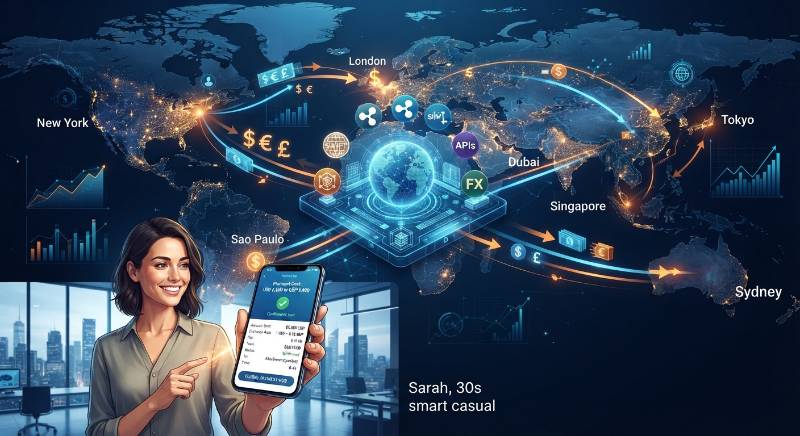
For digital brands operating on Amazon, Shopify, or regional marketplaces, payment friction directly reduces gross operating margins. Airwallex functions as a high-speed multi-currency collection engine by generating local virtual IBANs in key international jurisdictions.
This structure eliminates double conversion losses. An enterprise collecting EUR payouts can hold EUR balances directly and disburse funds to European marketing agencies via SEPA clearing, bypassing intermediary SWIFT fees entirely.
SaaS companies benefit from programmatic corporate debit cards and native payment gateway integrations. Batch payment APIs allow engineering teams to automate payouts to international contractors and vendors without manual teller approvals.
Traditional Trade, L/C Instruments, and Asset Holding
For import-export enterprises managing physical supply chains, bulk commodities, and manufacturing contracts, Tier-1 commercial banking institutions remain essential. Suppliers and sovereign buyers frequently require documentary Letters of Credit (L/C) issued by established institutions.
Pure asset-holding companies, family offices, and enterprises holding significant cash reserves also favor physical institutions. Tier-1 banks provide dedicated relationship managers, treasury deposit desks, wealth management custody, and access to the statutory HKMA Deposit Protection Scheme.
Compliance, Statutory CPA Audit, and Inland Revenue Department (IRD) Implications
Under Section 51 of the Hong Kong Inland Revenue Ordinance, all Hong Kong companies must maintain comprehensive business records and submit annual audited financial statements prepared by a Certified Public Accountant (CPA). Reconciling fintech transactions requires a different audit process than traditional bank accounts.
Traditional commercial banks issue standard bank confirmation letters directly to the independent auditor. This document independently verifies year-end balances, outstanding loan facilities, and contingent liabilities.
Fintech platforms require a more detailed documentation trail during the year-end statutory audit:
- API-Linked Transaction Ledgers: Complete electronic ledger extracts detailing every settlement, FX conversion event, and platform processing charge.
- Monthly Custody Statements: Official end-of-period PDF balance certificates verifying closing balances across all held virtual sub-accounts.
- Payment Gateway Matching: Clear reconciliation between merchant gateway payout batches (e.g., Stripe, Shopify Payments) and actual wallet inflows.
“Incomplete fintech transaction records are a common cause of audit delays and qualification notices from CPA firms. Maintaining organized monthly transaction logs protects your tax compliance standing with the Inland Revenue Department.”
— Hong Kong Practicing CPA, Olesen Global Advisory Panel
Partnering with an experienced firm for Hong Kong Accounting and Audit Services ensures your multi-currency collection records meet IRD requirements and pass annual statutory audits smoothly.
Mitigating Sudden Account Freezes: Automated Trigger Prevention & TCSP Governance
Fintech providers and traditional banks take different approaches to Anti-Money Laundering (AML) and Counter-Financing of Terrorism (CFT) monitoring. Understanding these operational differences protects your accounts from unexpected freezes.
Fintech platforms rely heavily on automated algorithmic risk engines. Rapid surges in incoming volume, sudden transfers from unverified third parties, or mismatched invoice descriptions can trigger instant algorithmic account locks without human warning.
Traditional commercial banks manage risk primarily through human compliance officers and Relationship Managers (RMs). While traditional account opening involves strict initial scrutiny, daily operations benefit from human review before formal account restrictions are applied.
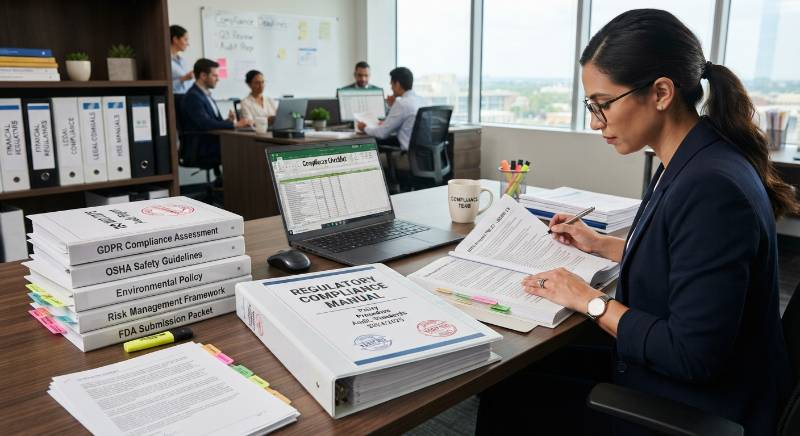
Maintaining clean corporate standing through a licensed Hong Kong Company Secretary Services provider is essential. Licensed TCSP firms ensure statutory registers, Significant Controllers Registers (SCR), and annual filings remain fully updated to satisfy periodic KYC reviews from banking partners.
The Hybrid Banking Architecture: Building a Dual-Engine Treasury Model
Modern enterprises increasingly move away from single-account arrangements. Instead, they deploy a Hybrid Treasury Architecture that leverages the speed of fintech alongside the stability of traditional banking infrastructure.
| Treasury Layer | Assigned Platform | Core Operational Function |
|---|---|---|
| Inbound Collection Engine | Airwallex Virtual Accounts | Collecting global marketplace sales, stripe settlements, and local payments in 60+ currencies. |
| Operational Expense Engine | Airwallex Corporate Cards / Local Clearing | Disbursing international marketing spend, SaaS subscriptions, and remote contractor payouts. |
| Capital Custody & Treasury Reserve | Tier-1 Hong Kong Bank (HSBC / SCB / BOC) | Holding core working capital reserves, term deposits, and DPS-protected operating liquidity. |
| Statutory Compliance & Local Settlements | Tier-1 Hong Kong Bank | Executing IRD profits tax payments, commercial office lease transfers, and trade financing. |
To successfully implement this dual-engine framework, follow our corporate setup checklist:
- Step 1: Complete compliant incorporation through a licensed Hong Kong corporate service provider.
- Step 2: Set up an Airwallex account to immediately handle digital merchant collections and vendor disbursements.
- Step 3: Prepare full business proof dossiers, contracts, and financial projections for traditional commercial bank verification.
- Step 4: Secure dedicated Corporate Bank Account Opening Support for physical branch verification and KYC review.
- Step 5: Connect automated cloud accounting integrations across both platforms for clean year-end audit trails.
Frequently Asked Questions
Is Airwallex legally considered a bank in Hong Kong?
No. Airwallex is licensed as a Money Service Operator (MSO) and holds Stored Value Facility (SVF) regulatory credentials. It is not an Authorized Institution under the Hong Kong Banking Ordinance and is not covered by the statutory Deposit Protection Scheme (DPS). Customer funds are safeguarded within segregated client trust accounts held at licensed commercial partner banks.
Can non-resident company directors open an Airwallex Hong Kong account remotely?
Yes. Airwallex offers a fully digital onboarding process for overseas directors and ultimate beneficial owners (UBOs). Verification is completed via passport scanning and biometric facial recognition, avoiding the need for an in-person visit to Hong Kong.
What business proof is required to open a traditional Hong Kong corporate bank account?
Traditional banks require valid incorporation documents, Business Registration Certificates, Articles of Association, director identity cards/passports, residential address verification, and substantial business proof. This proof includes signed commercial contracts, counterpart invoices, shipping documents (Bills of Lading), and 3 to 6 months of corporate bank statements from associated or parent trading entities.
How do CPA auditors verify fintech account balances during statutory annual audits?
Because fintech platforms do not use traditional physical bank confirmation letters, Hong Kong CPA auditors verify balances through certified month-end statement exports, real-time balance certificates, transaction-level API logs, and reconciliations against connected merchant gateway deposits and operational ledgers.
Establish Your Robust Hong Kong Banking Infrastructure
Setting up your international corporate structure requires the right combination of operational speed, regulatory compliance, and banking relationships. Navigating onboarding criteria across fintech platforms and Tier-1 commercial banks is much simpler with an established local partner.
Build Your Compliant Dual-Engine Corporate Treasury
Olesen Global is a first-hand, TCSP-licensed corporate service provider (TC010076) with physical offices in Hong Kong. We provide direct, transparent corporate formation, statutory audit coordination, and tailored banking support without intermediaries.