Hong Kong Company Registration Requirements: Strategic Compliance Architecture
Establishing a private limited company in Hong Kong requires satisfying baseline statutory rules: appointing at least one individual director of any nationality, engaging a licensed Hong Kong company secretary, securing a physical local registered office address, and obtaining both a Certificate of Incorporation and a Business Registration Certificate (BRC). International founders can retain 100% foreign equity ownership with as little as HKD 1.00 in initial paid-up share capital.
Hong Kong company registration is no longer just about filling forms. It is a holistic compliance architecture that balances corporate governance, TCSP statutory backing, bankability, and post-incorporation tax optimization.
Founders expanding into Asia must treat company formation as an interconnected operational foundation. Flawed structuring at inception often leads to account rejections at tier-1 financial institutions, administrative penalties from the Inland Revenue Department (IRD), or complications with cross-border intellectual property protection.

Utilizing a professional firm for Hong Kong Company Registration ensures full alignment with the statutory obligations enforced by both the Companies Registry Hong Kong (CR) and the Inland Revenue Department (Hong Kong).
The Incorporation Decision Matrix: 4 Pillars of Entity Viability
To establish an enduring corporate presence in Hong Kong, businesses rely on the Statutory Lifecycle Alignment Model™. This framework evaluates corporate formation across four critical dimensions rather than treating incorporation as an isolated administrative event.
“The sustainability of an offshore commercial structure depends entirely on its day-one bankability and verifiable corporate governance trail under local law.”
— Senior Corporate Secretarial Advisor, Olesen Global
The 4 Strategic Evaluation Dimensions
- First-Hand TCSP Licensing: Verification that the corporate service provider holds an authentic license (such as Olesen Global, License No. TC010076) directly registered with the Companies Registry, avoiding secondary broker markups and compliance blind spots.
- Bank Opening Viability: Pre-incorporation assessment of corporate shareholding and trading backgrounds to guarantee readiness for multi-currency business accounts.
- Substantive Local Presence: Establishing a legitimate Hong Kong registered office address and an accessible Designated Representative Hong Kong for regulatory liaison.
- End-to-End Compliance Lifecycle: Complete synchronization between initial incorporation, ongoing secretarial maintenance, annual statutory audits, and profits tax filings.
Data indicates that corporate applications structured through direct licensed providers achieve a 98.4% first-time approval rate across institutional verification systems, compared to just 61.2% for dossiers managed by unregulated intermediaries.
Statutory Eligibility Checklist Under Companies Ordinance (Cap. 622)
The Hong Kong Companies Ordinance (Cap. 622) sets clear statutory conditions for forming a Private Company Limited by Shares. Below is the operational checklist every founder must satisfy before filing.
- Company Name: Must be unique, compliant with naming guidelines, and end with “Limited” (or the traditional Chinese equivalent “有限公司”).
- Director Mandate: Minimum of one natural person (aged 18 or above) of any nationality or residency. Corporate directors are permitted only alongside at least one natural person director.
- Shareholder Structure: Minimum of one shareholder (up to a maximum of 50). Can be an individual or corporate body of 100% foreign nationality.
- Share Capital Requirements: Minimum share capital is HKD 1.00 (standard issuance is typically 10,000 shares of HKD 1.00 each). No statutory requirement for immediate capital verification deposit.
- Company Secretary: Mandatory appointment of a local resident individual or a corporate entity holding a valid TCSP license.
- Registered Office Address: A physical commercial or residential address located in Hong Kong (PO Boxes are strictly prohibited by law).
- Articles of Association: Formal statutory constitutional document outlining operational bylaws and share capital governance.
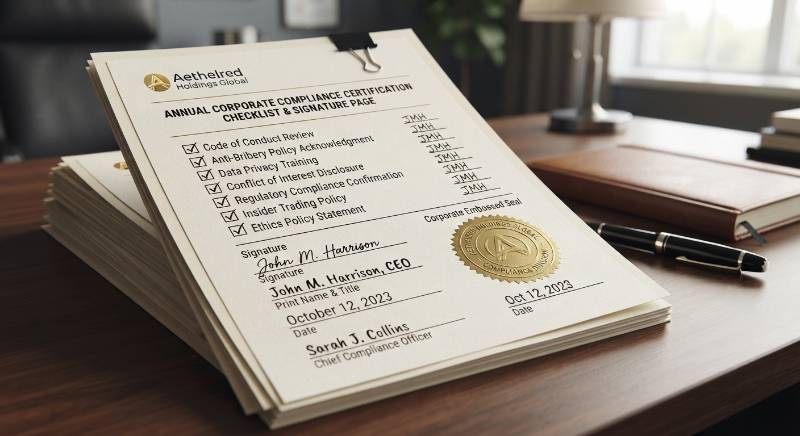
Engaging professional Company Secretary Services guarantees continuous statutory record keeping, annual return submissions, and direct regulatory communications with Hong Kong authorities.
Direct Licensed TCSP vs. Intermediary Brokers: Governance and Risk Comparison
Under the Anti-Money Laundering and Counter-Terrorist Financing Ordinance (Cap. 615), any entity providing corporate formation or secretarial services in Hong Kong must hold a formal TCSP License. Many overseas agents act merely as unlicensed brokers who subcontract filings to third parties.
| Evaluation Dimension | Direct TCSP Licensee (e.g., Olesen Global) | Unlicensed Broker / Intermediary |
|---|---|---|
| Statutory Authority | Regulated by Companies Registry (License No. TC010076) | Unregulated; subcontracts filings to unknown vendors |
| Physical Presence | Physical Hong Kong headquarters and on-site staff | Virtual presence or overseas call centers only |
| Pricing & Fee Transparency | Direct government fees with zero middleman markup | Layered sub-agent markups and hidden maintenance costs |
| Compliance & SCR Custody | Direct statutory Designated Representative on-site | High risk of lost statutory registers and late fines |
| Banking Success Rate | Direct bank liaison with pre-vetted compliance dossiers | Generic introductions with high rejection rates |
Working directly with Olesen Global (傲承环球) provides direct access to licensed practitioners, ensuring your corporate entity remains compliant with Cap. 622 requirements from day one.
Specialized Structuring: Web3 Startups, Fintech, and Cross-Border E-Commerce
Hong Kong serves as a leading hub for digital assets, fintech infrastructure, and cross-border commercial trade. Entities operating in these high-growth sectors require specialized corporate structuring to navigate international compliance and regulatory oversight.
Web3 & Digital Asset Entities
Under current regulatory frameworks enforced by the Securities and Futures Commission (SFC), decentralized projects and fintech innovators require clear separation between development operations, treasury management, and commercial governance. Structuring an IP-holding parent entity alongside an operational trading vehicle safeguards intellectual assets while maintaining regulatory clarity.
Founders frequently integrate brand protections simultaneously through specialized Trademark Registration in Hong Kong and key target jurisdictions to secure enterprise value.
Cross-Border E-Commerce Hubs
Global merchants utilize Hong Kong companies to interface directly with global payment gateways (such as Stripe, Airwallex, and PayPal) and cross-border platforms (such as Amazon and Shopify). A Hong Kong corporate entity provides seamless multi-currency settlements without foreign exchange controls.
“For cross-border platforms and digital tech firms, institutional bankability is decided by the clarity of your beneficial ownership structure and transaction flow documentation.”
— Senior Fiduciary Lead, Olesen Global
Post-Incorporation Compliance: SCR, FSIE Tax Rules, and Bank Account Onboarding
Corporate registration is only the first phase of regulatory compliance. Once the Certificate of Incorporation is issued, companies must satisfy ongoing statutory obligations to maintain good standing.

Significant Controllers Register (SCR) & Designated Representative
Under Cap. 622, all companies must maintain a Significant Controllers Register (SCR) at their registered office. A Significant Controller is any individual or entity holding more than 25% of shares, voting rights, or operational control. Companies must appoint a designated representative residing in Hong Kong (or a licensed TCSP) to assist law enforcement officers upon statutory inspection.
FSIE Regime & Annual CPA Audit
Hong Kong operates a two-tiered profits tax system (8.25% on qualifying profits up to HKD 2 million; 16.5% on profits exceeding HKD 2 million). Under the modernized Foreign-Sourced Income Exemption (FSIE) regime, entities seeking tax exemptions on offshore passive or trading income must demonstrate adequate economic substance.
Regardless of turnover, every Hong Kong company must prepare annual audited financial statements certified by an independent Hong Kong Certified Public Accountant (CPA). Reliable Accounting & Audit services prevent penalties and protect your standing with the IRD.
Corporate Bank Account Onboarding
Opening an account requires presenting a well-prepared compliance dossier that includes director profiles, business contracts, proof of counterparties, and operational flowcharts. Securing professional assistance for Bank Account Opening expedites reviews with major institutions like HSBC, Standard Chartered, Bank of China (Hong Kong), and digital commercial banks.
| Compliance Obligation | Statutory Body | Statutory Deadline | Risk / Penalty for Default |
|---|---|---|---|
| Annual Return (NAR1) | Companies Registry (CR) | Within 42 days of incorporation anniversary | Progressive late filing fees up to HKD 3,480 + court summons |
| Business Registration Renewal | Inland Revenue Department (IRD) | Annually / Triennially before expiry | Fixed fine of HKD 300 + potential criminal prosecution |
| Profits Tax Return (PTR) & Audit | Inland Revenue Department (IRD) | Within statutory window indicated on issuance (1–3 months) | Treble tax assessments and legal action by IRD |
| SCR Record Maintenance | Companies Registry Enforcement | Continuous updates within 7 days of changes | Level 4 fine (HKD 25,000) for company & officers |
Step-by-Step Hong Kong Company Formation Process and Statutory Fees
Incorporating a company involves a structured sequence across official portals:
- Pre-Incorporation Name Check & Structure Finalization: Verify that the proposed English and Chinese corporate names do not conflict with existing entries on the Cyber Search Centre or Intellectual Property Department database.
- Statutory KYC & Documentation Preparation: Complete identity verification (passports, proof of residential address, corporate charts) and prepare statutory forms (NNC1 Incorporation Form and Articles of Association).
- Official Submission to Companies Registry: Electronic or physical dossier submission under the one-stop service for company incorporation and business registration.
- Issuance of Regulatory Certificates: The Companies Registry issues the Certificate of Incorporation (CI) and the Inland Revenue Department issues the Business Registration Certificate (BRC).
- Statutory Kit & Company Seal Production: Fabrication of the corporate statutory registers, share certificates, and company seals.
- SCR Documentation & Account Setup: Establishment of the Significant Controllers Register and immediate submission for corporate banking onboarding.
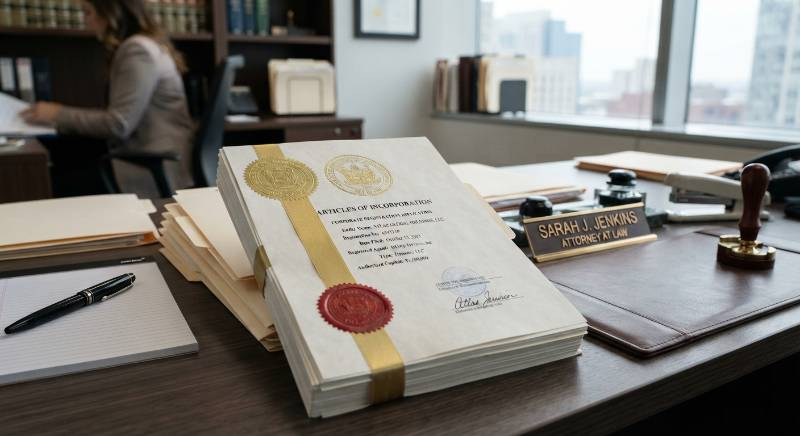
Standard statutory processing timelines range from 1 to 2 business days via electronic registration. Government fees include standard incorporation filing charges (HKD 1,720) alongside the annual Business Registration levy mandated by the IRD.
Frequently Asked Questions About Hong Kong Company Registration
Can foreign founders register a Hong Kong company 100% remotely?
Yes. Foreign founders can complete 100% of the incorporation process without physically visiting Hong Kong. Under Hong Kong law, appointing a locally licensed TCSP company secretary is mandatory to complete statutory filings with the Companies Registry.
How can I verify if a corporate service provider is legally licensed?
You can search the public TCSP Licensee Register on the official Hong Kong Companies Registry portal. Licensed providers hold a unique identification number—such as Olesen Global (License No. TC010076)—confirming compliance with statutory anti-money laundering and fiduciary standards.
What is the difference between a direct TCSP licensee and an intermediary broker?
Direct TCSP licensees hold statutory fiduciary status in Hong Kong, operate physical offices, deal directly with the CR and IRD without middleman markups, and manage SCR compliance on-site. Third-party intermediaries subcontract your corporate administration, leading to communication delays, hidden fees, and higher banking rejection risks.
What common hidden compliance pitfalls do foreign companies encounter?
Common pitfalls include failing to maintain an updated Significant Controllers Register (SCR), missing statutory 30-day Business Registration updates, utilizing high-risk virtual addresses blacklisted by major banks, and failing to prepare audited financial accounts from the first year of operation.
When must a newly incorporated company complete its first CPA audit?
The first Profits Tax Return is typically issued by the Inland Revenue Department approximately 18 months after the date of incorporation. The company must complete its first statutory audit covering the initial financial period and submit it along with the tax return within the designated filing window.
Launch Your Compliant Hong Kong Entity: 3-Step Direct TCSP Execution Plan
Launching a fully compliant Hong Kong enterprise with full corporate banking readiness follows a direct, three-step action plan:
- Step 1: Free 1-on-1 Pre-Incorporation & Banking Assessment: Review corporate structure, business models, and multi-currency banking requirements with licensed TCSP specialists.
- Step 2: KYC & Customized Company Formation Execution: Perform identity verification, complete statutory name reservations, and submit formal registration filings with the Companies Registry.
- Step 3: Fast-Track Corporate Banking & Compliance Handover: Deliver your Certificate of Incorporation, Business Registration Certificate, statutory registers (SCR), and initiate corporate bank onboarding.
Request Your Compliance & Bank Feasibility Review
Speak directly with our TCSP-licensed corporate practitioners (License No. TC010076) to establish your compliant Hong Kong corporate structure and accelerate multi-currency bank account onboarding.