HK vs. China Trademarks: A Strategic 2026 Comparison
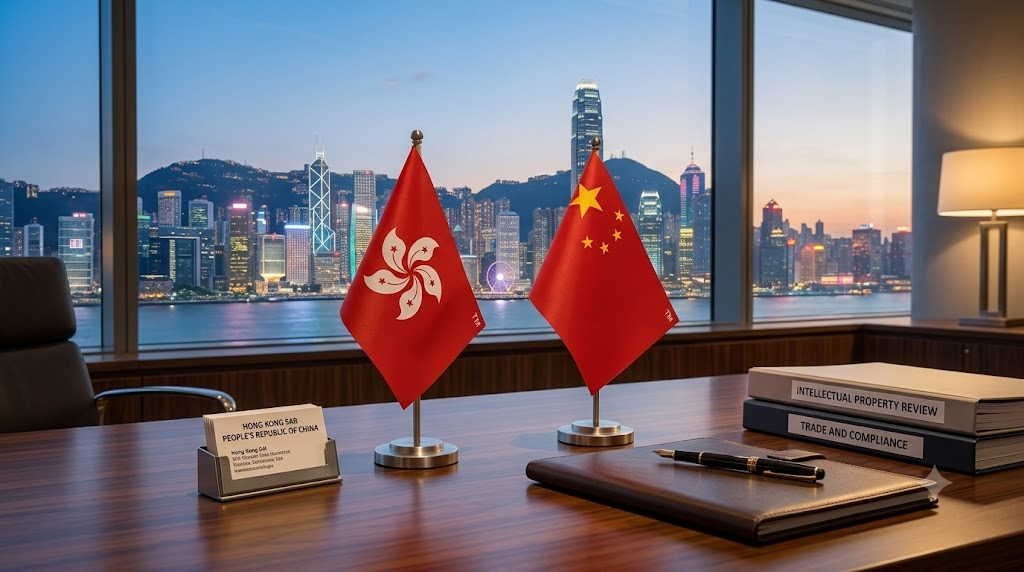
Navigating the “One Country, Two Systems” framework is the single most important hurdle for brands expanding into the Asian market. Despite being part of the same nation, the Hong Kong Intellectual Property Department (IPD) and the China National Intellectual Property Administration (CNIPA) operate as entirely independent legal jurisdictions.
A trademark registered in Mainland China provides zero protection in Hong Kong, and vice versa. This separation is governed by the Territoriality Principle, meaning your brand identity is only secure within the specific borders where you have filed for protection.
The 2026 IP Evaluation Framework: Defining Your Scope
At Olesen Global, we utilize The Dual-Gateway IP Matrix to help clients determine their filing sequence. This methodology evaluates three critical dimensions: immediate market revenue, supply chain location, and regional enforcement risk.
To protect your brand effectively in 2026, you must register your trademark in Mainland China if you manufacture or sell there, and separately in Hong Kong if you use the city as a financial hub, a retail market, or a gateway for international e-commerce. Failing to secure both often leads to “trademark squatting,” where third parties hijack your brand name in the jurisdiction you neglected.
“In the 2026 Greater Bay Area economy, IP protection is no longer about choice; it is about sequence. Secure the jurisdiction where your contract is signed first, then secure where your goods are moved.”
— Senior IP Counsel, Olesen Global
Key Differences: Legal Principles and Registration Timelines
The legal systems of these two regions couldn’t be more different. Mainland China follows a civil law system with a strict First-to-File rule. This means the first person to register the mark owns it, regardless of who used it first. In contrast, Hong Kong is a common law jurisdiction that acknowledges First-to-Use rights, providing a safety net for established brands, though formal registration remains the only way to gain statutory protection.
| Feature | Hong Kong (IPD) | Mainland China (CNIPA) |
|---|---|---|
| Legal System | Common Law | Civil Law |
| Primary Principle | First-to-Use / Intent to Use | First-to-File |
| Registration Timeline | 6 – 9 Months | 9 – 14 Months |
| Opposition Period | 3 Months | 3 Months |
| Madrid Protocol | Applicable via China | Member State |
Strategic Filing for Tmall Global and Cross-Border E-commerce
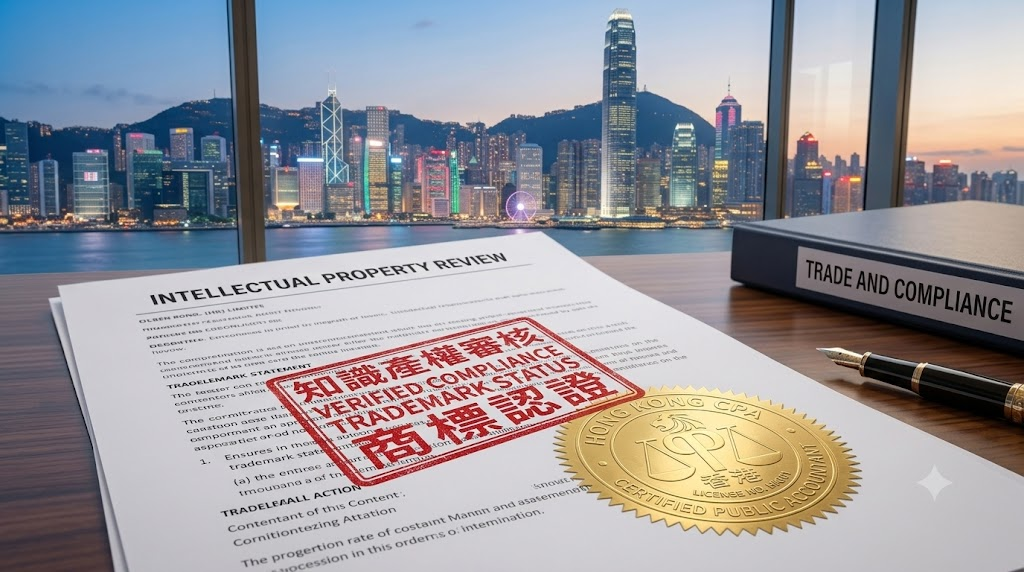
For a cross-border e-commerce firm, the sequence of filing is a tactical necessity. Most international brands enter the Chinese market via Tmall Global or JD Worldwide. These platforms often require a registered trademark in the brand’s home country or Hong Kong to open a flagship store.
By leveraging Hong Kong Company Formation, businesses can establish a local entity to hold their IP assets. This setup provides a professional corporate image and offers tax efficiencies for royalty payments, while satisfying the stringent IP requirements of Chinese e-commerce giants.
Protecting Digital Assets: AI-Generated Logos and Web3 IP
As we move through 2026, the Greater Bay Area (GBA) has become a hub for Web3 IP and digital economy assets. For a Web3 startup in Cyberport, registering a trademark for an NFT collection or a decentralized app (dApp) name requires a nuanced approach.
While the World Intellectual Property Organization (WIPO) provides guidelines, local enforcement differs. Hong Kong’s courts are increasingly adept at handling digital asset disputes. We recommend filing under specific Nice Classification classes (such as Class 9 for downloadable software and Class 42 for SaaS) in both jurisdictions to prevent digital “brand-jacking” in the metaverse.
Cost Estimator: Budgeting for Multi-Jurisdictional Filing
Budgeting for IP protection involves more than just official government fees. It includes search reports, professional filing fees, and potential response costs for office actions or Trademark opposition.
Working with a TCSP-licensed provider (License No. TC010076) like Olesen Global ensures you are dealing with a direct service provider. Unlike “middleman” agencies that outsource work to third-party lawyers, we manage the process internally. This “No Middleman” approach reduces your total expenditure and ensures 1-on-1 progress tracking.
Why Olesen Global: Direct Licensed Expertise in Hong Kong
Olesen Global is not just a consultancy; we are a physical, Hong Kong-based licensed provider. Our expertise extends beyond registration to include HK Company Secretary Services and comprehensive accounting support. This holistic view allows us to align your trademark strategy with your broader corporate compliance needs.
We provide Direct Filing Methodology Disclosure: every application we handle is submitted directly to the IPD or through our verified Mainland partners, ensuring maximum transparency and the highest success rates for brand approval.
Frequently Asked Questions on HK and China Trademarks
Can I use the Madrid Protocol for both China and Hong Kong?
Yes, but with caveats. While Mainland China is a member of the Madrid Protocol, Hong Kong’s application of the protocol is technically an extension of China’s membership. Direct filing is often faster and allows for more precise control over the Nice Classification sub-classes, which is vital for enforcement in China.
How do I verify if a trademark agent is licensed?
In Hong Kong, ensure your provider holds a valid TCSP license. Olesen Global holds license TC010076. You can verify this on the Registry of Trust and Company Service Providers website. Licensed providers are subject to strict anti-money laundering (AML) and professional conduct regulations.
What is the best way to prevent trademark squatting?
The most effective strategy is a “Defensive Filing.” Even if you do not plan to sell in Mainland China immediately, registering your core brand names and logos in the Paris Convention priority period (within 6 months of your first filing) prevents others from doing so in bad faith.
Secure Your Brand in the Asian Market Today
Don’t leave your brand’s future to chance. Consult with our licensed experts to build a robust IP shield across Hong Kong and Mainland China.