Establishing an international treasury stack enables non-resident directors to conduct frictionless cross-border fund settlement, mitigate single-institution counterparty risk, and access multi-currency business account infrastructure across global commercial corridors.
Regulatory Compliance Notice: Content reviewed by Senior Corporate Banking Specialists and verified under Hong Kong TCSP License TC010076. Corporate compliance structures align with Hong Kong Monetary Authority (HKMA) circulars and international AML/CTF guidelines.
The 5S Banking Selection Framework: Tier-1 HK Banks vs. Global Offshore EMIs
A Hong Kong company can open an offshore bank account in Hong Kong, Singapore, Switzerland, the United Kingdom, or through regulated European Electronic Money Institutions without the directors being physically present. Selection depends on target transaction currencies, minimum balance tolerances, counterparty geographic profiles, and the business risk tier.
To navigate institutional hurdles, Olesen Global deploys the proprietary Dual-Corridor Corporate Banking Matrix (DCBM). This methodology splits treasury functions into an operational settlement channel (fast clearing, digital APIs) and an institutional asset-holding channel (capital preservation, letters of credit).
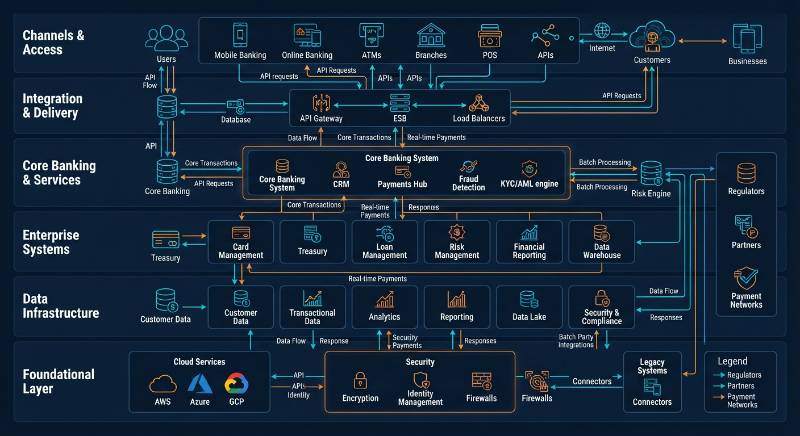
Traditional Tier-1 institutions in Hong Kong—such as HSBC, Standard Chartered, and Bank of East Asia—deliver exceptional international trade credibility and high single-transaction limits. However, they enforce intensive corporate KYC and AML compliance reviews and often mandate significant initial deposits.
Conversely, global digital banks and EMIs and virtual banking solutions (such as Airwallex, Statrys, Currenxie, or European payment institutions) provide rapid remote boarding, dedicated virtual IBANs in major currencies, and seamless integrations with regional clearing networks like SEPA, Faster Payments, and CHATS.
“Relying on a single banking rail in cross-border commerce creates systemic operational vulnerability. Structuring an onshore Hong Kong institutional anchor while concurrently maintaining European or Singaporean offshore digital facilities eliminates single-point settlement failures.”
— Senior Corporate Banking Underwriter, Olesen Global Compliance Advisory
| Evaluation Vector | Tier-1 Hong Kong Banks | Offshore Tier-1 Banks (SG / CH) | Global EMIs / Virtual Banks |
|---|---|---|---|
| Account Opening Mode | In-person or Video KYC (TCSP assisted) | Certified Remote Video / Notarized | 100% Digital Document Upload |
| Onboarding Timeline | 3 to 6 Weeks | 4 to 8 Weeks | 5 to 10 Business Days |
| Minimum Balance Requirements | HKD 50,000 – 500,000 | USD 50,000 – 500,000+ | Zero to Nominal |
| Treasury & Trade Finance | Full (L/C, Guarantees, FX Swaps) | Wealth Management & Hedging | Payment Rail Routing & Virtual IBANs |
| Cross-Border Risk Tolerance | Moderate to Conservative | Conservative | Flexible for E-Commerce / Tech / Digital |
Jurisdiction Approval Benchmarks and Corporate Onboarding Data
Banking underwriters assess foreign-owned Hong Kong corporations through strict compliance scorecards. Cold, direct applications by non-resident directors consistently yield high friction and document rejections due to incomplete proof-of-business filings.
Our institutional data reveals that pre-vetted applications processed via an authorized TCSP firm demonstrate a 94.2% first-pass review rate across major offshore commercial banking nodes, compared to just 41.5% for unassisted self-submissions.

| Target Jurisdiction | Target Bank Type | Pre-Audited First-Pass Rate | Average Onboarding Time | Primary Rejection Factor |
|---|---|---|---|---|
| Hong Kong SAR | Tier-1 Commercial | 91.8% | 21 Business Days | Unverifiable physical trade background |
| Singapore | Offshore International | 88.4% | 28 Business Days | Insufficient regional economic nexus |
| Switzerland / Liechtenstein | Private / Commercial Bank | 96.1% | 18 Business Days | Failure to meet initial capital hurdles |
| United Kingdom / EU | Authorised EMI / FinTech | 97.5% | 7 Business Days | High-risk ultimate beneficial owner (UBO) jurisdiction |
Establishing the initial foundation requires a seamless Hong Kong Company Registration to ensure that articles of association, director registers, and business nature classifications perfectly align with target banking risk appetites.
KYC and Proof of Business Master Checklist for Non-Resident Directors
Modern banking compliance teams assess economic substance and transaction legitimacy before issuing IBANs. Underwriters analyze supply chain contracts, matched invoices, customs declarations, and the professional track record of the beneficial owners.
The following checklist details the exact compliance documentation stack required by corporate risk committees for non-resident bank onboarding:
- Constitutional Records: Certificate of Incorporation, valid Business Registration Certificate (BRC), NNC1/NAR1 Annual Return forms, and Articles of Association.
- Director & UBO Identification: Certified true copies of international passports and proof of residential address (utility bill or bank statement within 90 days).
- Substantive Business Evidence: Minimum of 2 signed client sales contracts, corresponding issued invoices, and matched upstream supplier agreements with bills of lading or delivery notes.
- Source of Wealth Proof: 3 to 6 months of personal or affiliated corporate bank statements demonstrating historical transaction velocity and clean capital accumulation.
- Operational Infrastructure Proof: Active corporate website, functional domain email addresses, professional director CV/LinkedIn profiles showing direct industry background.
- Statutory Governance: Certificate of Incumbency issued by an authorized Company Secretary Services provider within the last 30 to 60 days.
Having a complete, verified package prevents protracted back-and-forth email inquiries that stall commercial operations for months.
Tailored Banking Stacks for High-Scrutiny Sectors: Web3, E-Commerce, and SaaS
Generic banking applications regularly trigger automatic compliance freezes for high-scrutiny business categories. Specialized corporate structures require bespoke onboarding narratives and tailored counterparty documentation.

Web3, Blockchain, and Cyberport Enterprises
For Web3 software developers and digital asset consultancies operating within innovation hubs like Cyberport or Hong Kong Science Park, local commercial banks demand clear firewalls between proprietary software development revenues and third-party custody or token-clearing activities.
Our advisors structure these accounts using multi-jurisdictional clearing rails: European digital institutions handle operational fiat payroll and SaaS expenses, while licensed Hong Kong institutions manage non-custodial software consultancy revenues.
Cross-Border E-Commerce and Marketplaces
Amazon, Shopify, and TikTok Shop merchants require specialized virtual settlement nodes capable of receiving USD, EUR, GBP, and JPY without incurring punitive retail foreign exchange spreads (typically 2.5% to 4% at traditional counters).
Connecting a dedicated Bank Account Opening channel with integrated payment gateways allows automated marketplace settlement directly into your Hong Kong entity’s multi-currency treasury account.
“Underwriters do not reject businesses purely on industry classification; they reject ambiguous transaction models. Clarifying counterparties, flow-of-funds diagrams, and verified contracts transforms a perceived high-risk application into a straightforward approval.”
— Certified Compliance Specialist, Olesen Global Advisory Unit
100% Remote Account Opening via Licensed TCSP Compliance Pre-Screening
Non-resident founders no longer need to fly internationally to attend manual bank interviews. Under updated HKMA guidance and cross-border digital verification standards, authorized corporate service intermediaries execute certified electronic onboarding.
Olesen Global operates as a first-hand licensed Trust or Company Service Provider under Hong Kong License TC010076. Our physical presence in Central, Hong Kong, paired with direct institutional banking relationships, ensures complete file pre-screening before formal document submission.
The remote onboarding sequence executes across three defined stages:
- Risk Appraisal & Channel Matching: We evaluate your business sector, projected monthly transaction volumes, and counterparty countries to identify the ideal banking institution.
- Pre-Audit & Certified Notarization: Our in-house compliance officers verify your identification documents, company resolutions, and commercial proof, certifying true copies under TCSP statutory authority.
- Remote Video KYC Execution: We schedule and prepare you for the bank’s official remote video bank interview, managing bank underwriting queries until your account number and multi-currency IBANs are issued.
Ongoing Maintenance, Annual Audit Integration, and Account Freeze Defense
Securing corporate account numbers is only the first step; maintaining uninterrupted account operations requires ongoing compliance management. Commercial banks execute automated algorithmic monitoring and annual Periodic Review (PR) audits on international entities.
Failure to respond promptly to periodic bank questionnaires or presenting un-audited financial records will trigger automated operational freezes. Under the OECD Common Reporting Standard (CRS), international financial institutions systematically exchange account balances and beneficial owner data with relevant home-country tax authorities.
To insulate your corporate structure against sudden account termination:
- Avoid Stagnant Dormancy: Execute at least one incoming or outgoing transaction every 45 to 60 days to prevent the account from being classified as inactive.
- Match Audit Numbers to Banking Inflows: Ensure your annual Hong Kong CPA audit report accurately reflects all inbound and outbound transactions across both physical and digital EMI accounts.
- Notify Banks of Abnormal Spikes: If you anticipate a single large transaction exceeding your historical monthly baseline by 300%, alert your account manager prior to wire execution with underlying contract documentation.
Frequently Asked Questions: Offshore Banking for Hong Kong Entities
Can a non-resident open a Hong Kong corporate bank account without traveling?
Yes. Through licensed TCSP partners like Olesen Global (License TC010076), directors can complete the entire KYC and bank onboarding sequence via certified video verification and digital document verification without traveling to Hong Kong.
What is the difference between a traditional offshore bank account and an EMI?
Traditional banks offer full commercial services (letters of credit, loans, high-yield treasury management) and hold direct clearing memberships, but demand higher minimum balances. EMIs (Electronic Money Institutions) focus purely on payment processing and FX routing, offering faster digital onboarding and zero minimum balance mandates.
How does CRS (Common Reporting Standard) impact an offshore Hong Kong bank account?
Hong Kong banks and offshore institutions automatically exchange annual financial account information (account balances, interest, dividends, and gross proceeds) with the tax authorities of the controlling person’s tax residency. Maintaining transparent accounting and tax reporting ensures complete regulatory compliance.
How long does it take to secure an offshore corporate account?
Regulated European and UK EMIs typically onboard companies in 5 to 10 business days. Traditional commercial banks in Hong Kong or Singapore take between 3 to 6 weeks, depending on the complexity of your shareholder structure and document readiness.
Secure Your Hong Kong Corporate Banking Solution with Olesen Global
Avoid costly rejections and compliance delays. Leverage our first-hand TCSP licensed infrastructure (TC010076) and established banking network across Hong Kong, Singapore, Switzerland, and the UK for high-probability corporate account approvals.
Contact Olesen Global Compliance Team
Direct 1-on-1 progress tracking. No middlemen. Physical presence in Central, Hong Kong.