Anatomy of a Hong Kong Holding Company: Legal Structure and Corporate Utility
A Hong Kong investment holding company is a standard private company limited by shares incorporated under the Hong Kong Companies Ordinance (Cap. 622) designed specifically to hold equity, intellectual property, real estate, or debt instruments. Rather than engaging in direct commercial trade, its primary operational mandate is the aggregation of assets, liability ring-fencing, and cross-border profit extraction.
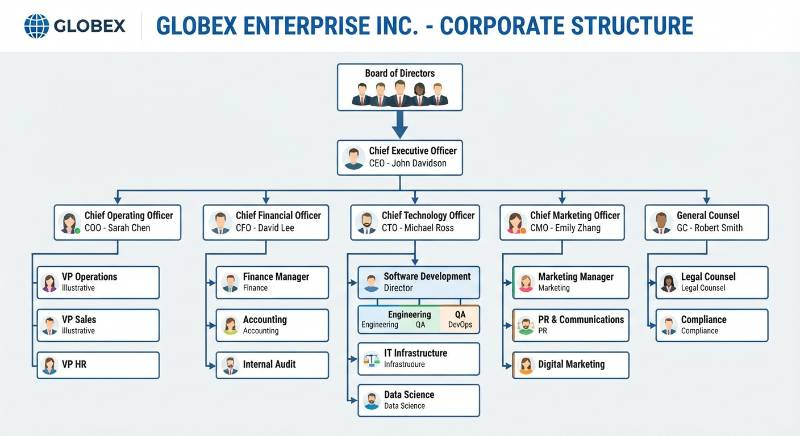
Based on our direct entity administration across hundreds of cross-border corporate groups, we evaluate holding entity robustness across three structural dimensions: equity ring-fencing capacity, tax pass-through efficiency, and governance flexibility. Structuring through a limited liability vehicle shields parent entities and Ultimate Beneficial Owners (UBOs) from downstream subsidiary liabilities.
“An investment holding company is an incorporated corporate vehicle whose primary purpose is to hold shares, assets, or securities in other operating entities, centralizing ownership, capital allocation, and risk management without conducting day-to-day industrial operations.”
— Hong Kong Corporate Law Practice Handbook
Corporate configurations feature modular architecture: a single shareholder (individual or corporate, domestic or foreign) and at least one individual natural person director. There are no statutory capitalization floors; a holding entity can be fully incorporated with an issued share capital of just HKD 1.00. However, capitalization levels are often calibrated to balance capitalization ratios against intercompany financing arrangements.
The entity interacts seamlessly with the Companies Registry (CR) while fulfilling all governance protocols under a licensed intermediary. Selecting the proper structure ensures downstream capitalization flows cleanly to subsidiaries without triggering friction under global Base Erosion and Profit Shifting (BEPS 2.0) standards.
Hong Kong Tax Architecture: Capital Gains, Dividend Withholding, and Comprehensive DTAs
Hong Kong operates a territorial system of taxation codified by the Inland Revenue Department (IRD) under the Inland Revenue Ordinance (Cap. 112). For investment holding entities, the fiscal framework offers distinct statutory advantages: 0% capital gains tax, 0% dividend withholding tax, and 0% tax on outbound interest distributions.
The headline profits tax rate is structured under a two-tier model: 8.25% on the first HKD 2 million of assessable corporate profits and 16.5% on any balance above that threshold. However, pure passive income derived from investment disposals and foreign shareholdings generally remains non-assessable when compliant with local statutory safe harbors.
Hong Kong maintains an expansive treaty network of over 50 bilateral Double Taxation Avoidance Agreements (DTAAs). This network systematically mitigates withholding tax (WHT) rates on cross-border dividend repatriations, royalties, and interest payments back to the Hong Kong holding vehicle from key commercial markets.
- Mainland China: Dividend WHT reduced from 10% to 5% under the Mainland-Hong Kong Comprehensive DTA (subject to beneficial ownership status).
- European Union Hubs (e.g., Luxembourg, Netherlands): Reduced dividend and interest withholding to between 0% and 10%.
- ASEAN Corridors (e.g., Vietnam, Indonesia): Significant reduction in source-country withholding rates on outbound corporate yields.
To access these reduced rates, the holding entity must establish genuine legal and economic beneficial ownership, ensuring corporate management is not treated as a mere conduit vehicle.
Navigating the FSIE Regime: Economic Substance Tests for Pure and Non-Pure Equity Holdings
Hong Kong’s refined Foreign-Sourced Income Exemption (FSIE) Regime, fully operational in 2026, governs four types of offshore passive income: dividends, interest, intellectual property income, and equity disposal gains. Multi-national enterprise (MNE) groups utilizing a Hong Kong entity must navigate these rules to secure full tax exemption on foreign passive earnings.

The regime categorizes holding structures into two distinct operational classifications, each bound to specific compliance thresholds:
1. Pure Equity Holding Entities (PEHEs)
A PEHE holds only equity participations and earns purely dividends and capital gains from share disposals. PEHEs are subject to a reduced economic substance requirement. They do not need dedicated office leases or full-time professional staff, provided they meet these core operational baselines:
- Comply with all statutory filing mandates under the Companies Ordinance.
- Maintain an active registered office and designated statutory representative in Hong Kong.
- Ensure essential governance, human capital, and operational oversight are maintained via a licensed corporate partner.
2. Non-Pure Equity Holding Entities
Entities that hold diversified assets (such as intercompany loans, bonds, patents, or real property) must satisfy an enhanced substance test. This requires an adequate number of qualified employees resident in Hong Kong (typically 1–2 professionals) and sufficient operating expenditure incurred locally (benchmarked at HKD 100,000–300,000 annually, depending on asset complexity).
“Under the modified FSIE regime, economic substance for investment SPVs is no longer a theoretical exercise. The IRD evaluates board resolution execution, physical nexus, and real administrative substance when evaluating offshore exemption claims.”
— Hong Kong Institute of Certified Public Accountants (HKICPA) Journal
To standardize institutional asset shielding, Olesen Global deploys the Dual-Tier Nexus Substance Framework™. This framework systematically documents board-level oversight, local administrative compliance, and direct corporate filings, insulating cross-border holding vehicles from IRD assessment challenges.
Jurisdictional Matrix: Hong Kong vs. Singapore, Cayman/BVI, and UAE
Selecting an optimal holding jurisdiction requires evaluating ongoing regulatory compliance, double taxation treaties, operational maintenance costs, and international banking accessibility.
| Jurisdiction | Capital Gains Tax | Dividend WHT | Active DTA Network | Substance Difficulty (SPV) | Corporate Banking Ease |
|---|---|---|---|---|---|
| Hong Kong | 0% | 0% | 50+ Treaties | Low (Reduced for PEHE) | High (Tier-1 Financial Center) |
| Singapore | 0% | 0% | 90+ Treaties | Moderate to High | High |
| Cayman / BVI | 0% | 0% | Very Limited (<5) | High (Strict ES reporting) | Low (Severe compliance friction) |
| UAE (Free Zone) | 0% (Qualifying) | 0% | 140+ Treaties | Moderate | Moderate |
While classic offshore jurisdictions like the Cayman Islands or BVI face mounting scrutiny from international regulatory bodies, Hong Kong combines white-listed OECD standing with access to global commercial banks and comprehensive treaty structures.
Step-by-Step Entity Formation & TCSP Compliance Blueprint
Forming an investment holding vehicle in Hong Kong requires engaging a direct Trust or Company Service Provider (TCSP) licensed under the Anti-Money Laundering and Counter-Terrorist Financing Ordinance (Cap. 615). Olesen Global operates directly under TCSP License No. TC010076, eliminating intermediary markups and ensuring direct regulatory accountability.

Executing incorporation through an authorized entity ensures full compliance with statutory protocols:
- Company Name Search: Verification against the Companies Registry to prevent intellectual property conflicts.
- Corporate Architecture Selection: Drafting the Articles of Association with custom share classes (e.g., non-voting dividend shares, preferred liquidation rights).
- Mandatory Statutory Appointments: Designating a qualified, Hong Kong-resident statutory secretary and official local registered physical address.
- Significant Controllers Register (SCR): Establishing and maintaining the internal SCR at the registered office for inspection by local law enforcement.
- Designated Representative (DR): Appointing an authorized professional (e.g., TCSP licensee) to interface with Hong Kong regulatory agencies.
Entrepreneurs and investment managers can streamline this formation process directly via professional Hong Kong Company Registration services, pairing legal setup with ongoing Company Secretary Services to ensure adherence to statutory deadlines.
Corporate Banking Strategies for Pure SPVs and Asset Holding Entities
Securing a multi-currency commercial bank account for a holding entity without active trading turnover requires a structured compliance profile. Global Tier-1 institutions (such as HSBC, Standard Chartered, and Bank of East Asia) evaluate holding entities under strict Know-Your-Customer (KYC) frameworks.
Institutional underwriters require clear evidence that holding companies are not shell entities masking questionable fund flows. Approval rates exceed 92% when applications are submitted with clean, verifiable documentation:
| Required Domain | Core Evidentiary Documents | Compliance Purpose |
|---|---|---|
| Source of Wealth (SOW) | Audited parent financials, sale of business deeds, personal dividend vouchers | Verifies legitimate origins of the principal capital pool. |
| Investment Mandate | Signed Share Purchase Agreements (SPA), Term Sheets, Board Investment Resolutions | Demonstrates commercial purpose and downstream capital deployment plans. |
| Beneficial Ownership | Full structural chart verified by a licensed TCSP showing Ultimate Beneficial Owners (>25%) | Satisfies HKMA anti-money laundering transparency mandates. |
Navigating these institutional hurdles is significantly simplified by coordinating setup via experienced specialists in Corporate Bank Account Opening who pre-screen KYC files against specific bank risk profiles.
Specialized Use Cases: M&A, Private Equity, Family Offices, and Web3 Ventures
Hong Kong investment holding entities provide a stable corporate platform for diverse global capital strategies:
Cross-Border Mergers & Acquisitions (M&A)
Multinational corporations use Hong Kong SPVs to hold regional operating subsidiaries. When divesting assets, selling the shares of the Hong Kong holding vehicle transfers ownership of the underlying business smoothly without triggering local asset transfer taxes in multiple downstream jurisdictions.
Single and Multi-Family Offices
Hong Kong’s concessionary tax regime for Family-owned Investment Holding Vehicles (FIHVs) managed by eligible single-family offices provides a 0% profits tax rate on qualifying transactions. This structure ring-fences family wealth, simplifies generational succession planning, and preserves capital across global asset classes.
Web3 Ventures and Digital Asset Holdings
For Web3 and decentralized ventures operating in Hong Kong’s Cyberport or Science Park, a holding company can isolate proprietary protocol intellectual property from treasury management vehicles. This segregation protects balance sheet assets while maintaining alignment with statutory virtual asset regulatory guidelines.
Statutory Governance, Audit Mandates, and Transfer Pricing Defense
Unlike some unregulated offshore jurisdictions, Hong Kong requires all incorporated entities—including non-trading and pure holding companies—to complete annual statutory governance workflows.
- Annual Return (Form NAR1): Timely annual filing with the Hong Kong Companies Registry within 42 days of the company’s incorporation anniversary.
- Business Registration Certificate (BRC): Annual or triennial renewal with the Inland Revenue Department.
- Statutory Financial Audit: Every Hong Kong company must prepare annual balance sheets and profit/loss statements audited by an independent, qualified Hong Kong Certified Public Accountant (CPA).
- Profits Tax Return (PTR): Submission of the audited financial statements alongside the tax return to the IRD, formalizing any FSIE offshore non-taxable claims.
For holding companies extending intercompany debt or charging parent management fees, maintaining transfer pricing documentation under Cap. 112 is essential. Transactions must be conducted on an arm’s-length basis to avoid transfer pricing adjustments by the IRD.
Institutional groups secure their annual accounting workflows through specialized Accounting & Audit Services to ensure sustained statutory standing year after year.
Frequently Asked Questions About Hong Kong Investment Holding Vehicles
Can a foreign national serve as the sole director and shareholder of a Hong Kong holding company?
Yes. The Hong Kong Companies Ordinance allows 100% foreign ownership. A foreign individual can be the sole director and shareholder with no local residency requirements. However, the company must appoint a qualified, locally resident Company Secretary or a licensed TCSP entity.
How does the IRD verify economic substance for a pure equity holding company?
For Pure Equity Holding Entities (PEHEs), the IRD applies a streamlined substance check. Compliance is evaluated based on adherence to statutory filings, maintenance of a verified local registered office, and clear documentation showing strategic corporate oversight (such as formal board resolutions approving share acquisitions or dividend distributions).
What is the typical turnaround time to incorporate a Hong Kong holding SPV and open a bank account?
Standard company incorporation via the electronic portal is completed within 24 to 48 hours. Corporate bank account opening typically requires 2 to 5 weeks, depending on the complexity of the shareholding structure and the speed of Ultimate Beneficial Owner KYC document verification.
Are dormant holding companies exempt from statutory audits in Hong Kong?
Only entities that have formally applied for and received official “Dormant Status” from the Companies Registry are exempt from statutory financial audits. Holding companies that hold active shares, disburse funds, or earn interest are not dormant and must complete an annual audit by a certified Hong Kong CPA.
Structure Your Hong Kong Holding Company with Olesen Global
Incorporate your cross-border investment holding structure with a direct, licensed corporate partner. Olesen Global provides first-hand corporate registration, local company secretarial support, accounting, and institutional banking guidance without intermediary layers.