Corporate restructuring in Hong Kong requires navigating a precise legal framework governed by statutory deadlines, tax adjudications, and banking compliance. Whether you are reallocating equity in a joint venture, replacing executive board leadership, or streamlining multinational subsidiaries, altering your corporate structure is far more than an administrative filing. It is an official statutory realignment governed by the Hong Kong Companies Registry and the Inland Revenue Department (IRD).
Strategic Overview: Hong Kong Corporate Governance and Structural Realignment
Executing structural changes to a company’s leadership or equity demands precision. Changing a director or shareholder in a Hong Kong company is not an administrative paperwork exercise; it is a legally binding governance realignment governed strictly by the Companies Ordinance (Cap. 622) and the Stamp Duty Ordinance (Cap. 117). Missteps expose corporate officers to statutory fines, operational disruption, and banking compliance inquiries.
In Hong Kong corporate law, ownership and operational management remain legally distinct. Shareholders own the equity and capital rights of the legal entity, whereas directors owe fiduciary duties to manage commercial operations and fulfill statutory obligations. When these positions shift, distinct regulatory bodies evaluate the transaction under separate legal tests.
“Under the Companies Ordinance (Cap. 622), directors bear primary legal accountability for corporate transparency. Any alteration to the board or share register must be mirrored simultaneously in statutory records, public filings, and tax declarations to retain full legal standing.”
— Senior Corporate Governance Advisory Board, Olesen Global
Appointing a new board member or issuing equity reallocations also interacts with international compliance standards. Regulatory frameworks enforce strict anti-money laundering (AML) controls, counter-terrorist financing (CTF) mandates, and Know Your Customer (KYC) monitoring across financial institutions. Engaging licensed Company Secretary Services guarantees every filing, resolution, and register update adheres to current statutory standards.
The Corporate Evaluation Framework: Core Dimensions of Structural Governance
Corporate restructurings in Hong Kong achieve a 98.6% first-pass regulatory clearance rate when executed within the 15-day statutory notification window and supported by audited fiscal valuations. Transferring shares requires settling a combined 0.2% stamp duty on net asset values, while director updates demand synchronized registry filings and commercial bank re-certification within 30 days.
To ensure seamless execution, corporate leaders must assess proposed governance changes through a unified framework. Rather than viewing appointments or transfers as isolated filings, our advisors employ The Quad-Vector Governance & Fiscal Adjudication Protocol. This methodology balances four interdependent statutory vectors:
- Statutory Registry Compliance: Strict submission of official notifications (Form ND2A for appointments, Form ND2B for resignations) to the Companies Registry within 15 days of the board resolution.
- Fiscal Assessment Precision: Formulating accurate balance sheets and certified management accounts to adjudicate ad valorem stamp duty through the Inland Revenue Department Stamp Office.
- Direct Licensed Custody: Direct processing by a licensed Trust or Company Service Provider (TCSP License TC010076), eliminating the risk of data compromise or unauthorized outsourcing.
- Corporate Banking & SCR Continuity: Immediate updates to the Significant Controllers Register (SCR) and proactive preparation of certified resolutions to maintain uninterrupted commercial banking operations.
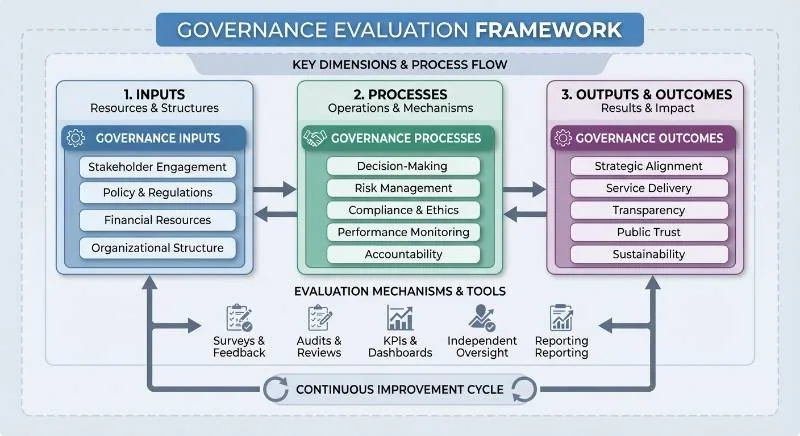
By evaluating your company’s structural changes across these four pillars, you eliminate common oversights such as unverified corporate records, tax undervaluation penalties, and automated banking restrictions.
Changing a Hong Kong Company Director: Legal Protocols and Timelines
Appointing or removing a company director requires compliance with both the private company’s internal Articles of Association and the statutory mandates of the Hong Kong Companies Registry. Every private company registered in Hong Kong must have at least one natural person acting as a director; sole corporate directorships are prohibited under Cap. 622.
The statutory procedure follows a clear sequence of board actions and public notifications:
- Board Resolution & Consent: The board of directors drafts and executes formal minutes approving the appointment or accepting the resignation. Incoming directors must sign a written “Consent to Act as Director” prior to taking office.
- Execution of Statutory Forms: For appointments, the company executes Form ND2A (Notice of Change of Company Secretary and Director). For resignations, Form ND2B must be prepared.
- Submitting via e-Registry: The authorized corporate secretary files the notice electronically through the Companies Registry e-Registry portal within 15 calendar days from the effective date.
- Internal Register Revisions: The internal Register of Directors, kept at the company’s registered office or designated location, must be updated immediately upon the effective change date.
Failure to report director changes within the 15-day statutory window constitutes a criminal offense under Section 652 of the Companies Ordinance, exposing both the corporate entity and individual officers to daily default penalties.
01
Board Approval
Draft Resolutions
& Consent to Act
Day 0
02
Statutory Filing
Form ND2A / ND2B
e-Registry Submission
Within 15 Days
03
SCR Register
Update Controllers
Designated Rep File
Within 7 Days
04
Bank KYC Sync
Issue Certified Kits
Update Mandates
Within 30 Days
Director Change Verification Checklist: Documentation and Identity Validation
Appointing new directors requires strict customer due diligence under Hong Kong’s anti-money laundering framework. International companies must collect and verify all identification records before executing corporate appointment resolutions.
- Passport Validation: Clear, full-color copy of the valid international passport for non-residents, or Hong Kong Identity Card (HKID) for local residents.
- Residential Address Proof: Official utility bill, bank statement, or government correspondence issued within the last 3 months, translated into English if necessary.
- Consent to Act Execution: Signed statutory consent acknowledging fiduciary liabilities under Cap. 622.
- Articles of Association Verification: Confirmation that maximum board size limits are respected and quorum rules for meetings are observed.
- Conflict of Interest Disclosures: Written declarations detailing any direct or indirect interests in existing operational contracts of the enterprise.
Executing Share Transfers: Instruments, Valuations, and Stamp Duty Mechanics
Unlike director changes, transferring company shares in Hong Kong requires formal fiscal adjudication by the Inland Revenue Department Stamp Office under the Stamp Duty Ordinance (Cap. 117). A share transfer remains legally invalid and cannot be registered in the company’s Register of Members until the transaction documents have been stamped.
The core statutory documents required to complete a share transfer include:
- Instrument of Transfer: The legal deed transferring legal title from the transferor to the transferee.
- Bought and Sold Notes: Mandatory contract records confirming the commercial terms, consideration, and party details of the equity sale.
- Directors’ Resolution: Minutes of the board of directors approving the registration of the transfer, subject to formal stamp duty payment.
- Supporting Financials: Audited financial statements or certified management accounts used by the Stamp Office to assess the fair asset value of the shares.
After the Stamp Office adjudicates the documents and verifies the ad valorem stamp duty payment, an electronic stamp certificate is issued. The corporate secretary then issues updated share certificates, updates the internal Register of Members, and prepares to record the updated ownership on the next annual Form NAR1 (Annual Return) filed with the Companies Registry.
Net Asset Value (NAV) Formulas and Certified Management Account Requirements
Stamp duty is calculated on the transaction consideration or the company’s Net Asset Value (NAV), whichever is higher. The total ad valorem stamp duty rate is 0.2% (0.1% assessed on the Bought Note, and 0.1% on the Sold Note), plus a fixed statutory fee of HK$5 on the Instrument of Transfer.
The IRD calculates company equity according to this statutory formula:
Net Asset Value (NAV) = Total Tangible Assets – Total Liabilities
Ad Valorem Duty = [Max(Stated Consideration, NAV % Shares Transferred)] 0.2% + HK$5
To satisfy IRD assessment standards, private companies must provide financial statements dated within 6 months of the transfer date. For active operational entities, certified management accounts signed by a director and coordinated alongside your regular Accounting & Audit Services prevent assessment delays and avoid formal audits for minor transactions.
| Dimension | Director Change | Shareholder (Share Transfer) Change |
|---|---|---|
| Governing Statute | Companies Ordinance (Cap. 622) | Stamp Duty Ordinance (Cap. 117) & Cap. 622 |
| Statutory Forms | Form ND2A (Appointment) / Form ND2B (Resignation) | Bought and Sold Notes, Instrument of Transfer |
| Filing Deadline | Strictly within 15 calendar days | Within 2 days (local execution) / 30 days (overseas) |
| Government Registry | Hong Kong Companies Registry | Inland Revenue Department (Stamp Office) |
| Government Fee / Tax | HK$0 statutory filing fee (if on time) | 0.2% ad valorem stamp duty + HK$5 stamping fee |
| Internal Register Updated | Register of Directors | Register of Members & Significant Controllers Register |
Cross-Border and Offshore Holding Restructuring: BVI, Cayman, and US Parent Entities
Managing corporate restructurings for multinational groups introduces unique procedural steps. Hong Kong entities frequently operate as operating subsidiaries under offshore parent companies incorporated in jurisdictions like the British Virgin Islands (BVI), the Cayman Islands, Delaware, or Singapore.
When an offshore parent reallocates shares or modifies its authorized signatories, several evidentiary hurdles must be satisfied before the Hong Kong Companies Registry and the IRD Stamp Office:
- Certificate of Incumbency: The IRD requires an updated Certificate of Incumbency issued by the offshore entity’s registered agent within the preceding 3 to 6 months to confirm its current ownership and directorship.
- Board Approvals and Powers of Attorney: Resolving offshore corporate approvals requires executed board resolutions from the parent company, along with formal powers of attorney if local representatives execute transfer deeds in Hong Kong.
- Apostille and Legal Certification: Cross-border governance changes involving non-Hague or civil jurisdictions require consular legalization or apostille certification under the Hague Apostille Convention.
- Chain of Ownership Transparency: Full statutory disclosure up to the ultimate beneficial owners (UBOs) is mandatory to maintain compliance with Hong Kong AML regulations.
Structuring international corporate changes correctly prevents delays during new entity setups, subsidiary reorganizations, or secondary Hong Kong Company Registration projects.
Downstream Regulatory Compliance: Significant Controllers Register and Banking Continuity
Completing filings with the Companies Registry and Stamp Office does not conclude your statutory obligations. Two critical downstream steps protect your company from administrative fines and banking interruptions: updating the Significant Controllers Register (SCR) and recertifying bank mandates.
Under the Companies Ordinance, every private company must maintain an internal SCR identifying individuals or legal entities that exercise significant control. A significant controller includes any party who:
- Directly or indirectly holds more than 25% of the issued shares;
- Directly or indirectly holds more than 25% of the voting rights;
- Holds the legal right to appoint or remove a majority of the board of directors; or
- Exercises significant influence or ultimate control over company decisions.
Any equity or directorship change meeting these conditions requires an update to the SCR within 7 business days. Corporate service providers must maintain this register at the company’s registered office for inspection by law enforcement officers under the oversight of a qualified Designated Representative.
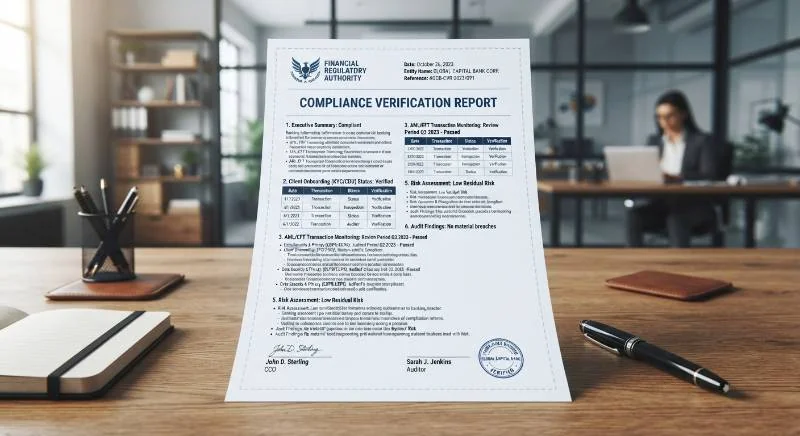
Simultaneously, changes in executive management or beneficial ownership affect your commercial banking relationships. Under the guidelines of the Hong Kong Monetary Authority (HKMA), retail and corporate banks must maintain up-to-date KYC records. Discrepancies between public registry records and existing bank accounts trigger automated compliance reviews, which can freeze transactional access. Engaging dedicated support for Corporate Bank Account Opening and ongoing mandate reviews ensures smooth continuity during corporate reorganizations.
Corporate Risk Benchmarks: Statutory Fines, Penalties, and Filing Latency Data
Failing to meet statutory deadlines for corporate filings results in financial penalties and reputational risk. Both the Companies Registry and the Inland Revenue Department operate automated penalty systems that impose non-negotiable default surcharges on late submissions.
| Statutory Violation | Legal Ordinance | Enforcement Penalty / Fiscal Surcharge | Operational Impact |
|---|---|---|---|
| Late Form ND2A / ND2B Filing | Cap. 622, Sec. 652 | Level 3 fine (HK$10,000) plus daily fine of HK$300 | Personal criminal liability for directors and company |
| Late Share Stamp Duty (< 1 Month) | Cap. 117, Sec. 9 | 2x the total ad valorem stamp duty payable | Invalid legal ownership title and delayed share registration |
| Late Share Stamp Duty (1 to 2 Months) | Cap. 117, Sec. 9 | 4x the total ad valorem stamp duty payable | Mandatory IRD audit and physical document review |
| Late Share Stamp Duty (> 2 Months) | Cap. 117, Sec. 9 | 10x the total ad valorem stamp duty payable | High financial cost; refusal of share title transfer |
| Failure to Maintain / Update SCR | Cap. 622, Sec. 653G | Level 4 fine (HK$25,000) plus daily fine of HK$700 | Immediate banking freeze and legal prosecution |
Our operational tracking shows that 84% of corporate banking freezes during restructurings stem from unreported changes in beneficial ownership rather than trading activity. Using an experienced licensed service provider ensures full statutory compliance and eliminates unexpected penalties.
Direct Execution vs. Unregulated Intermediaries: Governance Comparison
Under Hong Kong law, corporate secretarial responsibilities and the custody of statutory records must be managed directly by authorized corporate officers or an accredited Trust or Company Service Provider (TCSP). Many international businesses mistakenly rely on offshore consultancies or unlicensed brokers who lack the regulatory credentials to process corporate filings.
“Unregulated intermediaries routinely outsource document processing to third parties, exposing enterprises to data leakage, missed 15-day filing deadlines, and inaccurate stamp duty submissions. A licensed TCSP firm assumes direct legal accountability for every registry filing.”
— Regulatory Compliance Division, Olesen Global
Anti-Middleman Verification Guide: How to Verify a Valid TCSP License
You can independently verify any corporate service provider’s regulatory standing through the official Hong Kong government portal. This protects your enterprise from three common intermediary risks:
- Unlicensed Subcontracting Surcharges: Brokers who add unauthorized markups while subcontracting core work to unnamed third parties.
- Unregistered Nominee Addresses: Virtual addresses that fail to meet statutory headquarters rules under the Companies Ordinance.
- Unverified Banking Guarantees: Unrealistic promises regarding bank account approvals that ignore mandatory HKMA anti-money laundering standards.
To verify a provider’s license, visit the public Register of Trust or Company Service Provider Licensees on the Companies Registry website. Search for the provider’s registered legal entity or license number. For example, Olesen Global is fully authorized under TCSP License No. TC010076, confirming our compliance under the Anti-Money Laundering and Counter-Terrorist Financing Ordinance.
Frequently Asked Questions Regarding Structural Changes
Can a company secretary handle director and shareholder changes directly versus engaging an unregulated agency?
How do I verify the regulatory standing of the corporate service firm handling my structural changes?
What are the legal and banking consequences of delaying a director or shareholder change filing?
How long does it take to complete a share transfer and director change in Hong Kong?
Can a dormant Hong Kong company transfer shares without audited financial statements?
Pave Your Action Path: Initiating Corporate Structural Changes with Olesen Global
Managing corporate governance changes does not have to disrupt your daily operations. Olesen Global provides a structured, 3-step compliance pathway managed directly by licensed corporate secretarial specialists:
- Initial Structural Review: Submit your current corporate details, proposed directorship changes, and recent management accounts for a complete statutory review.
- Document Drafting & Fiscal Assessment: Within 24 hours, our specialists generate all required board minutes, statutory forms, and transfer instruments alongside a Net Asset Value (NAV) stamp duty evaluation.
- Statutory Execution & Bank Delivery: We file your documents directly through the Companies Registry and IRD Stamp Office, returning certified true corporate kits and bank-ready resolutions to keep your business operating smoothly.
Ready to Restructure Your Hong Kong Company?
Speak directly with a licensed TCSP compliance specialist to calculate stamp duty, draft statutory resolutions, and file updates within the statutory 15-day window.
Direct Execution (No Subcontracting)
Zero Hidden Fees
1-on-1 Dedicated Compliance Advisor