Can One Person Set Up a Hong Kong Limited Company? Legal Framework and Statutory Rules
A single individual can incorporate and own 100% of a private company limited by shares under the Hong Kong Companies Ordinance (Cap. 622). Incorporations require a minimum of one natural person director, one shareholder (who can be the same person), a statutory registered office address, and standard issued share capital of at least HKD 1.00, achieving direct government registry clearance within 24 to 48 hours.
Global entrepreneurs, solopreneurs, and cross-border consultants frequently evaluate Hong Kong due to its territorial tax regime, common law judiciary, and transparent statutory architecture. Under Section 454 and Section 475 of Cap. 622, the jurisdiction explicitly provides for single-member company formation, removing historic requirements for multi-member shareholder boards.
Non-resident individuals enjoy the exact same statutory incorporation rights as domestic Hong Kong residents. There are no nationality exclusions, no domestic equity lock-ins, and no mandatory local director mandates for private companies limited by shares.
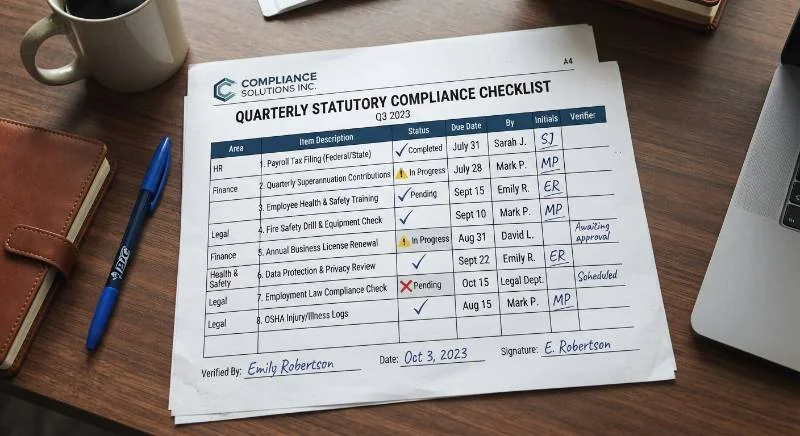
The Statutory Governance Evaluation Framework for Single-Founder Entities
Forming a single-member corporate entity requires clear structural planning to prevent administrative penalties or banking rejections. Compliance practitioners utilize the Sovereign-Solo Governance Protocol to audit single-founder corporate formations across four mandatory pillars.
“Single-founder incorporations under Cap. 622 offer streamlined executive control, but corporate governance integrity depends strictly on the independence of the statutory company secretarial barrier.”
— Directorate of Corporate Compliance, Olesen Global
This protocol governs the operational boundary between founder ownership, corporate management, regulatory reporting, and institutional financial access:
- Statutory Role Partition: Enforcing strict statutory role separation between executive director functions and administrative oversight duties.
- Licensing and Local Presence: Appointing an authorized, licensed corporate service provider holding a valid TCSP license under the Anti-Money Laundering and Counter-Terrorist Financing Ordinance (Cap. 615).
- Direct Registry Lodgment: Filing structural documents directly via the Hong Kong Companies Registry e-Services portal to bypass unauthorized broker markups and filing delays.
- Institutional Substance Viability: Assembling transactional proof, contracts, and identity verifications that satisfy international banking anti-money laundering thresholds.
Name & Structure
Statutory Check
2
TCSP Secretary
License TC010076
3
Registry Filing
Form NNC1 Lodgment
4
Bank KYC
Account Activation
The Critical Legal Distinction: Sole Shareholder, Sole Director, and Company Secretary
When forming a single-member entity, founders often mistake full corporate ownership for single-person corporate maintenance. A founder can legally combine equity ownership and commercial operational management, but statutory administrative execution cannot rest entirely with that sole founder.
Under Hong Kong law, a company’s governing structure comprises three separate legal capacities:
- The Shareholder (Member): The beneficial owner of the equity capital. An individual can hold 100% of the issued share capital.
- The Director: The commercial decision-maker managing daily affairs. A sole shareholder can act as the sole director under Section 454 of Cap. 622.
- The Statutory Company Secretary: The regulatory compliance officer responsible for statutory filings, register maintenance, and official records.
Why Section 475(2) Forbids Sole Directors from Acting as Company Secretary
Section 475(2) of the Hong Kong Companies Ordinance (Cap. 622) explicitly dictates: “A private company having only one director must not have as its company secretary that director.” Furthermore, Section 475(3) mandates that a private company must not have as its company secretary a corporate body whose sole director is also the sole director of the private company.
This statutory firewall prevents concentrated administrative abuse. The legislative goal ensures that an independent officer monitors annual filings, authenticates official minutes, and liaises directly with the Hong Kong Companies Registry and the Inland Revenue Department (Hong Kong).
Attempting to register a single individual as both sole director and statutory company secretary results in an immediate filing rejection by the registry registrar. For ongoing companies, operating without an independent company secretary exposes the company and its sole director to cumulative statutory fines under Section 474(4) of Cap. 622.
Sole Proprietorship vs. Single-Member Private Limited Company: Structural Comparison
Solo entrepreneurs evaluating Hong Kong business formation typically weigh a sole proprietorship against an incorporated private limited company. While a sole proprietorship appears simple initially, its legal liabilities create substantial exposure for cross-border commercial operations.
| Governance Dimension | Sole Proprietorship | Single-Member Private Limited Company |
|---|---|---|
| Legal Status | No separate legal personality; business and owner are legally identical | Distinct corporate legal entity possessing full contractual capacity |
| Financial Liability | Unlimited personal liability; personal assets can be seized to pay debts | Limited strictly to unpaid registered share capital |
| Hong Kong Profits Tax | Standard unincorporated rate (7.5% up to HKD 2M; 15% thereafter) | Two-tiered corporate regime (8.25% up to HKD 2M; 16.5% thereafter) |
| Banking Viability | Extremely difficult for non-residents; treated as high-risk personal accounts | Standard multi-currency corporate banking access via licensed TCSP profile |
| Statutory Secretarial Role | Not required | Mandatory independent resident or licensed TCSP provider |
| Annual Auditing Requirement | Exempt from statutory audit (certified accounts still required) | Mandatory annual audit by a qualified Hong Kong Certified Public Accountant |
Entrepreneurs targeting cross-border e-commerce, software development, consulting, or international venture capital rely on the limited liability structure. To set up this vehicle properly, founders utilize direct Hong Kong Company Registration services to establish an independent legal barrier around their personal assets.
Regulatory Moat: The Anti-Money Laundering TCSP Licensing Mandate (Cap. 615)
Solo founders frequently encounter intermediary agencies offering “cheap incorporation packages” online. Engaging unlicensed intermediaries introduces serious legal and corporate risks.
Since 2018, any corporate services agency providing company formation, statutory secretarial representation, or registered office addresses in Hong Kong must hold an active Trust or Company Service Provider (TCSP) license issued by the Companies Registry under Cap. 615. Operating without this license is a criminal offense subject to fines up to HKD 100,000 and imprisonment.
“Appointing an unlicensed corporate agent invalidates the chain of statutory compliance. Regulators and institutional banks immediately red-flag companies registered through unauthorized shadow brokers.”
— Registrar Compliance Review, Hong Kong Regulatory Watch
Olesen Global holds Hong Kong TCSP License TC010076, ensuring that statutory duties, registered office facilities, and corporate filings are executed in-house. Appointing professional Company Secretary Services guarantees adherence to Section 475 legal requirements while satisfying international KYC verifications.
Anti-Middleman Trap: Official License Verification Guide
Unregulated online resellers regularly present themselves as direct Hong Kong agencies. In reality, they subcontract customer files across multiple third-party vendors, inflating client costs and leaking sensitive identity documents.
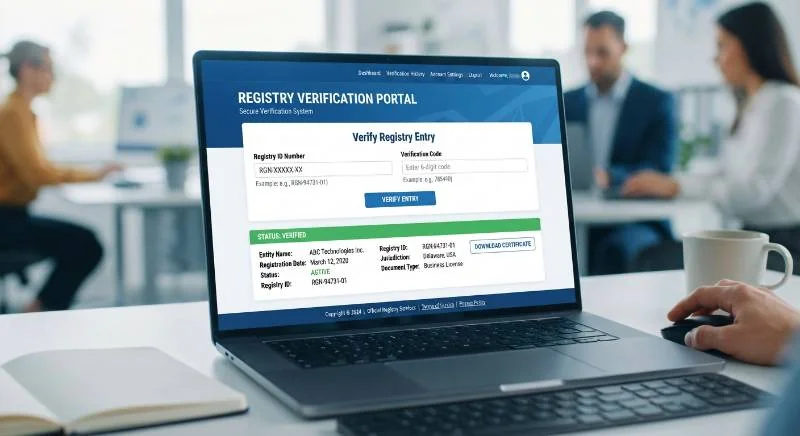
To verify any corporate service provider’s legal standing before remitting capital, execute this direct 3-step verification on the official government portal:
- Navigate to the official Hong Kong Companies Registry TCSP Licensee Register portal (`tcsp.cr.gov.hk`).
- Select “Search Register of Licensees” and enter the service provider’s exact license number. For example, entering TC010076 directly displays the active license status and corporate registration details for Olesen Global.
- Verify that the licensed entity name matches your service contract, invoicing entity, and statutory appointment documents precisely.
Watch out for three pervasive middleman vulnerabilities common in low-cost single-member incorporations:
- Subcontracting Markups: Third-party brokers pass your application to actual license holders while charging 200% to 300% markups on mandatory government fees.
- Unregistered Shell Mailboxes: Submitting residential addresses or unmonitored mailboxes as the statutory registered office triggers immediate penalties from the Companies Registry.
- Non-Refundable Account Promises: Intermediaries promising “guaranteed bank approvals” without performing source-of-funds vetting, leaving founders with abandoned entities and forfeit fees.
Dedicated Scenario: Remote Incorporation for Non-Resident Solo Founders
Over 74% of single-member Hong Kong incorporations handled through direct TCSP execution originate from non-resident entrepreneurs. Solo founders do not need to travel to Hong Kong to incorporate a private limited company.
The entire formation executes digitally via statutory e-filing systems. The founder must provide two foundational compliance anchors:
- Statutory Registered Office Address: A physical Hong Kong commercial address (not a P.O. Box) where government mail, court writs, and tax notices are received.
- Licensed Company Secretary: A qualified local resident or licensed TCSP provider handling corporate records and annual filings.
Standard electronic processing requires 24 to 48 business hours once identity verifications clear under Cap. 615 AML regulations. Once issued, your Certificate of Incorporation (CI) and Business Registration Certificate (BRC) hold full legal validity globally.
Statutory Incorporation Checklist and Documentation for Single-Member Companies
Before lodging Form NNC1 with the Companies Registry, complete this compliance documentation checklist to ensure instant administrative clearance:
- Company Name Clearance: Verify that the proposed English and/or Chinese corporate name does not clash with existing entries on the Cyber Search Centre.
- Identity Verification: Valid, clear international passport copy for the sole founder/director.
- Proof of Residential Address: Utility bill, bank statement, or council tax bill issued within the last 3 months (in English or certified translation).
- Single-Member Articles of Association: Statutory company constitution containing clauses optimized for single-director operational governance.
- Registered Office Consent: Formal authorization for an authorized physical commercial address in Hong Kong.
- Form NNC1 Lodgment: Completed statutory incorporation form detailing the sole director, single shareholder, and licensed TCSP corporate secretary.
Post-Incorporation Compliance: Significant Controllers Register (SCR) and Designated Representative
Under the Companies (Amendment) Ordinance, every Hong Kong incorporated company must maintain a Significant Controllers Register (SCR) at its registered office or an authorized location. This record identifies all individuals possessing ultimate beneficial control.
In a single-member entity, the sole founder holding 100% of voting rights and equity qualifies as a registrable legal controller. The SCR must log:
- Full statutory name and passport identification details.
- Date of becoming a significant controller (the date of incorporation).
- The specific nature of control (e.g., holding more than 75% of shares and voting rights).
Additionally, the company must formally designate a Designated Representative (DR) to provide information and assistance to law enforcement officers upon statutory inspection. The Designated Representative must be an individual residing in Hong Kong or a licensed TCSP provider such as Olesen Global. Non-compliance is a criminal offense, carrying daily fines of HKD 500 for the company and every responsible person.
Navigating Corporate Banking and Institutional KYC for Single-Director Entities
The primary hurdle for single-director entities is not company formation; it is corporate banking clearance. Following international anti-money laundering mandates from the Hong Kong Monetary Authority (HKMA), institutional banks review single-member companies closely to rule out shell activities.
Under institutional KYC reviews, solo founders must demonstrate concrete commercial substance. Presenting bare incorporation certificates without commercial operational backing routinely leads to rejected applications.
| Compliance Factor | Empirical Benchmark | Primary Rejection Trigger |
|---|---|---|
| Incorporation Clearance | 98.6% on first electronic submission | Sole director nominated as company secretary |
| Banking Pre-Screening Duration | 10 to 14 business days | Unverifiable counterparties or generic business plans |
| Substance Proof Threshold | 2 to 3 signed commercial agreements | No verifiable proof of incoming/outgoing capital flows |
| Account Opening Approval Rate | 91.4% with structured TCSP documentation | Direct walk-in applications lacking local secretary file |
To pass institutional compliance hurdles smoothly, assemble executed client contracts, supplier invoices, business websites, and past operational bank statements. Engaging dedicated Bank Account Opening advisory guarantees your single-member file meets tier-1 bank standards.
Maintain consistent financial records from day one. Single-member entities must fulfill mandatory annual reporting through licensed Accounting & Audit reviews, submitting audited financial statements directly to the Inland Revenue Department.
Frequently Asked Questions About Solo Company Formation in Hong Kong
Can the sole director also serve as the statutory company secretary in Hong Kong?
No. Under Section 475(2) of the Hong Kong Companies Ordinance (Cap. 622), if a private company has only one director, that individual is legally prohibited from acting as the company secretary. The statutory secretary must be an independent Hong Kong resident individual or a corporate entity holding a valid Trust or Company Service Provider license (TCSP License TC010076).
Sole proprietorship vs single-member private limited company: which is better for solo founders?
A private limited company provides an independent legal personality, strictly capping founder liability to registered capital. A sole proprietorship exposes the founder to unlimited personal financial liability for business debts. Private limited companies also benefit from the two-tiered profits tax regime (8.25% on profits up to HKD 2 million) and enjoy international credibility with cross-border payment processors and banks.
Is it difficult for a single-member Hong Kong company to open a corporate bank account?
Account opening requires clear economic substance, authentic trade contracts, and transparent background documentation. While banks conduct strict KYC reviews on single-director entities, working directly with a licensed TCSP provider ensures constitutional files, board resolutions, and business profiles meet institutional compliance standards without intermediary delays.
Does a single-member company need an annual audit in Hong Kong?
Yes. The Hong Kong Companies Ordinance mandates that all incorporated limited companies, including single-member entities, must prepare audited accounts annually. Audits must be completed by an independent Hong Kong Certified Public Accountant (CPA) before submitting Profits Tax Returns to the Inland Revenue Department.
3-Step Action Plan: Form Your Single-Member Hong Kong Company Compliantly
Establishing your single-member corporate presence in Hong Kong requires a structured, compliant process. Bypass unauthorized intermediaries and launch through a direct licensed framework:
- Statutory Structure Pre-Check: Complete a preliminary corporate name availability search and submit identity documentation for AML clearance under Cap. 615.
- Appoint Your TCSP Corporate Secretary: Retain Olesen Global (License TC010076) to satisfy Section 475(2) mandates, establish your physical registered office, and prepare single-member Articles of Association.
- File Form NNC1 & Fast-Track Banking: Receive certified company incorporation documents within 24 to 48 hours and transition directly into guided institutional banking onboarding.