Hong Kong Double Tax Agreement Countries List: 2026 Guide
Global businesses face structural challenges when expanding across borders, with double taxation acting as a major friction point. Hong Kong addresses this issue through its growing network of Comprehensive Double Taxation Agreements (CDTAs). These bilateral treaties play a crucial role in preventing double taxation and minimizing withholding taxes on cross-border transactions.
For multinational corporations and asset-holding companies, understanding these tax treaties is essential for structural planning. Hong Kong’s regulatory framework provides a highly compliant environment for optimizing international trade, intellectual property holding, and regional investment.
“A robust tax treaty network is no longer just about saving costs; it is about establishing regulatory certainty. In 2026, global tax authorities require strict economic substance, making Hong Kong’s clear-cut CDTA frameworks a preferred choice for institutional cross-border investments.”
— Marcus Chen, Senior Tax Strategist at Olesen Global
The 2026 HK CDTA Network: Active Countries & Withholding Tax Rates
The Hong Kong double tax agreement countries list includes 50 active treaties, providing global businesses with a structured mechanism for double taxation relief HK. By establishing clear guidelines on taxing rights, these agreements prevent overlapping tax claims between Hong Kong and its partner jurisdictions.
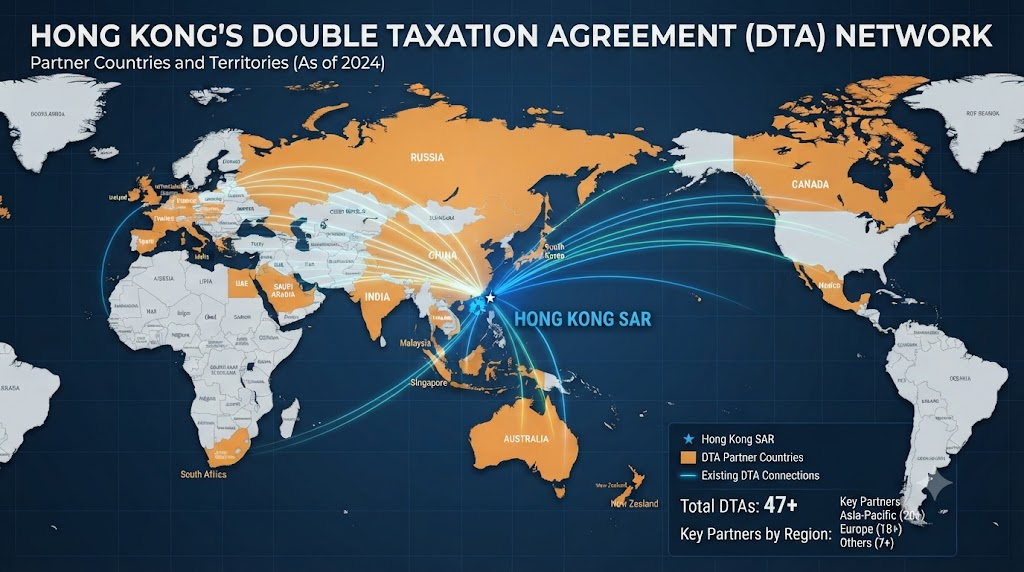
Under domestic law, Hong Kong does not levy withholding tax on dividends or interest paid to non-residents. However, foreign jurisdictions often impose steep withholding taxes on outgoing payments to Hong Kong entities. CDTAs help lower these foreign rates, making a Hong Kong holding company structure highly tax-efficient.
The table below outlines key jurisdictions in Hong Kong’s CDTA network, detailing the reduced withholding tax rates available under these agreements:
| Partner Jurisdiction | Dividend Withholding Tax | Interest Withholding Tax | Royalty Withholding Tax |
|---|---|---|---|
| Mainland China | 5% (if holding ≥ 25% shareholding) / 10% | 7% | 7% |
| United Kingdom | 0% (for qualifying pension/entities) / 15% | 0% | 3% |
| Japan | 5% (if holding ≥ 10% shareholding) / 10% | 10% | 5% |
| Netherlands | 0% (if holding ≥ 10% shareholding) / 15% | 0% | 0% |
| Canada | 5% (if holding ≥ 10% shareholding) / 15% | 10% | 10% |
| Switzerland | 0% (if holding ≥ 10% shareholding) / 15% | 0% | 3% |
For a complete and up-to-date breakdown of all active, signed, and pending tax treaties, businesses can consult the official Inland Revenue Department (Hong Kong) DTA database.
The 3-Tier DTA Evaluation Framework for Global Corporates
Simply incorporating a company in Hong Kong does not automatically grant access to treaty benefits. Based on our 10+ years of corporate advisory experience, we evaluate treaty eligibility using a proprietary system: The 3-Tier DTA Evaluation Framework.
This framework ensures that cross-border operations comply with both local regulations and international tax standards, including the OECD transfer pricing guidelines.
Tier 1: Tax Residency & Substance
An entity must prove it is a legitimate tax resident of Hong Kong. This requires securing a Certificate of Resident Status Hong Kong from the Inland Revenue Department IRD. The IRD reviews actual management and control, looking for physical offices, local employees, and active corporate bank accounts in Hong Kong.
Tier 2: Beneficial Ownership Status
The entity receiving the income must be its “beneficial owner.” If a Hong Kong company acts merely as a conduit—immediately passing dividends or royalties to a third-party offshore parent—foreign tax authorities may deny treaty benefits under general anti-avoidance rules.
Tier 3: Treaty Rate Application
Once substance and beneficial ownership are established, the company can apply the treaty rates to lower withholding taxes on cross-border payments. This step requires formal filings in the source country, supported by the Hong Kong tax residency certificate.
Strategic Tax Optimization: HK Holding Companies & Web3 Startups
Hong Kong’s tax treaty network offers clear advantages for businesses operating in specific sectors. By aligning corporate structures with active treaties, companies can legally minimize tax exposure and protect intellectual property.

The HK-Mainland China CDTA Structure
For international companies investing in China, a Hong Kong intermediate holding company is a standard structural choice. Under the HK-Mainland China CDTA, the withholding tax on dividends paid from a Chinese subsidiary to its Hong Kong parent is reduced from 10% to 5%, provided the Hong Kong company holds at least a 25% equity interest and meets substance requirements.
IP Holding Structures for Tech & AI Firms
Technology and AI firms often centralize their intellectual property (IP) in Hong Kong. By licensing this IP to affiliates worldwide, the Hong Kong company receives royalties that benefit from lower withholding tax rates under various CDTAs, while also utilizing Hong Kong’s 2-tiered profits tax rates (8.25% on the first HKD 2 million of assessable profits).
Cross-Border Planning for Web3 Startups
For Web3 and digital asset startups operating out of hubs like Cyberport, establishing a clear tax presence is critical. These firms use Hong Kong entities to pool global transaction fees, utilizing CDTAs to avoid double taxation on international node operations and software licensing fees.
To establish these structures correctly, businesses typically begin with professional Hong Kong Company Registration to ensure their corporate foundations are compliant from day one.
Hong Kong vs. Singapore: Which DTA Network is Superior?
When choosing a holding company jurisdiction in Asia, businesses frequently compare Hong Kong and Singapore. Both offer strong legal systems, simple tax regimes, and extensive tax treaty networks.
While Singapore has a larger treaty network with over 100 signed agreements, Hong Kong’s network is highly targeted, featuring advantageous terms with Mainland China and key European economies.
| Feature / Dimension | Hong Kong DTA Network | Singapore DTA Network |
|---|---|---|
| Total Active Treaties | 50 active treaties | 100+ active treaties |
| Treaty with Mainland China | Highly favorable (5% dividend withholding) | Standard treaty terms (5% to 10%) |
| Obtaining Tax Residency (CoR) | Requires demonstration of local management and control | Requires physical board meetings and local directors |
| Territorial Tax System | Strictly territorial (offshore profits are exempt) | Foreign-sourced income exempt only if specific conditions met |
For enterprises focusing on the Asia-Pacific region or those with operations connected to Mainland China, Hong Kong’s CDTA setup often provides a more integrated and cost-effective solution.
Step-by-Step Guide: Applying for a Hong Kong Certificate of Resident Status
To access the reduced tax rates in the Hong Kong double tax agreement countries list, a company must obtain a Certificate of Resident Status (CoR) from the IRD. This certificate serves as official proof of Hong Kong tax residency.
The IRD has implemented clear measures to prevent treaty abuse. It carefully reviews applications to ensure that claimant companies have a genuine economic presence in Hong Kong.
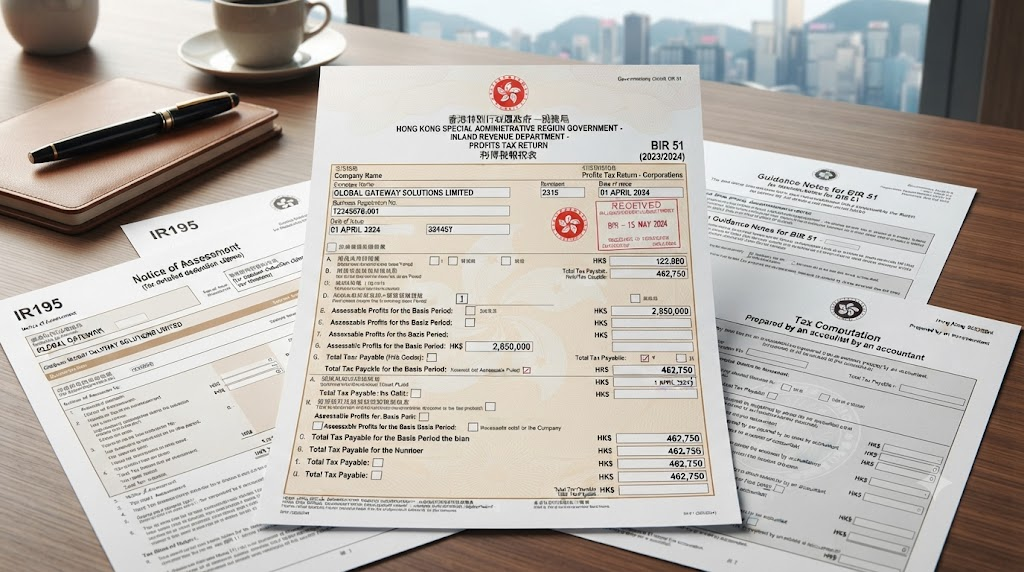
“The Inland Revenue Department has tightened its review of shell companies. To secure a CoR, a company must show it has actual operations in Hong Kong. This includes maintaining local bank accounts, employing local staff, and managing key business decisions from within the city.”
— Sophia Zhang, Licensed Tax Director at Olesen Global (TCSP License TC010076)
The CoR Application Process
- Prepare Corporate Records: Gather your incorporation documents, business registration certificate, and latest audited financial statements.
- Demonstrate Economic Substance: Document your local operations, including lease agreements for physical offices, employee contracts, and records of board meetings held in Hong Kong.
- Submit Form IR1313: Complete the relevant application form for the specific treaty partner and submit it to the IRD.
- Respond to IRD Inquiries: The IRD may request additional details regarding your business activities and beneficial ownership structure.
Maintaining compliance requires accurate, up-to-date financial records. Ongoing support from professional Accounting & Audit Services helps ensure your company meets these regulatory standards and remains positioned to secure residency certificates.
Frequently Asked Questions About Hong Kong’s DTA Network
How do I verify if a tax treaty with Hong Kong is active?
You can check the current status of all treaties on the official Inland Revenue Department website. Treaties are classified as “In Force,” “Signed,” or “Under Negotiation.”
Can a shell company claim benefits under Hong Kong’s DTAs?
No. Shell companies without physical offices, local employees, or active business operations in Hong Kong generally do not qualify. The IRD requires demonstrable economic substance before issuing a Certificate of Resident Status.
How does the Multilateral Instrument (MLI) affect Hong Kong’s DTAs?
Hong Kong has adopted the Multilateral Instrument (MLI) developed by the OECD. This framework updates existing tax treaties to include anti-abuse provisions, such as the Principal Purpose Test (PPT), to prevent treaty shopping.
Do I need a local secretary to maintain DTA compliance?
Yes. Having a licensed local corporate secretary is a statutory requirement in Hong Kong. They play a key role in maintaining statutory records, which help demonstrate corporate substance. Professional Company Secretary Services ensure your corporate filings remain fully compliant.
Maximize Your Global Tax Efficiency with Olesen Global
Setting up and managing a tax-compliant international structure requires expert local guidance. Olesen Global is a premier, first-hand corporate service provider in Hong Kong, operating under TCSP License No. TC010076.
We work directly with our clients—without intermediaries—from our physical office in Hong Kong. This direct approach allows us to provide clear, compliant services and 1-on-1 tracking for all corporate and tax matters.
Ready to Optimize Your International Tax Structure?
Speak with our licensed tax and corporate structuring experts to secure your Hong Kong Certificate of Resident Status and streamline your cross-border operations.